• Home
  • Store
    • Total Access Subscriptions
    • Newsletter Subscriptions
    • Multimedia
    • Books
    • eBooks
    • ABPN SA Courses
    • Institutional Site Licenses
  • CME Center
  • Multimedia
    • Podcast
    • Webinars
    • Blog
  • Newsletters
    • General Psychiatry
    • Child Psychiatry
    • Addiction Treatment
    • Hospital Psychiatry
    • Geriatric Psychiatry
    • Psychotherapy and Social Work
  • Toolkit/AskCarlat AI
  • FAQs
  • Log In
  • Register
  • Welcome
  • Sign Out
  • Subscribe
Access Purchased Content
Home » Topics » General Psychiatry » Files

General Psychiatry

N-ACETYLCYSTEINE (NAC) Fact Sheet [G]

November 29, 2023

NAC is a glutamate modulator and is derived from the amino acid cysteine. It has been tested for many psychiatric conditions, but is most likely effective as an add-on treatment to SSRIs in OCD, trichotillomania, nail biting, and skin picking. From Medication Fact Book for Psychiatric Practice, 7th Edition (2023).

CARBAMAZEPINE (Epitol, Equetro, Tegretol, others) Fact Sheet [G]

November 29, 2023

Equetro is the only FDA-approved formulation of carbamazepine for bipolar disorder, but use of other formulations would result in the same effects at a lower price. Generally, carbamazepine is not considered a first-line treatment for bipolar disorder due to its side effect profile and high likelihood of significant drug interactions. From Medication Fact Book for Psychiatric Practice, 7th Edition (2023).

NEFAZODONE (Serzone) Fact Sheet [G]

November 29, 2023

Nefazodone was once popular due to the lack of sexual side effects, but is now rarely used due to rare hepatic effects. From Medication Fact Book for Psychiatric Practice, 7th Edition (2023).

ATOMOXETINE (Strattera) Fact Sheet [G]

November 29, 2023

Atomoxetine is a non-stimulant ADHD treatment that carries no abuse potential, causes less insomnia and anxiety, and is unlikely to worsen tics. Unfortunately, it is generally less effective than stimulants and takes longer to work (two to four weeks). From Medication Fact Book for Psychiatric Practice, 7th Edition (2023).

DARIDOREXANT (Quviviq) Fact Sheet

November 29, 2023

Daridorexant is the third agent in the class of orexin receptor antagonists. Like the other agents in its class, it is no more effective than benzos or Z-drugs, and it has a similar abuse liability. We’re concerned that next-day impairment is a potential side effect at the higher dose, particularly since sleepless patients may decide on their own to take even higher doses. It’s not a first-line hypnotic. From Medication Fact Book for Psychiatric Practice, 7th Edition (2023).

ALPRAZOLAM (Xanax) Fact Sheet [G]

November 29, 2023

Alprazolam is fast acting and effective for generalized anxiety disorder (GAD) and panic disorder, but its short duration of action may contribute to breakthrough symptoms between doses and make withdrawal more difficult. From Medication Fact Book for Psychiatric Practice, 7th Edition (2023).

FLIBANSERIN (Addyi) Fact Sheet

November 29, 2023

Flibanserin, marketed as the “pink Viagra,” is mildly effective for enhancing sexual desire, but with potentially significant side effects and precautions regarding alcohol use around the time of administration. From Medication Fact Book for Psychiatric Practice, 7th Edition (2023).

ILOPERIDONE (Fanapt) Fact Sheet

November 29, 2023

Iloperidone is not recommended as a first-choice agent due to twice-daily dosing, need for titration, QT prolongation (comparable to ziprasidone), dizziness, moderate weight gain, and increases in blood sugar; and because it appears less efficacious than other antipsychotics. From Medication Fact Book for Psychiatric Practice, 7th Edition (2023).

CHLORPROMAZINE (Thorazine) Fact Sheet [G]

November 29, 2023

Chlorpromazine was the first antipsychotic to be developed. Its long track record and good sedative properties make it popular for certain populations, especially patients with chronic psychosis, agitation, and mania, particularly when they are hospitalized. Its availability as an IM injection is an advantage for treating acute agitation. As a low-potency agent, it is less likely to cause EPS than many other antipsychotics. From Medication Fact Book for Psychiatric Practice, 7th Edition (2023).

Dystonia

November 29, 2023

 Involuntary contractions of muscles due to some antipsychotics. Can include torticollis (twisting neck), opisthotonos (arching spine or neck), oculogyric crisis (eyes rolling back), and trismus (jaw clenching). Rare but serious is tongue swelling, which can block the airway or cause choking when eating. From Medication Fact Book for Psychiatric Practice, 7th Edition (2023).

Previous 1 2 … 15 16 17 18 19 20 21 22 23 … 29 30 Next
Try The New AskCarlat AI

Ask any clinical question—our AI responds using only the peer-reviewed, editorially vetted content from Carlat Publishing.

Available In The Carlat Toolkit
Free Psychiatry Updates
The latest unbiased psychiatric information sent to your inbox.
Specify Your Interests
Featured Book
  • CAM1e_3DCover_Spiral_sm.png

    Complementary and Alternative Medicine in Psychiatry: A Fact Book (2026) -

    Fact sheets for 67 treatments that fall outside conventional psychopharmacology.
    READ MORE
Featured Video
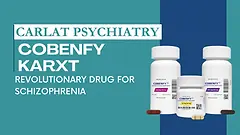
  • KarXT (Cobenfy)_ The Breakthrough Antipsychotic That Could Change Everything.jpg
    General Psychiatry

    KarXT (Cobenfy): The Breakthrough Antipsychotic That Could Change Everything

    Read More
Featured Podcast
  • Andrew-Christensen-1.jpg
    Psychology and Social Work

    Treating Couples: Integrative Behavioral Couple Therapy — Balancing Acceptance and Change Andrew Christensen, PhD

    Dr. Andrew Christensen, distinguished research professor of psychology at UCLA and co-developer of Integrative Behavioral Couple Therapy (IBCT), explains how IBCT balances...

    Listen now
Recommended
  • Join Our Writing Team

    July 18, 2024
    WriteForUs.png
  • Insights About a Rare Transmissible Form of Alzheimer's Disease

    February 9, 2024
    shutterstock_2417738561_PeopleImages.com_Yuri A.png
  • How to Fulfill the DEA's One Time, 8-Hour Training Requirement for Registered Practitioners

    May 24, 2024
    DEA_Checkbox.png

About

  • About Us
  • CME Center
  • FAQ
  • Contact Us

Shop Online

  • Newsletters
  • Multimedia Subscriptions
  • Books
  • eBooks
  • ABPN Self-Assessment Courses

Newsletters

  • The Carlat Psychiatry Report
  • The Carlat Child Psychiatry Report
  • The Carlat Addiction Treatment Report
  • The Carlat Hospital Psychiatry Report
  • The Carlat Geriatric Psychiatry Report
  • The Carlat Psychotherapy Report

Contact

carlat@thecarlatreport.com

866-348-9279

PO Box 626, Newburyport MA 01950

Follow Us

Please see our Terms and Conditions, Privacy Policy, Subscription Agreement, Use of Cookies, and Hardware/Software Requirements to view our website.

© 2026 Carlat Publishing, LLC and Affiliates, All Rights Reserved.