_-The-Breakthrough-Antipsychotic-That-Could-Change-Everything.webp?t=1729528747 "KarXT (Cobenfy)_ The Breakthrough Antipsychotic That Could Change Everything.jpg")
Expert Q&A
The Role of Psychiatry in Palliative Care

Getting your Trinity Audio player ready...
CHPR: Please tell us a little about yourself.
Dr. Shalev: I trained in general adult psychiatry at Columbia, then completed a consultation-liaison (CL) fellowship. After that, I did something a little unusual and completed a fellowship in hospice and palliative medicine, which is an American Board of Internal Medicine fellowship predominantly completed by internists and family medicine physicians. It’s open to psychiatrists, but I was the only one in my class. I often joke that it was my most intensive year of psychiatric training. Patients living with serious, life-limiting illness carry an enormous burden of psychological distress and psychiatric comorbidity. For the first time in my career, I was the only person in the room with psychiatric training. That experience really shaped me. At Weill Cornell, I run a research program focused on psychiatric and psychological issues at end of life and have an outpatient CL clinic embedded within our palliative care program.
CHPR: What do palliative care psychiatrists typically see clinically?
Dr. Shalev: In some ways, it’s many of the same things any psychiatrist sees—mood disorders, anxiety disorders, occasionally psychotic disorders. But the context is profoundly different. A lot of my work involves thinking biopsychosocially about what’s driving a patient’s presentation. Many of my patients have serious underlying illnesses, like cancer or end-organ failure, as well as complex medication regimens, including advanced therapeutics with poorly characterized neuropsychiatric profiles. In these cases, both the illness and the medications can cause psychiatric symptoms. So I’m often asking: Is this a primary psychiatric disorder, a direct consequence of the underlying illness, or a medication side effect? I’m also constantly thinking about prognosis in a way that most psychiatrists don’t have to. Our standard antidepressants take four to eight weeks to work. I’m regularly seeing people who may not be alive in eight weeks. That clinical reality forces you to adapt. And then there’s a whole dimension of existential and spiritual distress, demoralization, grief—constellations of suffering that may not map neatly onto a DSM diagnosis and that require a much more holistic assessment.
“If what I’m seeing is demoralization or grief rather than major depression, I’m less focused on prescribing an antidepressant and more focused on supportive psychotherapy; helping the patient regain a sense of control or meaning; optimizing symptom relief; and bringing in chaplaincy, social work, or other supports.”
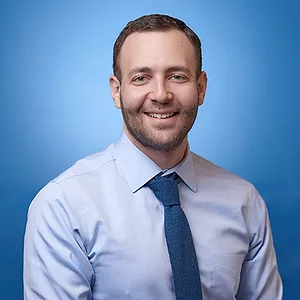
Daniel Shalev, MD
CHPR: Diagnostically, how do you distinguish demoralization from depression?
Dr. Shalev: It’s one of the most important and most challenging questions in my work, partly because these constructs do not map neatly onto DSM checkboxes or treatment algorithms. That said, I do have clinical anchors. When distinguishing major depression from demoralization, I focus on anhedonia—the inability to experience pleasure—which tends to be a feature of depression, not demoralization. I also look for guilt, worthlessness, and self-loathing, which point more toward major depressive disorder. Demoralization looks more like helplessness, hopelessness, a sense of futility—but with a preserved capacity for pleasure. Someone who is demoralized can still laugh at something funny; someone who is anhedonic can’t.
CHPR: And where does grief fit into that picture?
Dr. Shalev: Grief is different from both. It’s usually tied to a specific loss and often comes in waves, with yearning, sadness, and moments of intense pain, but without the global self-condemnation of depression. A grieving patient can still feel connected, moved, and even comforted at times; a depressed patient is more likely to feel persistently empty, cut off from pleasure, and consumed by worthlessness. And I think carefully about the constancy of symptoms: People facing the end of life will naturally have terrible days, but in true depression that low mood is fixed and pervasive rather than fluctuating. This distinction matters because it affects what I do. If what I’m seeing is demoralization or grief rather than major depression, I’m less focused on prescribing an antidepressant and more focused on supportive psychotherapy; helping the patient regain a sense of control or meaning; optimizing symptom relief; and bringing in chaplaincy, social work, or other supports. Practically, I try to get a sense of the “flavor” of what’s going on and share that diagnostic thinking with patients who are able to engage with it. Their response often tells me as much as the checklist does.
CHPR: How do you treat patients who don’t have four to eight weeks to wait for an antidepressant to kick in?
Dr. Shalev: We reach for interventions that general psychiatry might not consider first-line. Ketamine is a good example. The rapidity of effect is obviously a huge advantage for someone with limited time, and the transience of the benefit, which would be a significant downside in a younger outpatient, is much less of a concern. I’m also quicker to use antipsychotic augmentation rather than switching antidepressants, particularly agents like aripiprazole where the augmentation data are compelling and the onset is relatively fast (Caldiroli A et al, Int J Mol Sci 2021;22(23):13070). Psychostimulants are another tool we use more readily in palliative care, either as monotherapy or augmentation for depression. In a standard outpatient practice, I’d rarely reach for them. In palliative care, they’re a reasonable and often effective option for patients who simply don’t have the time to wait for a conventional antidepressant to work.
CHPR: Is there a role for psychedelics in palliative care?
Dr. Shalev: I am both excited about psychedelics and worried about them. What makes psychedelics compelling in palliative care is that their potential benefits cut across several domains that matter deeply to patients with serious illness: depression, anxiety, existential distress, demoralization, and acceptance. That is unusual. The evidence is early but promising, and it is encouraging to see trials conducted in patients with advanced cancer and other serious medical illnesses, because this population is often excluded from psychiatric research. That said, I have real reservations about translation to practice. Psychedelic-assisted therapy requires extensive therapist time, specialized training, and controlled settings. Many of my patients struggle to access basic psychotherapy or first-line medications. I worry we are already seeing a two-tiered system: expensive psychedelic therapy for those who can pay, and little or nothing for everyone else. I’m also wary of psychedelics becoming seen as a panacea in a way that draws energy and funding away from other important work—including, frankly, research into improving implementation of interventions that we already know to be helpful. We have effective tools for depression, anxiety, and existential distress, yet we’re not great at delivering them reliably. That’s a solvable problem that receives far less attention than it deserves.
CHPR: That brings us back to the basics. What medication-management issues do psychiatrists need to anticipate in palliative care?
Dr. Shalev: Deprescribing is one area that doesn’t get nearly enough attention. As patients approach the end of life, their ability to take and tolerate medications changes significantly. Many lose the ability to swallow. Body composition shifts. Lithium is a good example of why we need to plan ahead. It can become genuinely dangerous as patients become dehydrated, medically frail, or less able to maintain stable intake, and its therapeutic window is already narrow. If we wait for a crisis to address this, we have waited too long. One practical issue I come back to often is antidepressant withdrawal. If we know a patient is likely to lose the ability to swallow in the coming weeks, the time to start weaning their antidepressant is now, not when they’re already in crisis. Adding a withdrawal syndrome on top of everything else a dying patient is going through is something we can and should prevent with a little foresight.
CHPR: What should psychiatrists keep in mind when using antipsychotics in palliative care, especially as patients lose the ability to swallow?
Dr. Shalev: One misconception is that orally dissolvable antipsychotics solve the swallowing problem. Many clinicians assume that orally dissolvable formulations, like olanzapine (Zydis), are absorbed through the mucosa and are therefore useful for patients who can no longer swallow. It’s an understandable assumption, but it’s wrong. With the exception of asenapine, which genuinely is mucosally absorbed, these formulations are designed to dissolve in the mouth and then be swallowed and absorbed in the gut. A patient who can’t swallow may not get meaningful benefit from them. Our non-psychiatric colleagues often don’t know this, and it can lead to a patient going undertreated at a critical moment. When patients begin missing oral doses, coughing or choking with medication administration, losing the ability to reliably swallow, or becoming less alert, it’s time to think ahead about switching to a parenteral option or a long-acting injectable. Anticipating that transition days to weeks before the oral route fails is one of the most concrete and immediately impactful contributions a psychiatrist can make. Antipsychotic choice also matters. Olanzapine, for example, is a highly effective antiemetic, so when a patient needs both an antipsychotic and nausea management, there can be real clinical efficiency in choosing it. That kind of dual-purpose prescribing is often second nature to psychiatrists but may not be on a palliative care team’s radar.
CHPR: Patients at the end of life sometimes make treatment decisions that others might find hard to accept. Are you often asked to assess decision-making capacity in those situations?
Dr. Shalev: This comes up less than I might have expected, actually. In general hospital psychiatry, capacity tends to become an issue when a patient wants to do something potentially harmful—leave against medical advice, refuse a life-saving surgery, stop a critical medication. In palliative care, the situation is usually different. When patients push back, they are typically declining a burdensome treatment, like chemotherapy, radiation, or an invasive procedure. Even if a capacity assessment concluded that the patient lacked capacity, it often wouldn’t change what happens next, because we wouldn’t forcibly administer those treatments anyway. We don’t strap people down to give them chemotherapy. The capacity question, in those situations, becomes somewhat moot, and part of my job is helping teams understand that. I have many wonderful oncology colleagues committed to ensuring that vulnerable patients with serious mental illness or cognitive impairment have access to appropriate cancer-directed treatment. That’s a genuinely good impulse, rooted in a commitment to equitable patient care. But sometimes it generates a capacity consult to evaluate someone’s refusal of chemotherapy or radiation. My role is often to do the evaluation, yes, but also to have a frank conversation with the team about the reality that these aren’t interventions we typically deliver over objection.
CHPR: Does your approach change when a patient has a serious mental illness like schizophrenia or bipolar disorder?
Dr. Shalev: This is a real passion of mine. People living with serious mental illness experience profound disparities all the way from cancer screening to end-of-life care, and I try never to lose sight of that. One of the biggest challenges is the silo between behavioral health and medical services. Many of my patients with chronic psychotic disorders have received most of their care, and built their most meaningful relationships, in community mental health settings. When they develop serious medical illnesses like metastatic cancer and transition to an academic medical center, that community often gets cut off. Their long-time clinicians aren’t integrated into the care team, and suddenly a patient who had solid support is navigating a foreign system with new faces every few days. I work hard to bridge that gap and give patients a real voice in their care. The research is compelling on this point. People with serious mental illness want the same things at the end of life that everyone wants: honest information, symptom control, connection, and agency (Sweers K et al, Arch Psychiatr Nurs 2013;27(5):246–252). That often gets lost when a patient has a psychiatric diagnosis. My job is to help the team see the whole person, preserve continuity where we can, and make sure the patient still has a voice in decisions about their care.
CHPR: How do you support families dealing with grief and guilt?
Dr. Shalev: Honestly, I think this is an area where CL psychiatrists, myself included, aren’t always as well equipped as we could be. Our training tends to be dyadic: the psychiatrist and the patient, or at most triadic with the medical team added in. There’s sometimes a reflexive concern that the family isn’t our patient—we’re not diagnosing them, we’re not prescribing for them. But serious illness is inherently relational; people don’t go through it alone. So I’ve had to expand my practice to include some informal psychosocial support for families—not a full diagnostic interview, but genuine exploration of what their caregiving experience has been like, what needs are going unmet, how destabilizing the medical system has been for them. The other thing I’d really advocate for is working closely with the palliative care team, particularly social workers and chaplains. Palliative care has done something psychiatry hasn’t always done well: It has built systems that genuinely center the family unit and deliver meaningful support to caregivers, even without formally making them patients. Plugging into that infrastructure can be enormously powerful.
CHPR: What do you wish more psychiatrists understood about this area?
Dr. Shalev: A few things. First, the basics of what palliative care actually is, what hospice is, and who’s appropriate for each. Many psychiatrists don’t realize that palliative care patients aren’t all dying. We see plenty of people with potentially curable illnesses who are going through a brutal phase of treatment, like stem cell transplant for leukemia, and need real supportive care during that period. Second, some of our standard clinical instincts don’t translate directly to end-of-life care. The classic example is delirium. In CL psychiatry, we generally avoid benzodiazepines for delirium; there’s good evidence they make it worse and can precipitate it in older adults (Zaal IJ et al, Intensive Care Med 2015;41(12):2130–2137). And yet in the end-of-life context, some recent clinical trials have shown benzodiazepines are more effective for symptom relief in folks who are delirious at the end of life (Hui D et al, JAMA Oncol 2025;11(9):1031–1043). Similarly, I’m much looser about duration criteria at end of life. If a patient with only weeks to live has anxiety that is causing significant distress, I’m not going to wait for them to meet the six-month criterion for generalized anxiety disorder before treating it. CL psychiatrists and psychiatrists in general have so much to contribute here, and I think the field of palliative care is genuinely hungry for that expertise.
CHPR: Thank you for your time, Dr. Shalev.

Recommended