RSS
RSS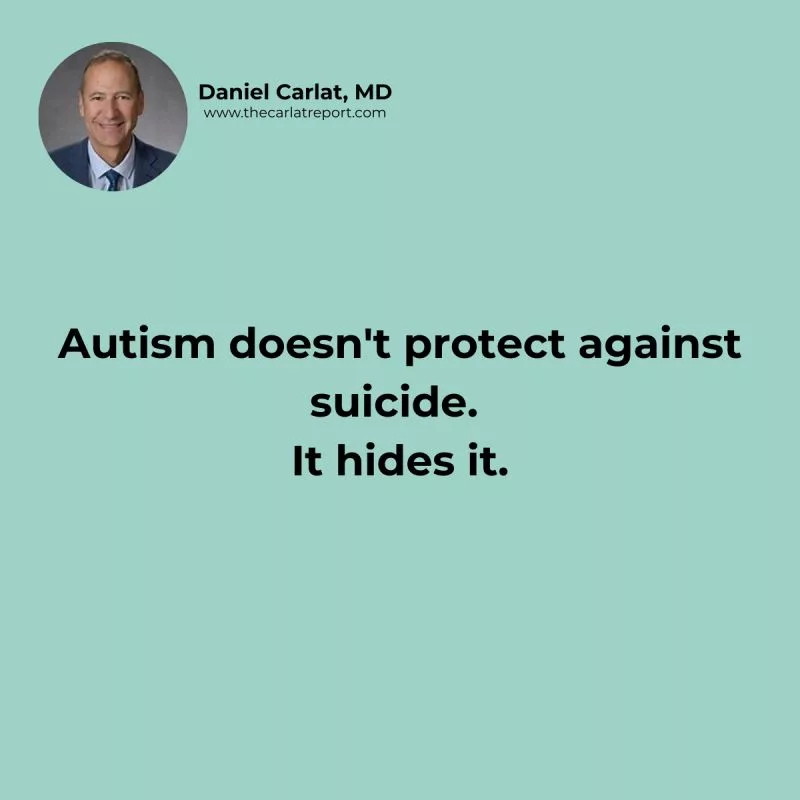


Autistic youth are five times more likely to attempt suicide than their neurotypical peers. As an adult psychiatrist, I had no idea.
But I've been reviewing our latest Child Psychiatry Report, and the suicide data on autistic youth is not what I expected.
The dangerous assumption — held by families and clinicians alike — is that autism offers some protection.
Concrete thinking. High parental supervision. Less existential rumination.
The evidence says the opposite.
▸ Nearly 1 in 4 autistic youth report suicidal thoughts — more than double the general population rate
▸ They are 5x more likely to attempt suicide
▸ Completed suicide is 4x more common in autistic youth ages 10–19
Fewer than half of clinicians routinely screen for it.
The signs don't look the way you'd expect. Autistic youth often won't say "I want to die." Instead watch for:
▸ Loss of interest in a special interest or routine
▸ Increased shutdowns or emotional outbursts
▸ Unusually rigid or catastrophic thinking
▸ Sudden changes in sleep, eating, or hygiene
Standard screening tools need adaptation. Use concrete language. Explain terms like "hopeless" — don't assume they land. Offer yes/no formats. Allow extra time. Get collateral from parents and teachers, because many autistic youth won't verbalize distress directly.
The truth? The belief that developmental differences reduce suicide risk may be one of the more dangerous myths in child psychiatry.
The full clinical guide — screening adaptations, safety planning, medication considerations — is free to read on our site: https://lnkd.in/eEFSi4PC
Do you routinely screen autistic youth for suicide risk, and have you found standard tools adequate?
Share this post with a colleague who works with children or adolescents.
Follow Daniel Carlat for more evidence-based psychiatry updates.