RSS
RSS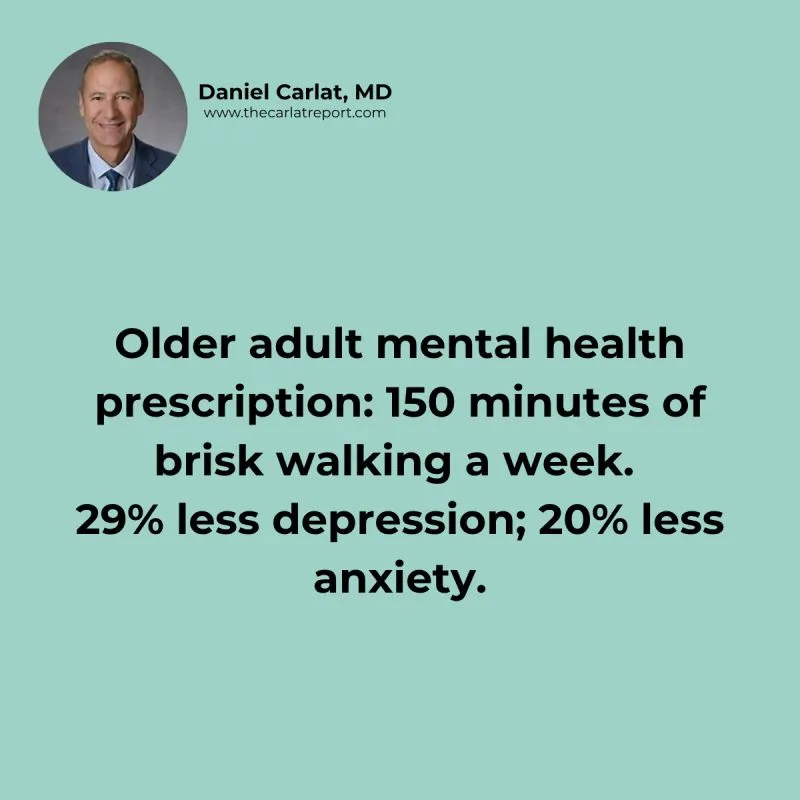


We tell patients to exercise. We're usually vague about the dose.
A 2025 UK Biobank study put real numbers on it — using accelerometers, not self-report.
Yu K et al, Am J Geriatr Psychiatry 2025;33(5):512–523
71,556 adults. Mean age 62. No depression or anxiety at baseline. Followed a median of 8 years.
How the study worked:
▸ Moderate-to-vigorous physical activity (MVPA) was tracked by wrist accelerometer
▸ Participants were grouped by weekly MVPA minutes
▸ Sedentary time was measured separately as daily inactive hours
What 150–300 min/week of MVPA was associated with (vs <75 min/week):
▸ 29% lower risk of depression
↳ risk plateaued around 150 minutes
▸ 20% lower risk of anxiety
↳ kept improving past 300 minutes
▸ Biggest gains came from moving out of the very-low group
↳ "some is much better than none"
Light activity helped too — but less, and mostly for depression.
Sedentary time mattered on its own:
▸ >10.6 hours/day of sitting
→ 19% higher depression risk
▸ No clear effect on anxiety
▸ Findings held across age, sex, and BMI
The truth?
We can stop being vague. Aim for 150 minutes/week of MVPA — brisk walking 30 minutes most days works. And ask patients not just "Do you exercise?" but "How many hours a day are you sitting?"
Good advice for patients. Good advice for us.
Follow Daniel Carlat for more evidence-based psychiatry updates.