RSS
RSS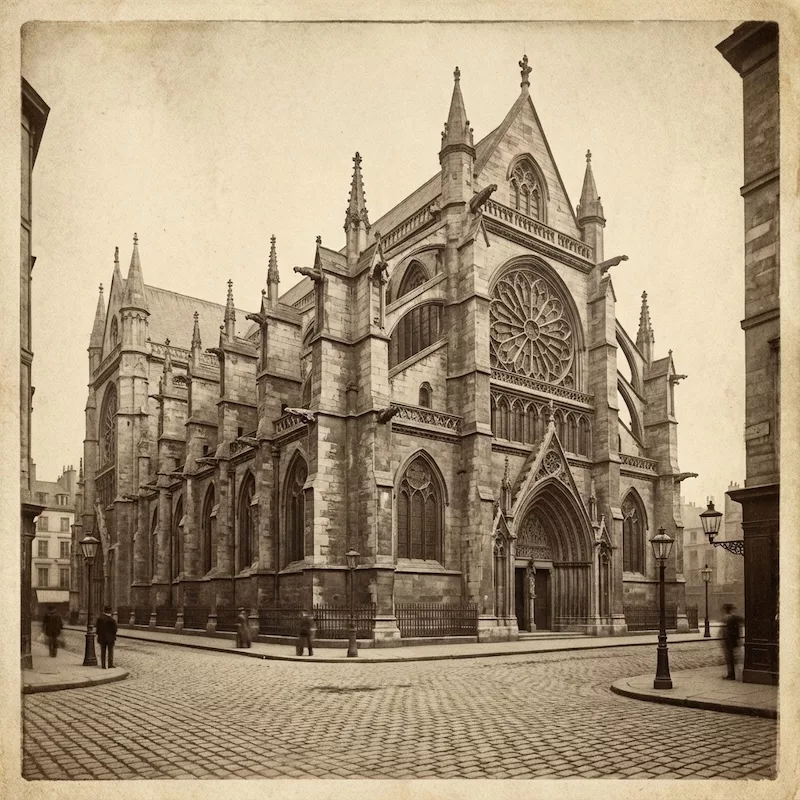
_-The-Breakthrough-Antipsychotic-That-Could-Change-Everything.webp?t=1729528747 "KarXT (Cobenfy)_ The Breakthrough Antipsychotic That Could Change Everything.jpg")
How a tip from Carl Jung inspired Alcoholics Anonymous and the 12-step recovery movement.
Publication Date: 12/29/2025
Duration: 08 minutes, 55 seconds
Transcript:
KELLIE NEWSOME: Do you need to believe in a higher power to benefit from a 12-step program? We trace this idea back to Carl Jung and find new research that gives solace to those with a more secular worldview. Welcome to the Carlat Psychiatry Podcast, keeping psychiatry honest since 2003.
CHRIS AIKEN: I’m Chris Aiken, the editor-in-chief of The Carlat Report.
KELLIE NEWSOME: And I’m Kellie Newsome, a psychiatric NP and a dedicated reader of every issue. Last week, we rode on some fanciful waves, as we looked at the psychotic-like symptoms and religious conflicts that brought Carl Jung to believe in a collective unconscious that connects us all. Freud couldn’t stomach the idea, and it seems a bit far-fetched for our DSM world, but here’s how Jung used it in practice. He believed these universal archetypes rose up to guide us through the stresses that humans have faced for millennia. It’s a collective guide for universal struggles, things like danger, mating, war, birth and death, family conflict, and social disruption. I suspect Jung would have been fascinated by the QAnon Shaman, who marched into the capital riot with tattoos of Nordic Gods, horns, and a bearskin headdress. So when a patient came to Jung with one of those universal stresses, Jung would help them uncover the archetypal material that was waiting just beneath the surface, ready to guide them across the chasm. That’s what Jung did when Roland Hazard came seeking help for his alcoholism in the late 1920s, lighting a spark that has become a standard part of practice today.
CHRIS AIKEN: Roland Hazard was born into a prominent Rhode Island family, whose various branches had played key roles in the American Revolution, the abolition of slavery, women’s rights, and workers' rights. Roland founded an industrial chemical company, but his personal life fell apart after repeated relapses into alcoholism that he could not control with medical intervention or moral conviction. As a last resort, Roland came to Jung for analysis, but the Swiss doctor warned him that psychoanalysis was not likely to cure his addiction. Instead, Jung told him the only hope was to find a life-changing "vital spiritual experience," to swap chemical spirits for real spirits.
KELLIE NEWSOME: Roland took his advice and joined an evangelical Christian movement – the Oxford Group – that had recently set up headquarters at Manhattan’s Calvary Church (the Gothic church is still active in the Gramercy Park neighborhood). The group based its principles on four moral absolutes: absolute honesty, absolute purity, absolute unselfishness, and absolute love. The church set up a residential house for recovering alcoholics, and people like Roland found recovery through the combination of peer support and strict moral absolutism. In 1934, Roland’s friends in the mission reached out to Bill Wilson, another New England businessman who was unable to stop drinking. Wilson was in the hospital with delirium tremens. Led by his friends, he cried out, "I'll do anything! Anything at all! If there be a God, let Him show Himself!" He then had the sensation of a bright light, a feeling of ecstasy, and a new serenity. He joined the Oxford Group, where Roland Hazard introduced him to Carl Jung. The Swiss analyst advised Wilson that "craving for alcohol is the equivalent, on a low level, of the spiritual thirst… for wholeness."
BILL WILSON AUDIO: The room lit up in an intense white light, and I was caught up in an ecstasy that words cannot describe, in my mind’s eye, it were if I were on a mountaintop and a wind, not of air, but a spirit flowed through my body, and it burst upon me that I was a free man. The obsession to drink left me, that obsession that absolutely pervaded my total being, left me.
KELLIE NEWSOME: Let’s pause for a preview of the CME quiz for this episode. Earn CME for each episode through the link in the show notes.
KELLIE NEWSOME: Roland took his advice and joined an evangelical Christian movement – the Oxford Group – that had recently set up headquarters at Manhattan’s Calvary Church (the Gothic church is still active in the Gramercy Park neighborhood). The group based its principles on four moral absolutes: absolute honesty, absolute purity, absolute unselfishness, and absolute love. The church set up a residential house for recovering alcoholics, and people like Roland found recovery through the combination of peer support and strict moral absolutism. In 1934, Roland’s friends in the mission reached out to Bill Wilson, another New England businessman who was unable to stop drinking. Wilson was in the hospital with delirium tremens. Led by his friends, he cried out, "I'll do anything! Anything at all! If there be a God, let Him show Himself!" He then had the sensation of a bright light, a feeling of ecstasy, and a new serenity. He joined the Oxford Group, where Roland Hazard introduced him to Carl Jung. The Swiss analyst advised Wilson that "craving for alcohol is the equivalent, on a low level, of the spiritual thirst… for wholeness."
BILL WILSON AUDIO: The room lit up in an intense white light, and I was caught up in an ecstasy that words cannot describe, in my mind’s eye, it were if I were on a mountaintop and a wind, not of air, but a spirit flowed through my body, and it burst upon me that I was a free man. The obsession to drink left me, that obsession that absolutely pervaded my total being, left me.
KELLIE NEWSOME: Let’s pause for a preview of the CME quiz for this episode. Earn CME for each episode through the link in the show notes.
1. TRUE or FALSE: A 2020 Cochrane meta-analysis concluded that 12-step programs are more effective at promoting abstinence than CBT.
CHRIS AIKEN: Bill Wilson credited Carl Jung with the idea behind the first two steps of AA: Admitting you are powerless to alcohol and surrendering to a higher, spiritual power. Most of the other steps were borrowed from the evangelical Oxford Group: taking a moral inventory, confessing to past misdeeds, making amends, and helping others.
BILL WILSON AUIDIO: What was that little neat formula you had that you got from the Oxford people that got you sober? He said, Simple. He said, You get honest, you talk over with somebody else, you make up for the harm you’ve done, help other people, you ask God for help, whatever God you come up with.
CHRIS AIKEN: Wilson may have been a wounded healer, but he was not a health care professional, and the medical community viewed his 12-step program as an amateur venture, at best unscientific and at worst a cult. Gradually, that changed, and by the 1990s, the 12 steps earned mainstream endorsements from practice guidelines. In 2020, the latest Cochrane review concluded that 12-step programs are more effective at promoting abstinence than other established treatments like CBT, including two controlled trials that compare the two forms of treatment head to head, and Young's contribution might have been partly responsible for this efficacy. Spiritual transformation mediates some of the recovery in studies of 12-step programs, but that doesn’t mean you should only refer the religiously inclined to the meetings. Patients have similar outcomes regardless of their religious backgrounds.
BILL WILSON AUDIO: One is that there is a spiritual quality about it, but this requires no theology or religious belief in the ordinary intent. That the group can be a higher power, then his release and his freedom know, no doubt.
KELLIE NEWSOME: And if your patient recoils at any talk of a higher power, they may find solace in this 2007 study, which followed over 3,000 patients with substance use disorders over two years. On the surface, it looked like spirituality helped them stay in recovery. But on a closer look, spirituality was just a proxy for a secular concept that better explained the pattern: Acceptance based responding. It’s the ability to accept your internal experiences – all those symptoms, cravings, thoughts – while keeping your focus – and directing your actions - toward higher values and goals.
CHRIS AIKEN: But that study would not have been possible without the work of two other wounded healers – Steve Hayes and Marsha Linehan – who brought us Acceptance and Commitment Therapy and Dialectical Behavioral Therapy. Next week, we’ll look at the personal struggles that drove their revelations.
KELLIE NEWSOME: Dr. Aiken’s new book Difficult to Treat Depression is available in print or as an audiobook on Audible.com and Amazon. You learn how to use a safer version of vitamin B6 for antipsychotic and lithium side effects, how to speed up antidepressants, and how to combine rapid-acting treatments like ketamine with psychotherapy so their effects last longer.
CHRIS AIKEN: Bill Wilson credited Carl Jung with the idea behind the first two steps of AA: Admitting you are powerless to alcohol and surrendering to a higher, spiritual power. Most of the other steps were borrowed from the evangelical Oxford Group: taking a moral inventory, confessing to past misdeeds, making amends, and helping others.
BILL WILSON AUIDIO: What was that little neat formula you had that you got from the Oxford people that got you sober? He said, Simple. He said, You get honest, you talk over with somebody else, you make up for the harm you’ve done, help other people, you ask God for help, whatever God you come up with.
CHRIS AIKEN: Wilson may have been a wounded healer, but he was not a health care professional, and the medical community viewed his 12-step program as an amateur venture, at best unscientific and at worst a cult. Gradually, that changed, and by the 1990s, the 12 steps earned mainstream endorsements from practice guidelines. In 2020, the latest Cochrane review concluded that 12-step programs are more effective at promoting abstinence than other established treatments like CBT, including two controlled trials that compare the two forms of treatment head to head, and Young's contribution might have been partly responsible for this efficacy. Spiritual transformation mediates some of the recovery in studies of 12-step programs, but that doesn’t mean you should only refer the religiously inclined to the meetings. Patients have similar outcomes regardless of their religious backgrounds.
BILL WILSON AUDIO: One is that there is a spiritual quality about it, but this requires no theology or religious belief in the ordinary intent. That the group can be a higher power, then his release and his freedom know, no doubt.
KELLIE NEWSOME: And if your patient recoils at any talk of a higher power, they may find solace in this 2007 study, which followed over 3,000 patients with substance use disorders over two years. On the surface, it looked like spirituality helped them stay in recovery. But on a closer look, spirituality was just a proxy for a secular concept that better explained the pattern: Acceptance based responding. It’s the ability to accept your internal experiences – all those symptoms, cravings, thoughts – while keeping your focus – and directing your actions - toward higher values and goals.
CHRIS AIKEN: But that study would not have been possible without the work of two other wounded healers – Steve Hayes and Marsha Linehan – who brought us Acceptance and Commitment Therapy and Dialectical Behavioral Therapy. Next week, we’ll look at the personal struggles that drove their revelations.
KELLIE NEWSOME: Dr. Aiken’s new book Difficult to Treat Depression is available in print or as an audiobook on Audible.com and Amazon. You learn how to use a safer version of vitamin B6 for antipsychotic and lithium side effects, how to speed up antidepressants, and how to combine rapid-acting treatments like ketamine with psychotherapy so their effects last longer.
You must be logged in to your individual account to take the post-test. You will have two attempts to pass and must answer at least 75% of the questions correctly to earn credit. The Carlat CME Institute is accredited by the Accreditation Council for Continuing Medical Education (ACCME) to provide continuing medical education for physicians and maintains responsibility for this program and its content. This enduring material is designated for a maximum of (.25) AMA PRA Category 1 Credit™. Physicians and psychologists should claim credit commensurate with their participation. This activity is available for CME credit for a defined period based on the date of publication, in accordance with accreditation requirements. The post-test must be completed prior to the expiration date; after that time, CME credit will no longer be available.