RSS
RSS
_-The-Breakthrough-Antipsychotic-That-Could-Change-Everything.webp?t=1729528747 "KarXT (Cobenfy)_ The Breakthrough Antipsychotic That Could Change Everything.jpg")
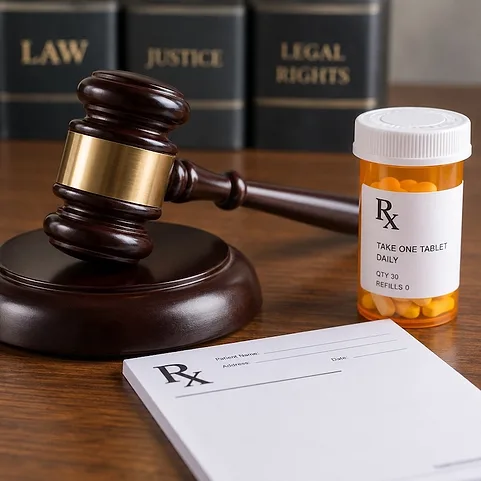
Prescribing stimulants outside of ADHD is not illegal, but what Done did sent the clinical leader to jail. We look at what went wrong and what the charges were, and end with a research update that improves access to psychiatric care the honest way.
Publication Date: 09/28/2026
Duration: 26 minutes, 34 seconds
Transcript:
CHRIS AIKEN: Prescribing stimulants outside of ADHD is not illegal, so why is the psychiatrist who ran Done Health behind bars? Welcome to the Carlat Psychiatry Podcast, keeping psychiatry honest since 2003. I’m Chris Aiken, the editor-in-chief of the Carlat Report.
KELLIE AIKEN: And I’m Kellie Aiken, a psychiatric NP and a dedicated reader of every issue. It’s the final days of the Done empire. Pharmacies are refusing their scripts. The C-suite is deleting emails and shredding documents. And federal agents are chasing Ruthia He as she tries to flee the country. Stay with us to the end, where our research update points to a more ethical way to ease access to care. Here's the CME quiz for that study:
1. In a 2026 study, how did a community clinic reduce wait times for new psychiatric appointments from 10 months to 6 weeks?
A. Triaging patients through online screening
B. Triaging patients through an interview with a social worker
C. Offering regular times for primary care consultation
D. Reserving time slots for emergencies and hospital discharges
We pick up on this story at the end of 2022. Done has given millions of Adderall pills to adults who didn’t have ADHD in childhood. The supply chain has hit a breaking point, and patients can't get stimulants at the pharmacy, whether prescribed by Done or not. But as the problems stacked up, Done stayed on the defensive. In their view, the government was to blame. People with ADHD had real problems, and most doctors cared more about protecting their own license than about helping them. It was all stigma, and Done was fighting it. Chief physician David Brody took to the blogosphere like a crusader, ranting in boldface and all caps. For Brody, medical professionals who tried to rein in ADHD diagnoses were "reprehensible." Only journalists who wrote for an unintelligent readership would dare to criticize the medical judgment of Done. He actually wrote this in his Done blogs. They are no longer online, but we dug them up through the Wayback Machine. They show how physician arrogance can cloud judgment.
CHRIS AIKEN: Like this. In one post, Brody says that amphetamine withdrawal is benign, as he lashes out at newspapers who wrote that Done was causing withdrawal problems. But when he’s attacking the government for restricting refills, he calls amphetamine withdrawal a dangerous syndrome, one that causes depression, severe stress, and would push patients to use street drugs or even to suicide. On one point, though, he never wavered: ADHD goes badly undertreated, and easing access to stimulants was the only humane fix. Our job isn't to believe in medications. It's to weigh their risks against their benefits. As William Osler put it, "Poisons and medicine are oftentimes the same substance given with different intents." In August 2022, that poison caused a death. In Los Angeles, a man with a substance use disorder started treatment at Done. A review of his controlled substance database showed a clear history of problems, but Done prescribed him Adderall anyway. His addiction worsened, and he died of an opioid and cocaine overdose.
KELLIE AIKEN: Stimulants aren’t as dangerous to combine with opioids as benzodiazepines are, but they still increase the risk of opioid overdose. They don't suppress respiration, but they can trigger more substance use in some people.
CHRIS AIKEN: On the whole, that’s true, but to be fair, there’s also evidence that stimulants reduce the risk of opioid overdose when they are carefully prescribed as part of an MAT program along with a med like Suboxone, probably because they help patients stay on Suboxone. But that wasn’t the scenario with this case at Done.
KELLIE AIKEN: As the DOJ investigation intensified, Done's CEO Ruthia He knew her time was short. In February 2023, she booked a one-way ticket to Hong Kong, but federal investigators stopped her on the way to the airport. Hoping to win public sympathy, she livestreamed the encounter on Facebook. Undeterred, the investigators seized her phone and forced her to surrender her passport. And what they found on her phone took the investigation to a new level. Hu had been funneling Done's profits into overseas bank accounts, and researching countries that don’t have extradition agreements with the US so she could flee the country without risking arrest.
CHRIS AIKEN: Back at Done, executives tried to reassure employees that the investigation was a routine audit, the kind every large practice goes through. They wanted business as usual, but that got harder by the week. Pharmacies either refused their scripts or didn’t have any stimulants to fill because of the shortage. You can imagine the chaos. Instead of writing for two refills a minute, clinicians spent unpaid hours fielding patient complaints and shuffling scripts between providers. As turnover accelerated, the Done experience was no longer frictionless, and patients started leaving. They never knew who their provider was, or whether their prescription would come through.
KELLIE AIKEN: In the C-suite, executives tried to cover their tracks: shredding documents, communicating through burner phones and disappearing-message apps. When the DOJ requested medical records, Done falsified the details with their home-grown EHR. By June 2024, the scheme collapsed. Federal agents arrested Ruthia He and David Brody. Brody made bail and stayed on house arrest, where he medicalized his troubles much as he had medicalized the work problems his patients sought stimulants for. Brody complained to the judge that the ankle monitor was impairing his sleep and his health. Ruthia He was spared the ankle bracelet. She went straight to jail, as the judge deemed her a flight risk. Two years and many days of testimony later, a judge sentenced Hu to six years in prison, and Dr. Brody to two.
CHRIS AIKEN: The main charge was conspiring to distribute controlled substances for no legitimate medical purpose, but there were two other charges are worth a closer look. The first is the corporate practice of medicine, something most states have restrictions on, and California is one of the strictest. These laws exist to stop profit-driven companies from employing clinicians, controlling their practice, and setting policies that shape their medical judgment.
KELLIE AIKEN: Wait. That sounds like what goes on in plenty of corporate medical practices. I've heard NPs complain that their CEOs pressure them to prescribe esketamine, and keep patients on it long term, because esketamine carries some of the most lucrative CPT codes around. How is that not the same thing?
CHRIS AIKEN: Most states have loopholes, or don’t put much muscle into the enforcement. One way the corporations get away with it is by creating a straw-man governance, where the company is nominally owned by a physician who lends their name to the project, but the real decisions are made by the MBAs. But as the harms to the public become more real, states are starting to crack down on those arrangements.
KELLIE AIKEN: The harms are pretty clear. After private equity takes over a hospital, falls increase 27%, central line infections rise 37%, and surgical infections double. Mortality climbs 10% in nursing homes and 13% in emergency departments. And even as these companies promise streamlined care, surveys tell us that the costs to patients goes up and the patient experience goes down after private equity takes over.
CHRIS AIKEN: California has always required strict separation between ownership and practice. That's why Kaiser Permanente operates as two companies in California: Kaiser runs the facilities and the health plans as a nonprofit. That’s the business side. On the medical side, Permanente is physician-owned and employs the clinicians. Done blurred that line, treating Dr. Brody as an employee rather than granting him a separate, clinical domain; and that was one of the violations.
KELLIE AIKEN: The second charge was Medicare and Medicaid fraud, which sounds odd for a company that didn't bill insurance. But here's the lesson: even if you don't bill insurance, the pharmacy does, and clinicians can be held liable for writing scripts that insurance ends up paying for without a legitimate medical basis. Done also got caught submitting false information to secure prior authorizations for patients. Some might see that as harmless, stretching the truth a bit to help a patient, but regulators read it as a red flag. It signals that you know the prescription isn't legitimate, and you're willing to alter the record so the patient can get it filled and will keep coming back to your practice. Now, a lot of clinicians would have a hard time proving that every stimulant they’ve written for is medically legitimate. But that’s not the problem. The problem is when they acknowledge in one part of the chart that the patient doesn’t meet full ADHD criteria, and then write that they do to gain a prior auth… that’s when sloppy practice starts to look like a conspiracy to distribute amphetamines or defraud insurance. And when it’s a government program foots the bill for that fraud, the penalties get severe.
CHRIS AIKEN: When I spoke with former clinical leadership at Done, their take went something like this: some corporate leaders bend the rules in service of a cause they believe in. They are disrupters, like when Uber ignored local taxi regulations; When Tesla bent laws that prohibit automobile makers from owning the dealerships that sell them; or when Airbnb stepped over zoning and hospitality laws to rent rooms. OK, so these aren’t kinds of causes that Martin Luther King wrote about in Letter from a Birmingham Jail, but at least it’s a cause outside of themselves. Ruthia He, however, wasn’t that type of disruptor. As her former colleagues put it, she was on another level. She might have spoke about public service, but she the only motivation behind the lies and law-breaking was her own financial gain. When a former patient accused her of profiting off addiction, she privately saw it as a compliment, writing in an internal memo that all successful companies profit off addiction, and comparing herself to her former employer, whom she admired for doing much the same: Mark Zuckerberg.
KELLIE AIKEN: Done may have used the wrong tactics, but they had a good mission: to lower the obstacles that keep people from treatment. Today’s study tried to do that the honest way, and they did: Lowering the average wait time for a new psychiatric appointment from 10 months to 6 weeks. It comes from Giuseppe Guaiana and colleagues, published in *Community Mental Health Journal. They measured a quality improvement initiative out of a Canadian community health center.
CHRIS AIKEN: Here's how they did it. Instead of booking every new referral for a full hour, they brought in a social worker to sort incoming cases by phone. If the patient had simple questions — like they needed a medication adjustment and had a clear diagnosis with no suicidality — they got a brief appointment by phone the psychiatrist and the referring physician instead of a full assessment. On average, their problems were solved in 10 minute by phone, and that freed up needed time for the other cases. More complex cases got a full visit, which lasted 60 to 90 minutes.
KELLIE AIKEN: Among the 687 referrals over seven months, only a small minority – 15% - were handled with this brief phone consultation. But that was enough to reduce the wait times from 10 months to 6 weeks. No-show rates stayed the same.
CHRIS AIKEN: That’s a striking change, but we don’t know if it will generalize to other centers. These patients had primary care back up, so it was easier to do a brief consultation. And we don’t have any quality outcomes from this work.
KELLIE AIKEN: Patients are already sensitive to rejection, and when we tell them they have to wait months to see us, they feel even more like they don’t matter. If the wait time is long in your community, try something to improve it – maybe reserving urgent spots for suicidal patients or people who just came out of the hospital or the ED. Maybe briefer visits for simple questions like they did here. But maybe not refilling industrial amphetamine scripts without ever seeing the patient – that is so… Done. Here’s what you’ll find inside the September issue of the Carlat Report. We scrutinize a newly approved antipsychotic, Bysanti; updates on GLP-1 agonists in psychiatry; and, just in time for autumn equinox, an interview with Norman Rosenthal, who discovered light therapy for seasonal affective disorder. Get $30 off your first year’s subscription with the promo code PODCAST.
We pick up on this story at the end of 2022. Done has given millions of Adderall pills to adults who didn’t have ADHD in childhood. The supply chain has hit a breaking point, and patients can't get stimulants at the pharmacy, whether prescribed by Done or not. But as the problems stacked up, Done stayed on the defensive. In their view, the government was to blame. People with ADHD had real problems, and most doctors cared more about protecting their own license than about helping them. It was all stigma, and Done was fighting it. Chief physician David Brody took to the blogosphere like a crusader, ranting in boldface and all caps. For Brody, medical professionals who tried to rein in ADHD diagnoses were "reprehensible." Only journalists who wrote for an unintelligent readership would dare to criticize the medical judgment of Done. He actually wrote this in his Done blogs. They are no longer online, but we dug them up through the Wayback Machine. They show how physician arrogance can cloud judgment.
CHRIS AIKEN: Like this. In one post, Brody says that amphetamine withdrawal is benign, as he lashes out at newspapers who wrote that Done was causing withdrawal problems. But when he’s attacking the government for restricting refills, he calls amphetamine withdrawal a dangerous syndrome, one that causes depression, severe stress, and would push patients to use street drugs or even to suicide. On one point, though, he never wavered: ADHD goes badly undertreated, and easing access to stimulants was the only humane fix. Our job isn't to believe in medications. It's to weigh their risks against their benefits. As William Osler put it, "Poisons and medicine are oftentimes the same substance given with different intents." In August 2022, that poison caused a death. In Los Angeles, a man with a substance use disorder started treatment at Done. A review of his controlled substance database showed a clear history of problems, but Done prescribed him Adderall anyway. His addiction worsened, and he died of an opioid and cocaine overdose.
KELLIE AIKEN: Stimulants aren’t as dangerous to combine with opioids as benzodiazepines are, but they still increase the risk of opioid overdose. They don't suppress respiration, but they can trigger more substance use in some people.
CHRIS AIKEN: On the whole, that’s true, but to be fair, there’s also evidence that stimulants reduce the risk of opioid overdose when they are carefully prescribed as part of an MAT program along with a med like Suboxone, probably because they help patients stay on Suboxone. But that wasn’t the scenario with this case at Done.
KELLIE AIKEN: As the DOJ investigation intensified, Done's CEO Ruthia He knew her time was short. In February 2023, she booked a one-way ticket to Hong Kong, but federal investigators stopped her on the way to the airport. Hoping to win public sympathy, she livestreamed the encounter on Facebook. Undeterred, the investigators seized her phone and forced her to surrender her passport. And what they found on her phone took the investigation to a new level. Hu had been funneling Done's profits into overseas bank accounts, and researching countries that don’t have extradition agreements with the US so she could flee the country without risking arrest.
CHRIS AIKEN: Back at Done, executives tried to reassure employees that the investigation was a routine audit, the kind every large practice goes through. They wanted business as usual, but that got harder by the week. Pharmacies either refused their scripts or didn’t have any stimulants to fill because of the shortage. You can imagine the chaos. Instead of writing for two refills a minute, clinicians spent unpaid hours fielding patient complaints and shuffling scripts between providers. As turnover accelerated, the Done experience was no longer frictionless, and patients started leaving. They never knew who their provider was, or whether their prescription would come through.
KELLIE AIKEN: In the C-suite, executives tried to cover their tracks: shredding documents, communicating through burner phones and disappearing-message apps. When the DOJ requested medical records, Done falsified the details with their home-grown EHR. By June 2024, the scheme collapsed. Federal agents arrested Ruthia He and David Brody. Brody made bail and stayed on house arrest, where he medicalized his troubles much as he had medicalized the work problems his patients sought stimulants for. Brody complained to the judge that the ankle monitor was impairing his sleep and his health. Ruthia He was spared the ankle bracelet. She went straight to jail, as the judge deemed her a flight risk. Two years and many days of testimony later, a judge sentenced Hu to six years in prison, and Dr. Brody to two.
CHRIS AIKEN: The main charge was conspiring to distribute controlled substances for no legitimate medical purpose, but there were two other charges are worth a closer look. The first is the corporate practice of medicine, something most states have restrictions on, and California is one of the strictest. These laws exist to stop profit-driven companies from employing clinicians, controlling their practice, and setting policies that shape their medical judgment.
KELLIE AIKEN: Wait. That sounds like what goes on in plenty of corporate medical practices. I've heard NPs complain that their CEOs pressure them to prescribe esketamine, and keep patients on it long term, because esketamine carries some of the most lucrative CPT codes around. How is that not the same thing?
CHRIS AIKEN: Most states have loopholes, or don’t put much muscle into the enforcement. One way the corporations get away with it is by creating a straw-man governance, where the company is nominally owned by a physician who lends their name to the project, but the real decisions are made by the MBAs. But as the harms to the public become more real, states are starting to crack down on those arrangements.
KELLIE AIKEN: The harms are pretty clear. After private equity takes over a hospital, falls increase 27%, central line infections rise 37%, and surgical infections double. Mortality climbs 10% in nursing homes and 13% in emergency departments. And even as these companies promise streamlined care, surveys tell us that the costs to patients goes up and the patient experience goes down after private equity takes over.
CHRIS AIKEN: California has always required strict separation between ownership and practice. That's why Kaiser Permanente operates as two companies in California: Kaiser runs the facilities and the health plans as a nonprofit. That’s the business side. On the medical side, Permanente is physician-owned and employs the clinicians. Done blurred that line, treating Dr. Brody as an employee rather than granting him a separate, clinical domain; and that was one of the violations.
KELLIE AIKEN: The second charge was Medicare and Medicaid fraud, which sounds odd for a company that didn't bill insurance. But here's the lesson: even if you don't bill insurance, the pharmacy does, and clinicians can be held liable for writing scripts that insurance ends up paying for without a legitimate medical basis. Done also got caught submitting false information to secure prior authorizations for patients. Some might see that as harmless, stretching the truth a bit to help a patient, but regulators read it as a red flag. It signals that you know the prescription isn't legitimate, and you're willing to alter the record so the patient can get it filled and will keep coming back to your practice. Now, a lot of clinicians would have a hard time proving that every stimulant they’ve written for is medically legitimate. But that’s not the problem. The problem is when they acknowledge in one part of the chart that the patient doesn’t meet full ADHD criteria, and then write that they do to gain a prior auth… that’s when sloppy practice starts to look like a conspiracy to distribute amphetamines or defraud insurance. And when it’s a government program foots the bill for that fraud, the penalties get severe.
CHRIS AIKEN: When I spoke with former clinical leadership at Done, their take went something like this: some corporate leaders bend the rules in service of a cause they believe in. They are disrupters, like when Uber ignored local taxi regulations; When Tesla bent laws that prohibit automobile makers from owning the dealerships that sell them; or when Airbnb stepped over zoning and hospitality laws to rent rooms. OK, so these aren’t kinds of causes that Martin Luther King wrote about in Letter from a Birmingham Jail, but at least it’s a cause outside of themselves. Ruthia He, however, wasn’t that type of disruptor. As her former colleagues put it, she was on another level. She might have spoke about public service, but she the only motivation behind the lies and law-breaking was her own financial gain. When a former patient accused her of profiting off addiction, she privately saw it as a compliment, writing in an internal memo that all successful companies profit off addiction, and comparing herself to her former employer, whom she admired for doing much the same: Mark Zuckerberg.
KELLIE AIKEN: Done may have used the wrong tactics, but they had a good mission: to lower the obstacles that keep people from treatment. Today’s study tried to do that the honest way, and they did: Lowering the average wait time for a new psychiatric appointment from 10 months to 6 weeks. It comes from Giuseppe Guaiana and colleagues, published in *Community Mental Health Journal. They measured a quality improvement initiative out of a Canadian community health center.
CHRIS AIKEN: Here's how they did it. Instead of booking every new referral for a full hour, they brought in a social worker to sort incoming cases by phone. If the patient had simple questions — like they needed a medication adjustment and had a clear diagnosis with no suicidality — they got a brief appointment by phone the psychiatrist and the referring physician instead of a full assessment. On average, their problems were solved in 10 minute by phone, and that freed up needed time for the other cases. More complex cases got a full visit, which lasted 60 to 90 minutes.
KELLIE AIKEN: Among the 687 referrals over seven months, only a small minority – 15% - were handled with this brief phone consultation. But that was enough to reduce the wait times from 10 months to 6 weeks. No-show rates stayed the same.
CHRIS AIKEN: That’s a striking change, but we don’t know if it will generalize to other centers. These patients had primary care back up, so it was easier to do a brief consultation. And we don’t have any quality outcomes from this work.
KELLIE AIKEN: Patients are already sensitive to rejection, and when we tell them they have to wait months to see us, they feel even more like they don’t matter. If the wait time is long in your community, try something to improve it – maybe reserving urgent spots for suicidal patients or people who just came out of the hospital or the ED. Maybe briefer visits for simple questions like they did here. But maybe not refilling industrial amphetamine scripts without ever seeing the patient – that is so… Done. Here’s what you’ll find inside the September issue of the Carlat Report. We scrutinize a newly approved antipsychotic, Bysanti; updates on GLP-1 agonists in psychiatry; and, just in time for autumn equinox, an interview with Norman Rosenthal, who discovered light therapy for seasonal affective disorder. Get $30 off your first year’s subscription with the promo code PODCAST.
The Carlat CME Institute is accredited by the ACCME to provide continuing medical education for physicians. Carlat CME Institute maintains responsibility for this program and its content. Carlat CME Institute designates this enduring material educational activity for a maximum of one quarter (.25) AMA PRA Category 1 CreditsTM. Physicians or psychologists should claim credit commensurate only with the extent of their participation in the activity.