• Home
  • Store
    • Total Access Subscriptions
    • Newsletter Subscriptions
    • Multimedia
    • Books
    • eBooks
    • ABPN SA Courses
    • Institutional Site Licenses
  • CME Center
  • Multimedia
    • Podcast
    • Webinars
    • Blog
  • Newsletters
    • General Psychiatry
    • Child Psychiatry
    • Addiction Treatment
    • Hospital Psychiatry
    • Geriatric Psychiatry
    • Psychotherapy and Social Work
  • Toolkit/AskCarlat AI
  • FAQs
  • Log In
  • Register
  • Welcome
  • Sign Out
  • Subscribe
Access Purchased Content
Home » Topics » General Psychiatry » Files

General Psychiatry

Inpatient Fact Sheet Progress Note Guidelines

April 3, 2024

Progress notes should be succinct and readable notes that summarize the progress your patient has made over the last 24 hours (or whatever interval your hospital requires). It is likely that your hospital has adopted an electronic health record software with templates leading to bloated daily notes with reams of excessive data. This makes the progress notes unreadable and relatively useless for efficiently tracking patient progress. All hope is not lost. In this fact sheet we recommend the tried-and-true SOAP note (Subjective, Objective, Assessment, Plan) format. Alternatively, you can use the increasingly common APSO note (Assessment, Plan, Subjective, Objective) format that places the most important parts of the note at the beginning.

Inpatient Fact Sheet Anger Management

April 3, 2024

Managing patients’ anger effectively is critical for both patient well-being and the safety of the hospital environment. This fact sheet provides tips and sample dialogues to assist your patients in identifying their anger triggers, expressing their anger constructively, and reducing aggressive behaviors.

Inpatient Fact Sheet How to Discuss Side Effects

April 3, 2024

Psychiatric medications cause plenty of side effects, and yet we tend to severely underestimate the number of side effects our patients are experiencing. According to one survey, patients on antidepressants reported 20 times more side effects than were documented by their psychiatrists (Zimmerman M et al, J Clin Psychiatry 2010;71(4):484–490). Sometimes we don’t ask about side effects because we’re not sure what to do about them—so we have created detailed fact sheets covering common side effects and suggesting management strategies. In this fact sheet we’ll give you more general tips on how to ask patients about side effects and how to manage them.

Borderline Personality Disorder Management on the Inpatient Unit

April 3, 2024

Here we provide an overview of strategies for managing borderline personality disorder (BPD) on the inpatient unit

Inpatient Fact Sheet Diff Dx Psychosis

April 3, 2024

Psychosis is common, and there are many varieties. This fact sheet guides you through the process of thinking through the main DSM-5 diagnoses that apply to psychotic disorders. For help with how to ask the right questions to discover psychosis in patients, see the How to Interview for Psychosis Fact Sheet.

Inpatient Patient Fact Sheet Common Side Effects

April 3, 2024

Psychiatric meds help a lot but can also cause side effects. Here are some key points to keep in mind:

Inpatient Fact Sheet Viral Hepatitis

April 3, 2024

Hepatitis B and C are prevalent among psychiatric inpatients, often transmitted through shared needles and sexual contact. This fact sheet serves as a concise guide on the pathophysiology, diagnosis, and treatment of these conditions, tailored for the psychiatric setting.

Inpatient Fact Sheet PTSD Diagnosis

March 25, 2024

Post-Traumatic Stress Disorder (PTSD) is a discrete DSM-5 disorder that can occur in people who have experienced or witnessed a traumatic event. Many of your patients in inpatient psychiatry have been exposed to significant trauma, such as adverse childhood experiences, domestic or sexual violence, and the hardships associated with homelessness or substance use. Determining whether these experiences result in PTSD or are manifestations of ongoing trauma impacts (sometimes referred to as "complex PTSD") is crucial for effective treatment. In this fact sheet we describe a practical approach to determining a diagnosis and to what extent your patient’s daily functioning is being significantly affected by past trauma.

Inpatient Fact Sheet The Psychiatric Review of Symptoms

March 25, 2024

The psychiatric review of symptoms (PROS) is an important though often neglected part of the initial psychiatric evaluation. This fact sheet provides a framework to help you screen for the major psychiatric disorders that your client may have. It starts with a mnemonic that will help you recall all the major categories of disorders, followed by brief reminders of the diagnostic criteria. It’s helpful to have this at your side when doing your interviews, though eventually you will memorize most of the information contained herein.

Inpatient Fact Sheet Relaxation and Deep Breathing

March 25, 2024

Relaxation and deep breathing exercises are helpful for relieving anxiety and insomnia and you should include them in your repertoire of therapeutic tools on the inpatient uni

Previous 1 2 3 4 5 6 7 8 9 10 … 29 30 Next
Try The New AskCarlat AI

Ask any clinical question—our AI responds using only the peer-reviewed, editorially vetted content from Carlat Publishing.

Available In The Carlat Toolkit
Free Psychiatry Updates
The latest unbiased psychiatric information sent to your inbox.
Specify Your Interests
Featured Book
  • CAM1e_3DCover_Spiral_sm.png

    Complementary and Alternative Medicine in Psychiatry: A Fact Book (2026) -

    Fact sheets for 67 treatments that fall outside conventional psychopharmacology.
    READ MORE
Featured Video
  • KarXT (Cobenfy)_ The Breakthrough Antipsychotic That Could Change Everything.jpg
    General Psychiatry

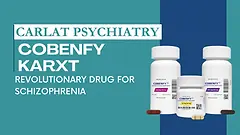
    KarXT (Cobenfy): The Breakthrough Antipsychotic That Could Change Everything

    Read More
Featured Podcast
  • Andrew-Christensen-1.jpg
    Psychology and Social Work

    Treating Couples: Integrative Behavioral Couple Therapy — Balancing Acceptance and Change Andrew Christensen, PhD

    Dr. Andrew Christensen, distinguished research professor of psychology at UCLA and co-developer of Integrative Behavioral Couple Therapy (IBCT), explains how IBCT balances...

    Listen now
Recommended
  • Join Our Writing Team

    July 18, 2024
    WriteForUs.png
  • Insights About a Rare Transmissible Form of Alzheimer's Disease

    February 9, 2024
    shutterstock_2417738561_PeopleImages.com_Yuri A.png
  • How to Fulfill the DEA's One Time, 8-Hour Training Requirement for Registered Practitioners

    May 24, 2024
    DEA_Checkbox.png

About

  • About Us
  • CME Center
  • FAQ
  • Contact Us

Shop Online

  • Newsletters
  • Multimedia Subscriptions
  • Books
  • eBooks
  • ABPN Self-Assessment Courses

Newsletters

  • The Carlat Psychiatry Report
  • The Carlat Child Psychiatry Report
  • The Carlat Addiction Treatment Report
  • The Carlat Hospital Psychiatry Report
  • The Carlat Geriatric Psychiatry Report
  • The Carlat Psychotherapy Report

Contact

carlat@thecarlatreport.com

866-348-9279

PO Box 626, Newburyport MA 01950

Follow Us

Please see our Terms and Conditions, Privacy Policy, Subscription Agreement, Use of Cookies, and Hardware/Software Requirements to view our website.

© 2026 Carlat Publishing, LLC and Affiliates, All Rights Reserved.