Patients often arrive at psychiatric hospitals under involuntary commitment orders, typically initiated by
police or psychiatric mobile response teams. Short holds (eg 72 hours) don’t get a judicial review, but if you extend the
hold, you’ll need to provide testimony to a hearing officer or judge. Here are some strategies for providing legal
testimony. Procedures vary across jurisdictions, but the overarching goal is to balance individual safety and rights with
preventing undue deprivation of liberty.
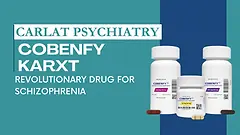
Your patients with schizophrenia won’t all be alike – some will have prominent delusions and
hallucinations while others might primarily display disorganized thinking and impaired social functioning.
Regardless of a patient’s presentation, medications help manage symptoms and improve their quality of life.
Here we provide guidance on using medications to treat patients with schizophrenia.
● Late-life depression (LLD) impacts about 2-5% of older adults (OAs) in the community (Steffens DC et
al, Arch Gen Psychiatry 2000;57(6):601-7).
● However, in medical and skilled nursing settings, it occurs in up to 25%. So, always screen patients for
it in these locations.
● The diagnosis is often missed because it’s seen as an “understandable reaction to getting-old” or it’s
misdiagnosed as anxiety.
Introduction: The MSE provides a structured way of observing and describing a patient's current mental state. Here we
review the MSE’s various components and typical descriptors.
Introduction: Postpartum depression (PPD) is surprisingly common, affecting 10%–20% of new mothers in the first year
after giving birth. Severe cases may require inpatient psychiatric hospitalization. Here we review key principles in the
diagnosis and treatment of PPD.
Introduction: When managing agitation in children and adolescents in hospital settings, you're
not just focusing on their immediate safety and that of those around them; you're also trying
to minimize the potential trauma that can occur in such high-stress environments. In this
guide, we'll walk through the core principles for handling these sensitive situations.
Introduction: The 1968 case of Tatiana Tarasoff and Prosenjit Poddar in Oakland brought significant changes to mental
health law. After their relationship ended, a distressed Poddar told his therapist he planned to kill Tarasoff. Despite the
therapist's warning to police, Tarasoff wasn't informed and was later murdered by Poddar. This led to the creation of
"Tarasoff Warnings," requiring mental health professionals in California and other states to warn or protect individuals
from their patients' threats.
Supportive therapy is a psychotherapeutic approach focused on providing emotional and practical support and
strengthening a patient's coping mechanisms. Here we share tips for how to implement supportive therapy in the
inpatient unit.
You’ll sometimes encounter STDs among patients in psychiatric units. Here we review diagnoses and treatments for the
most common STDs. Inform patients that their partners should be treated simultaneously to prevent reinfection.
Introduction: Once you see a case of postpartum psychosis, you’ll never forget it. New mothers who appear stable one
day can become severely impaired almost overnight. These mothers are in no condition to care for their newborns and,
in extreme cases, might even pose a danger to the child. Here we dive into the key points in identifying and managing
this challenging condition
Dr. Andrew Christensen, distinguished research professor of psychology at UCLA and co-developer of Integrative Behavioral Couple Therapy (IBCT), explains how IBCT balances...