RSS
RSS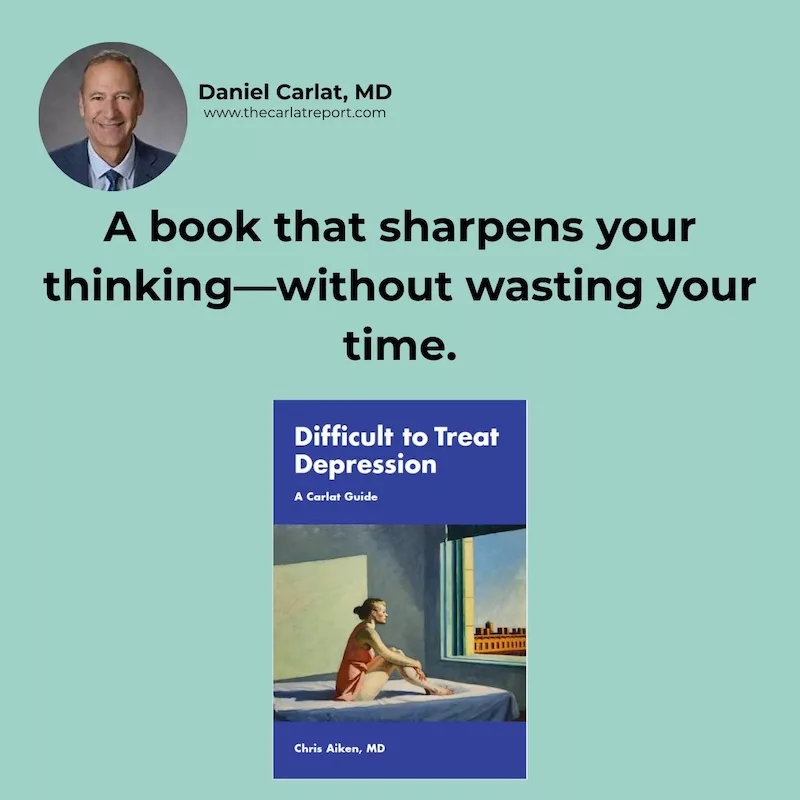


We tend to blame the meds.
But what if the real reason a patient isn’t improving… is because we’re treating the wrong thing?
In Difficult-to-Treat Depression, Chris Aiken opens Chapter 3 with a clinical punch:
“Sometimes the failure isn’t the antidepressant—it’s our own diagnostic prowess.”
That line stopped me.
Because misdiagnosis is one of the most under-discussed culprits in so-called “treatment resistance.”
And I don’t mean rare or exotic errors.
I mean:
▸ Bipolar disorder hiding under unipolar labels
▸ ADHD that’s been buried under low self-esteem
▸ Substance use that we didn’t think to ask about
▸ Trauma histories that masquerade as melancholia
▸ “Failed” meds that were actually underdosed or cut too soon
Aiken reminds us that nearly half of patients labeled “treatment-resistant” may actually have undiagnosed bipolar disorder.
And that’s just one example.
What I love about this book is how high yield it is.
It’s not your usual textbook, with pages of throat-clearing on epidemiology and reminders of basic features you already know and will probably skim.
Every page counts.
Chapter 3 on Misdiagnosis is only four pages long—and yet it’s packed with clinical pearls you’ll use in practice the same day you read it.
This is the first in a short series where I’ll be sharing reflections on key chapters from the book.
Coming up:
▸ How measurement tools can double remission rates—and why we still don’t use them
▸ What to do when antidepressants don’t work, and how to rethink your next step
▸ Underused augmentation tools, from lithium to celecoxib
▸ And why staying well might matter more than full remission
Each post will highlight one chapter—and one mirror for our work.
There’s a phrase I keep coming back to in this one:
“Depression rarely travels alone.”
And when we forget that—when we tunnel in on “fixing the meds”—we can lose sight of the real work: figuring out who this person actually is, and what their suffering is trying to tell us.
Not every difficult case is misdiagnosed, of course.
But I wonder how many times we escalate treatment… when what’s really needed is a reframe.
A slower interview.
A wider lens.
A willingness to say: Maybe I got this wrong.
What’s your process when a patient isn’t getting better?
Do you double down—or zoom out?
▸ If this post stirred something, feel free to pass it along.
▸ Follow me (Daniel Carlat, MD) for grounded reflections on psychiatry in real-world practice.