RSS
RSS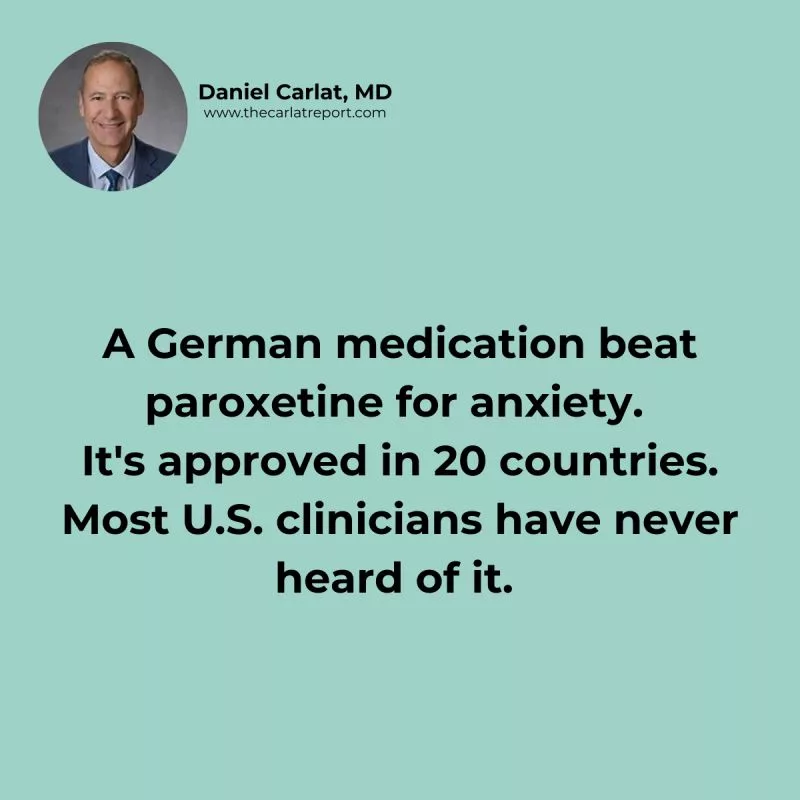
_-The-Breakthrough-Antipsychotic-That-Could-Change-Everything.webp?t=1729528747 "KarXT (Cobenfy)_ The Breakthrough Antipsychotic That Could Change Everything.jpg")
I mentioned in my last post that we're previewing some of the more surprising findings from our upcoming CAM book. This is one of them.
Silexan is a patented extract of lavender. It's been approved as a medication in 20 countries since 2009. In a head-to-head trial of 509 patients, it outperformed paroxetine for generalized anxiety disorder.
Its effect size is 0.9. Compare that to antidepressants at 0.3 and benzodiazepines at 0.5.
And it works through real pharmacology — modulating calcium signaling and glutamate release (similar to pregabalin), increasing extracellular serotonin (similar to SSRIs), and raising BDNF. No weight gain. No sedation. No sexual dysfunction. No tolerance or withdrawal.
Seven large randomized trials. Regulatory approval across Europe. So why don't most American clinicians know about it?
Because no one can patent lavender. And in the US, the financial incentives for FDA approval — application fees in the millions, trials in the billions — don't exist for natural compounds that can't be owned.
In the US, Silexan is available over the counter as CalmAid — about $13 a month. In Europe, it's a regulated medication. Same compound. Same evidence. Different regulatory category depending on which side of the Atlantic you're on.
Here's the other problem. Try telling a patient their anxiety treatment is "lavender" and watch their face.
In the book, Chris Aiken, MD suggests introducing it to patients this way. Save the word "lavender" for last:
→ "There's a German medication called Silexan that works through serotonin and glutamate — with stronger anti-anxiety effects than most American medications."
→ "It's well tolerated. The most common side effect is lavender-flavored burps — because the medication was derived from the lavender plant."
By the time you say "lavender," the patient has already heard the pharmacology. The name becomes a curiosity, not a credibility problem.
We don't call bupropion an herbal treatment. It came from the African khat plant. Valproate was synthesized from valerian.
The name shouldn't determine the credibility. The data should.
One more preview coming soon — a cheat sheet of CAM options for the conditions that are hardest to treat with medications alone.
Have you tried Silexan with patients? What was their reaction when you told them it was derived from lavender?
If you know a colleague still searching for a benzo alternative, this one's worth sharing.
Follow Daniel Carlat for more evidence-based psychiatry updates.