RSS
RSS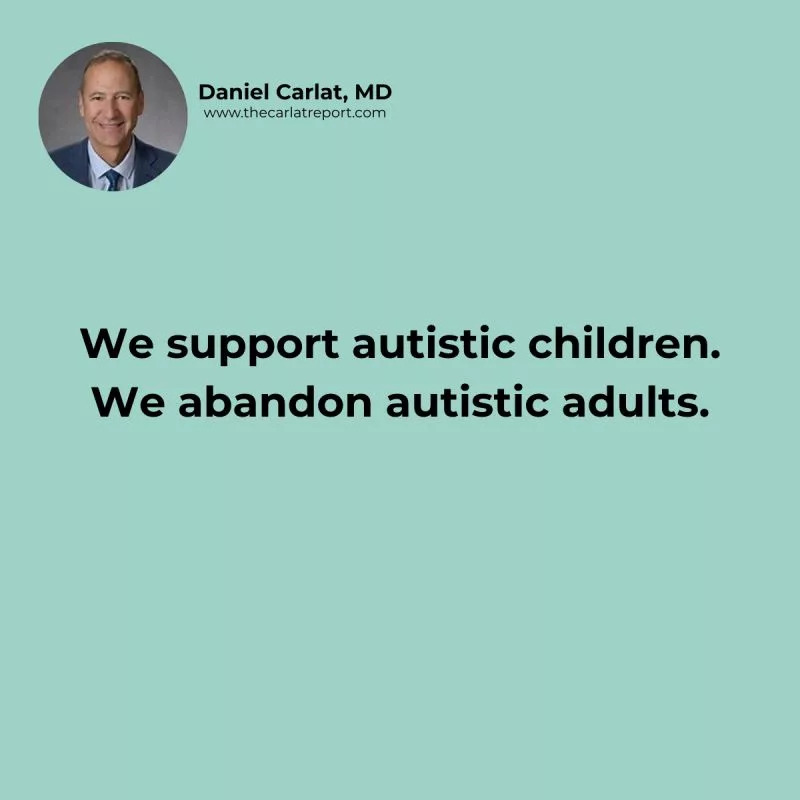


My last post was about suicide risk in autistic youth. But there's a follow-up question that keeps nagging me.
What are we asking them to live for?
We pour resources into autistic children. Schools provide speech therapy, occupational therapy, mental health support, academic accommodations — all under one roof.
Then they turn 18. And most of it disappears.
Adult services are fragmented, with separate eligibility criteria and waiting lists. In some states, you can't even bill for autism treatment alone. The one-stop shop becomes a maze with no map.
The outcomes reflect this.
▸ 85% of autistic adults are unemployed or underemployed
▸ Only 30% pursue any postsecondary education
▸ Only 30% drive — compared to 80–90% of neurotypical adults
▸ 5–15% live independently outside a family home or group residenceThese aren't destiny. They're the result of a system that stops trying at 18.
The most modifiable factor? Executive functioning. Time management, goal-setting, breaking tasks into steps. Many autistic youth also have ADHD — compounding the challenge. And these skills predict nearly every adult outcome: employment, education, mental health.
They can be taught. Starting in middle school.
In our latest Child Psychiatry Report, Mary Baker-Ericzen, MA, PhD — research professor at San Diego State and clinical psychologist at the Intricate Mind Institute — makes the case that clinicians should be asking a different question at every visit: is this patient building the skills they'll need when the system stops showing up for them?
The full interview is behind a paywall, but a subscription to the Carlat Child Psychiatry Report is worth it. https://lnkd.in/eHRMtD97
How early do you start having transition conversations with autistic patients and their families?
Share this with a colleague who works with adolescents or young adults.
Follow Daniel Carlat for more evidence-based psychiatry updates.