RSS
RSS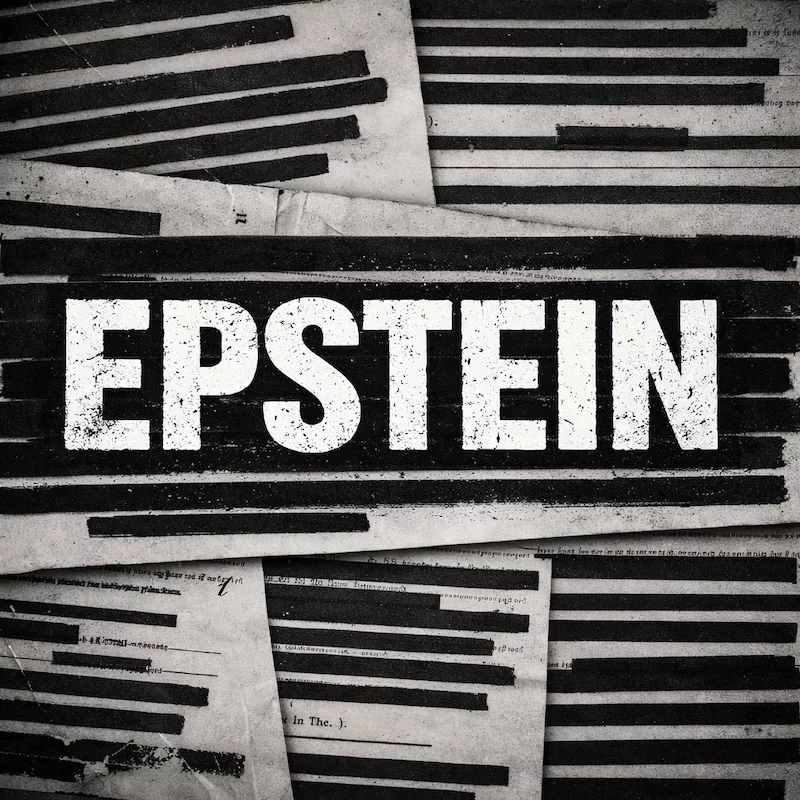
_-The-Breakthrough-Antipsychotic-That-Could-Change-Everything.webp?t=1729528747 "KarXT (Cobenfy)_ The Breakthrough Antipsychotic That Could Change Everything.jpg")
Narcissism, antisocial, pedophilia… We examine the diagnoses people invoke to explain Jeffrey Epstein and determine if any fit.
Publication Date: 03/09/2026
Duration: 15 minutes, 29 seconds
Transcript:
CHRIS AIKEN: We’ve been digging through the Epstein files, and today we’ll bring you updates that shed light on his psychiatric diagnosis.
KELLIE NEWSOME: Welcome to The Carlat Psychiatry Podcast, keeping psychiatry honest since 2003.
CHRIS AIKEN: I’m Chris Aiken, the editor-in-chief of The Carlat Psychiatry Report.
KELLIE NEWSOME: And I’m Kellie Newsome, a psychiatric NP and a dedicated reader of every issue.
CHRIS AIKEN: Jeffrey Epstein’s crimes are upending power structures in politics, business, law, and academia. They also impact us in psychiatry in at least three ways. First, there’s the victims, whose plight is a reminder of how survivors of sexual trauma are often dismissed, ignored, or blamed for the abuse. Then there’s Epstein, who we’re gonna put on the couch today and try to see if psychiatry has anything to offer about what drove him. Finally, there’s the public reaction in a world divided over conspiracy theories. This is one that brings everyone together. Well, almost everyone. Reasonable people believe claims about Epstein that are usually the kind of things reserved for conspiracy theorists: that he was an international spy, that he built his fortune on blackmail, or that he ran an international sex trafficking operation as opposed to a more limited ring of abuse for himself and a few friends, or that his suicide was a murder. There is evidence for each of those positions and for their opposites. The story is so bewildering that I started to question my own reality as I researched it for this podcast, and it keeps unfolding. We’re gonna bring some new revelations in this series. We’re also gonna try to stick to the facts. Along the way, you’ll learn something about psychiatric disorders that Epstein might have had, and we’ll end each episode with a clinical research update. Today, an update on the mental health of Generation X. I’m a bit hesitant to do this podcast. Epstein is controversial, but I’m gonna stay away from politics and conspiracies in this psychiatric take. And as we try to explain his behavior, some may think we are making excuses for his offenses. You be the judge of that.
STEVE BANNON: Okay, how did a guy like you get on the board of Rock A Blue Blood? Internationally known. Internationally known hard research, Nobel Prize winners all over the place. How do they pick a guy like you, a trader from, or basically some guy from Bear Stearns?
JEFFREY EPSTEIN: So he said to me, would you like to be on the Trilateral Commission? I was 30 years old, 32 years old. And he said, well, you have to fill out this application so they have your bio. And I looked at the list of people, and it was Bill Clinton, former president of the United States. Paul Volcker, every great leader in America, the Asians, the Japanese, and with a very long description of their history. And they asked me to fill in what I would like to have written. And I wrote, Jeffrey Epstein, just a good kid.
KELLIE NEWSOME: Jeffrey Epstein grew up in a working-class Jewish family in Coney Island, near Brooklyn. He was a bright student, called “sweet and generous… just an average boy, very smart in math, slightly overweight, freckles, always smiling” by his classmates. He played bassoon and earned a scholarship at 14 to the prestigious Interlochen Arts Camp, where a fellow camper described him as “an introvert, very smart, with an off-beat, goofy sense of humor, and a knack for quietly skirting or just barely complying with the rules. He had a big vocabulary, but did not show off. As a smart kid, he felt he was an outsider, someone who didn't really belong in our age group.” Epstein skipped two grades, graduated from high school at 16, and then enrolled in the engineering program at Cooper Union, a competitive college in Manhattan that, until 2014, granted free admission to every student. Epstein left Cooper Union to study mathematics at NYU but dropped out before finishing his undergraduate degree.
CHRIS AIKEN: There’s not a trace of antisocial features in his early years. He didn’t break rules, bully others, or lie, cheat, and charm his way through school. If anything, he had a lack of charm – friends remember Jeffrey as “quiet and nerdy.” Antisocial personality disorder usually begins with ADHD symptoms in early childhood, especially hyperactivity and impulsivity. From there, it progresses to oppositional defiant disorder, then conduct disorder around puberty, followed by substance use problems and escalating antisocial acts in adolescence. We can intervene at each of those steps to prevent the cascade. Treating ADHD or oppositional defiant disorder in the early years reduces progression to antisocial personality. Even without treatment, fewer than half of children with conduct disorder go on to have antisocial personality as adults. For many, it’s just a passing phase, a sign of trouble in their lives or a delay in their maturity. That’s why we can’t diagnose antisocial until someone turns 18. There’s too much hope that it will go away.
KELLIE NEWSOME: It’s often said that an early sign of antisocial is abusing animals in childhood, but you should take that pearl with a grain of salt. On the one hand, many antisocials did abuse animals, but so did nearly half of all children. Abusing animals may be a sign that the child themselves was abused, or it may be normal exploratory behavior, testing boundaries. If the animal abuse is persistent or continues after age 10, antisocial personality is more likely, but otherwise it’s probably a passing phase. Here are signs that childhood misbehavior might progress to antisocial personality. Conduct problems that begin before age 10 are more likely to follow this path, especially if severe and aggressive. Another strong predictor is callous and unemotional traits, because emotions are road signs that help us correct course. Lots of children misbehave, but if their emotional wiring is intact, they’ll eventually self-correct as that misbehavior causes them to feel guilt, shame, or anxiety. They learn it doesn’t work for them. Antisocials lack those responses and do not learn from their mistakes. Their affect is shallow, they lack empathy and guilt. They may report anxiety, but it is often a free-floating type that isn’t connected to actions or events. Their anxiety is more likely to lead to self-medicate than to change course.
CHRIS AIKEN: Antisocial may be described as cold-blooded, but like Kellie said, they do feel anxiety. It's just free-floating and not connected to anything. Likewise, on an interview, an antisocial may actually tell you that they feel guilty. They may be trying to pull it over on you, or they may have this free-floating sense of guilt that again, isn't connected to anything and doesn't change their behavior. Back to Jeffrey Epstein. It might be that we see the first signs of antisocial in his failure to complete college despite his intelligence and drive. He just didn’t care for the structure, the rules, or society’s expectations – he believed he could do better on his own. But this is pure conjecture. We have nothing solid on him yet. Another feature of antisocial personality is the failure to follow rules or take responsibility. Like any ambitious person, they want success, but prefer cutting corners and loafing off of others over playing by the rules and earning it themselves. They don’t just do this out of necessity. It’s a preference. They take a certain pleasure in manipulating others and getting away with fraud. With that in mind, Jeffrey’s decision to skip college and go straight into professional work may be the first sign of antisocial personality. The work he embarked on generally requires a college diploma, and Epstein faked that degree to become a math teacher at the Dalton School, an elite high school in Manhattan. The scheme worked, and from his position at the Dalton School, Epstein broke more boundaries. The Dalton School is between Central Park and Park Avenue on the Upper East Side of Manhattan, just above the Metropolitan Museum of Art. The time is September 1974, and the 21 year old, Jeffrey Epstein has just started as a math teacher. He was hired by the headmaster, Donald Barr, who just published Space Relations, a science fiction novel about a planet ruled by oligarchs who engage in child sex slavery. Earlier, Barr wrote a children’s book explaining the glories of atomic energy. It opens with a drawing of an atomic explosion and an exuberant description of the death of 92,000 Japanese civilians in Hiroshima. To illustrate the concept of mass, Barr shows a slender woman fretting over her weight on a scale. Jeffrey Epstein is two years younger than Barr’s son, Bill Barr, who at this time is working as a CIA analyst in Washington while finishing law school. Bill Barr will go on to serve as attorney general to George Bush Sr., and Donald Trump. Once in the classroom, Epstein starts to push boundaries. He delivers lectures wearing a fur coat and gold chains. He attends parties with high school girls and was rumored to date a 16-year-old student.
KELLIE NEWSOME: If the rumor is true, and if the relationship between a 16 and a 22-year-old was sexual, it would have been a crime in most states, including New York. The age of consent today is similar to what it was in 1974: 16-18, and varies by state. Some states have “Romeo and Juliet” exceptions that allow sexual activity with an age gap of 2-4 years, or at least reduce the penalties if they get caught. The name comes from Shakespeare’s ill-fated lovers, Juliet was 13 and Romeo was 3-4 years older. But Romeo and Juliet exceptions don’t apply if the older partner is in a position of authority like a coach or a teacher, like Jeffrey was, and they don’t apply at all in New York. The age of consent has changed over the past 250 years, usually rising, and sometimes falling. In early laws, it only applied to female minors, but it became gender neutral in the past 50 years. In the 1800s, the age of consent was 10 in most US states, but in the 1880s, the Women’s Christian Temperance Union pushed for laws against statutory rape, domestic violence, and child prostitution, and these reforms needed a higher age of consent. By the 1920s, they had successfully raised it to 18, but as teen sexuality grew in later decades, the age 18 limit became hard to enforce, and most states lowered it to 16 or 17. The older laws only applied to girls considered virtuous and chaste. If judges found flaws in their moral character, they would blame the girl for seducing the man. The last state to remove this chastity exception was Mississippi in 1998, but the spirit of the law lives on. In 2007, Epstein’s lawyers attempted to recast his victims as the aggressors - girls of poor character who seduced the helpless financier. Let’s pause for a preview of the CME quiz for this episode. Earn CME for each episode through the link in the show notes.
TRUE or FALSE: Treating ADHD with stimulant medication reduces criminal behavior.
KELLIE NEWSOME: It’s often said that an early sign of antisocial is abusing animals in childhood, but you should take that pearl with a grain of salt. On the one hand, many antisocials did abuse animals, but so did nearly half of all children. Abusing animals may be a sign that the child themselves was abused, or it may be normal exploratory behavior, testing boundaries. If the animal abuse is persistent or continues after age 10, antisocial personality is more likely, but otherwise it’s probably a passing phase. Here are signs that childhood misbehavior might progress to antisocial personality. Conduct problems that begin before age 10 are more likely to follow this path, especially if severe and aggressive. Another strong predictor is callous and unemotional traits, because emotions are road signs that help us correct course. Lots of children misbehave, but if their emotional wiring is intact, they’ll eventually self-correct as that misbehavior causes them to feel guilt, shame, or anxiety. They learn it doesn’t work for them. Antisocials lack those responses and do not learn from their mistakes. Their affect is shallow, they lack empathy and guilt. They may report anxiety, but it is often a free-floating type that isn’t connected to actions or events. Their anxiety is more likely to lead to self-medicate than to change course.
CHRIS AIKEN: Antisocial may be described as cold-blooded, but like Kellie said, they do feel anxiety. It's just free-floating and not connected to anything. Likewise, on an interview, an antisocial may actually tell you that they feel guilty. They may be trying to pull it over on you, or they may have this free-floating sense of guilt that again, isn't connected to anything and doesn't change their behavior. Back to Jeffrey Epstein. It might be that we see the first signs of antisocial in his failure to complete college despite his intelligence and drive. He just didn’t care for the structure, the rules, or society’s expectations – he believed he could do better on his own. But this is pure conjecture. We have nothing solid on him yet. Another feature of antisocial personality is the failure to follow rules or take responsibility. Like any ambitious person, they want success, but prefer cutting corners and loafing off of others over playing by the rules and earning it themselves. They don’t just do this out of necessity. It’s a preference. They take a certain pleasure in manipulating others and getting away with fraud. With that in mind, Jeffrey’s decision to skip college and go straight into professional work may be the first sign of antisocial personality. The work he embarked on generally requires a college diploma, and Epstein faked that degree to become a math teacher at the Dalton School, an elite high school in Manhattan. The scheme worked, and from his position at the Dalton School, Epstein broke more boundaries. The Dalton School is between Central Park and Park Avenue on the Upper East Side of Manhattan, just above the Metropolitan Museum of Art. The time is September 1974, and the 21 year old, Jeffrey Epstein has just started as a math teacher. He was hired by the headmaster, Donald Barr, who just published Space Relations, a science fiction novel about a planet ruled by oligarchs who engage in child sex slavery. Earlier, Barr wrote a children’s book explaining the glories of atomic energy. It opens with a drawing of an atomic explosion and an exuberant description of the death of 92,000 Japanese civilians in Hiroshima. To illustrate the concept of mass, Barr shows a slender woman fretting over her weight on a scale. Jeffrey Epstein is two years younger than Barr’s son, Bill Barr, who at this time is working as a CIA analyst in Washington while finishing law school. Bill Barr will go on to serve as attorney general to George Bush Sr., and Donald Trump. Once in the classroom, Epstein starts to push boundaries. He delivers lectures wearing a fur coat and gold chains. He attends parties with high school girls and was rumored to date a 16-year-old student.
KELLIE NEWSOME: If the rumor is true, and if the relationship between a 16 and a 22-year-old was sexual, it would have been a crime in most states, including New York. The age of consent today is similar to what it was in 1974: 16-18, and varies by state. Some states have “Romeo and Juliet” exceptions that allow sexual activity with an age gap of 2-4 years, or at least reduce the penalties if they get caught. The name comes from Shakespeare’s ill-fated lovers, Juliet was 13 and Romeo was 3-4 years older. But Romeo and Juliet exceptions don’t apply if the older partner is in a position of authority like a coach or a teacher, like Jeffrey was, and they don’t apply at all in New York. The age of consent has changed over the past 250 years, usually rising, and sometimes falling. In early laws, it only applied to female minors, but it became gender neutral in the past 50 years. In the 1800s, the age of consent was 10 in most US states, but in the 1880s, the Women’s Christian Temperance Union pushed for laws against statutory rape, domestic violence, and child prostitution, and these reforms needed a higher age of consent. By the 1920s, they had successfully raised it to 18, but as teen sexuality grew in later decades, the age 18 limit became hard to enforce, and most states lowered it to 16 or 17. The older laws only applied to girls considered virtuous and chaste. If judges found flaws in their moral character, they would blame the girl for seducing the man. The last state to remove this chastity exception was Mississippi in 1998, but the spirit of the law lives on. In 2007, Epstein’s lawyers attempted to recast his victims as the aggressors - girls of poor character who seduced the helpless financier. Let’s pause for a preview of the CME quiz for this episode. Earn CME for each episode through the link in the show notes.
TRUE or FALSE: Treating ADHD with stimulant medication reduces criminal behavior.
We’ll end with a research update: Historical Change in Midlife Development from a Cross-National Perspective by Frank J Infurna and colleagues. They compared survey data from 17 countries on middle-aged adults from the Silent Generation to early Generation X, in other words, those born in the 1930s to early 1970s. What they found is a rise in loneliness and depression, but only for one cohort, and only in one country: Gen Xers in the United States. This generation also reports poorer memory and weaker physical strength, but again, only in the US.
CHRIS AIKEN: It’s easy to complain about the woes of Gen X. Born between 1965 and 1980, they were the latch-key generation who came home to empty houses, with both parents working full-time jobs or families split apart by newly enacted no-fault divorce laws. But they were also surrounded by great economic wealth and relative international peace – no Vietnam, no World Wars to contend with.
KELLIE NEWSOME: But wealth has its drawbacks. The researchers point out that the US is unique among developed nations in having wide income inequality, which tends to make the rich more isolated and depressed and the poor more insecure and depressed. Media consumption, sedentary lifestyle, and processed foods are other side effects of wealth – all of them linked to depression and cognitive decline. America stands out in other ways from the other 16 developed countries in the study. People are more likely to move away from their family supports, and the government provides fewer social services to support growing families and protect the most vulnerable from slipping off the brink. Join the conversation and get daily research updates from Dr. Aiken’s Daily Psych feed. Search for ChrisAikenMD on LinkedIn, Twitter, Facebook, Bluesky, and that quaintest of social media sites, Threads.
CHRIS AIKEN: Our audio excerpt is from a 2019 interview of Steve Bannon and Jeffrey Epstein that was released by the Department of Justice.
CHRIS AIKEN: It’s easy to complain about the woes of Gen X. Born between 1965 and 1980, they were the latch-key generation who came home to empty houses, with both parents working full-time jobs or families split apart by newly enacted no-fault divorce laws. But they were also surrounded by great economic wealth and relative international peace – no Vietnam, no World Wars to contend with.
KELLIE NEWSOME: But wealth has its drawbacks. The researchers point out that the US is unique among developed nations in having wide income inequality, which tends to make the rich more isolated and depressed and the poor more insecure and depressed. Media consumption, sedentary lifestyle, and processed foods are other side effects of wealth – all of them linked to depression and cognitive decline. America stands out in other ways from the other 16 developed countries in the study. People are more likely to move away from their family supports, and the government provides fewer social services to support growing families and protect the most vulnerable from slipping off the brink. Join the conversation and get daily research updates from Dr. Aiken’s Daily Psych feed. Search for ChrisAikenMD on LinkedIn, Twitter, Facebook, Bluesky, and that quaintest of social media sites, Threads.
CHRIS AIKEN: Our audio excerpt is from a 2019 interview of Steve Bannon and Jeffrey Epstein that was released by the Department of Justice.