RSS
RSS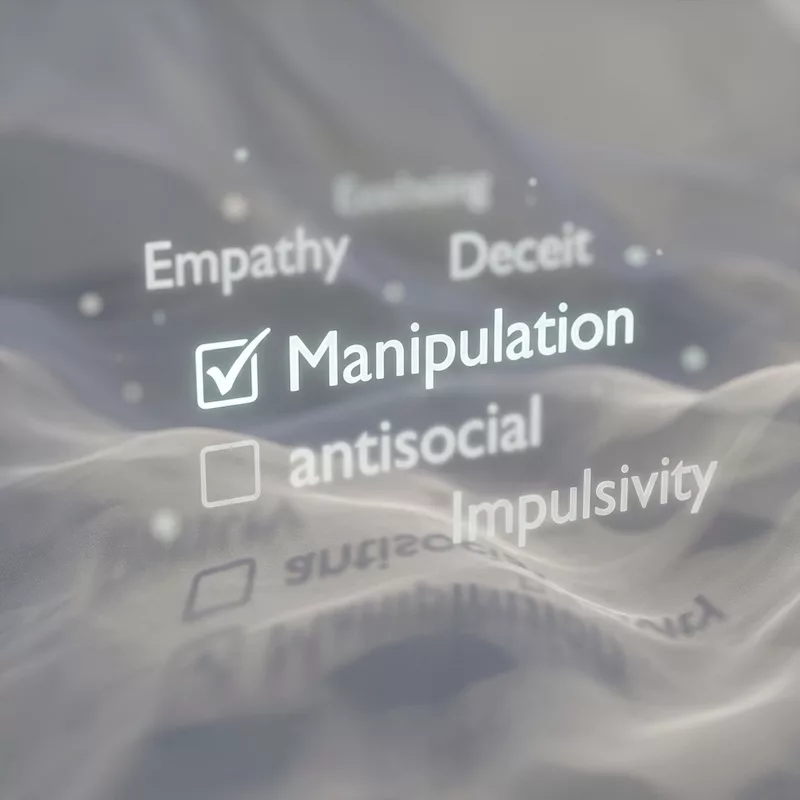
_-The-Breakthrough-Antipsychotic-That-Could-Change-Everything.webp?t=1729528747 "KarXT (Cobenfy)_ The Breakthrough Antipsychotic That Could Change Everything.jpg")
Narcissism, antisocial, pedophilia… A lot of psychiatric terms have been used to explain Jeffrey Epstein. We’ll look at what fits.
Publication Date: 03/30/2026
Duration: 12 minutes, 34 seconds
Transcript:
KELLIE NEWSOME: Jeffrey Epstein may have a psychiatric disorder. But not the one he often is accused of having. Welcome to The Carlat Psychiatry Podcast, keeping psychiatry honest since 2003.
CHRIS AIKEN: I'm Chris Aiken, the editor-in-chief of The Carlat Psychiatry Report.
KELLIE NEWSOME: And I’m Kellie Newsome, a psychiatric NP and a dedicated reader of every issue. Last week, we reviewed a postmortem analysis of Jeffrey Epstein’s personality by forensic psychologists, who used the Hare Psychopathy Checklist to assess antisocial traits. The average adult scores 4 on this 40-point scale. Prisoners and sex offenders score around 22. Epstein scored 29, just under the 30-point cutoff for clinical sociopathy, but the breakdown of his score is more revealing. The Psychopathy Checklist has two factors. Factor 1 captures the core features of a skillful antisocial: charm, manipulation, pathological lying, lack of remorse, shallow emotions, and lack of empathy. Epstein scored a perfect 16 out of 16 there. Factor 2 captures behavioral problems: impulsivity, criminal history, parasitic lifestyle, poor self-control. These are not the hallmarks of a “successful antisocial”, and it is here that Epstein lost points. He was calculating. Patient. Strategic. He wasn't getting arrested for bar fights. He was cultivating relationships and managing his image. Here’s a preview of the CME quiz for this episode – earn CME through the link in the show notes.
CHRIS AIKEN: I'm Chris Aiken, the editor-in-chief of The Carlat Psychiatry Report.
KELLIE NEWSOME: And I’m Kellie Newsome, a psychiatric NP and a dedicated reader of every issue. Last week, we reviewed a postmortem analysis of Jeffrey Epstein’s personality by forensic psychologists, who used the Hare Psychopathy Checklist to assess antisocial traits. The average adult scores 4 on this 40-point scale. Prisoners and sex offenders score around 22. Epstein scored 29, just under the 30-point cutoff for clinical sociopathy, but the breakdown of his score is more revealing. The Psychopathy Checklist has two factors. Factor 1 captures the core features of a skillful antisocial: charm, manipulation, pathological lying, lack of remorse, shallow emotions, and lack of empathy. Epstein scored a perfect 16 out of 16 there. Factor 2 captures behavioral problems: impulsivity, criminal history, parasitic lifestyle, poor self-control. These are not the hallmarks of a “successful antisocial”, and it is here that Epstein lost points. He was calculating. Patient. Strategic. He wasn't getting arrested for bar fights. He was cultivating relationships and managing his image. Here’s a preview of the CME quiz for this episode – earn CME through the link in the show notes.
1. In DSM-5, Pedophilic Disorder is defined by sexual attraction to those under what age?
CHRIS AIKEN: So far, we've aimed the psychiatric spotlight on Jeffrey Epstein, but what about Ghislaine Maxwell? Some of the victims placed the blame more on her, and we found no evidence of sexual assault of minors until she teamed up with him in the 1990s. Maxwell groomed the victims and sometimes participated in the abuse. It seems likely that both Epstein and Gmax, as he called her, had dark triad traits. They learned from each other, normalized each other, and got a twisted kind of satisfaction out of the abuse. That sadistic satisfaction is a core antisocial trait. DSM-5 alludes to it in the criteria, as “exploitation is a primary means of relating to others”. But like a lot of things in DSM-5, it's easy to misunderstand. It might seem that the antisocial is overly calculating, manipulating others just to achieve their own goals. No. They manipulate for the sake of manipulating. Here's an example. Now I don't have antisocial personality, so if I win a board game, honestly, I'm happy. I'm thrilled. If I cheated to get there, though, I'm not so happy. I feel guilty, and I feel like I didn't earn it, but for an antisocial, this is flipped. If they win by playing fair, they are not as happy. They'll cheat when they don't have to, lie for no discernible reason, manipulate others just for the fun of it. For them, it's not enough to beat people fair and square. The real joy is in pulling the wool over their eyes.
KELLIE NEWSOME: And the feeling of power that comes from lying and manipulating. That makes me wonder about the other part of Epstein’s diagnosis, the sexual aspect. Was he a pedophile, or do his antisocial traits alone explain the abuse? Let me put that another way. Did he break the law because he had a strong desire for young girls, like a pedophile? Or did he target young girls because he got pleasure out of breaking the law, as an antisocial does.
CHRIS AIKEN: You could argue that one both ways. And DSM acknowledges that pedophilia, as a pedophilic disorder, is not the only reason people abuse children sexually. In other words, not all child abusers are pedophiles, and not all pedophiles act on their urges. Most people with pedophilia feel guilty and ashamed of their urges and do not act on them. Of course, when someone with pedophilic disorder also has antisocial traits, it raises the risk that they're going to act on those urges.
JEFFREY EPSTEIN: If, if, to some extent science doesn't describe romance. I don't know why I'm attracted to somebody. People are attracted to each other, and everyone has the same feeling. They've seen someone walk in the room, and they say, oh, that person gives me a creepy feeling. Science doesn't describe what creepy feelings means. They just know it's a creepy feeling. I think women have an intuitive sense. What is intuitive? They have intuition, they have feelings, and they're able to deal in the realm of things that men, especially men like myself, find unexplainable.
CHRIS AIKEN: Most of what he know about pedophilia comes from people who committed offenses, and in that group, which is not representative of the whole, there are high rates of substance use disorders around 60% (mostly alcohol), high rates of narcissim, again this is the offenders, around 20% have narrsisum, another 23% have antisocial, and also high rates of among the ofenders of avoidant and obsessive compulsive personality disorders, around 25% each. That last one might seem odd since obsessive-compulsive types are seen as following a strict moral code, but obsessive-compulsive also disconnects them from their emotions, allowing them to compartmentalize what they do, and that can lead to abuse.
KELLIE NEWSOME: OK, but if we’re going to stick to the DSM, Jeffrey Epstein did not have Pedophilic Disorder. That diagnosis only applies to sexual attraction of prepubertal children, generally below age 13. Epstein’s verified victims were age 14 and up, though there are unverified reports of victims as young as 7. So maybe not official pedophilia, but there was something going on here that wasn’t just antisocial. I mean, if all you’re into is breaking the law and sexually manipulating others, there are many ways to go about it. But Epstein stuck to one type of abuse, repeatedly, 3-4 times a day! And when his recruiters brought him friends who were over 18, he sent them away, saying they were “too old for me.”
CHRIS AIKEN: That pattern looks like hebephilia, which means sexual attraction to pubertal-age children. The word comes from Hebe, the Greek goddess of youth. When the children are just over puberty, like 15 to 16, it's called ephebophilia. Neither of these terms are in the DSM, and it is not clear how common they are. For DSM pedophilia, the rate is around 3-5% percent of men and much smaller for women. But we do know this: people do not choose their sexual orientation, but they can choose whether to act on it. And most people with pedophilic urges do not act on them. If they commit an offense, the chance of doing so again is fairly low, about 10-17% over five years, and that chance is two to three times lower if they stay in treatment. Although these weren't controlled trials, I'm drawing from, so it doesn't prove that treatment works. Most states have mandatory reporting laws when we hear about child abuse, physical, sexual, and neglect in practice. Although these laws are well-intended, they can also prevent people from getting help, but not entirely. About 40% with pedophilia do seek treatment. Standard therapies include cognitive behavioral group therapy and testosterone-lowering drugs like Depo-Provera. There are also self-help groups that offer peer support along the 12-step model, like Molesters Anonymous or the online Virtuous Pedophiles.
KELLIE NEWSOME: Child sexual abuse is a major public health problem for both genders. Around 12% of men and 17% of women report some level of sexual abuse or inappropriate touch in their childhood. 9 out of 10 times, the offender was known to the victim. You’ve made it to the end of this dark series, and we’ll close out on a brighter note. This is a meta-analysis by Victor Simão and colleagues from Brazil and London titled “Effect of extra virgin olive oil on mild cognitive impairment and dementia in older adults.” They gathered five randomized trials that tested extra virgin olive oil in over 700 older adults with mild cognitive impairment or dementia for up to 6 years. All of the studies were controlled, using nuts, other oils, or Mediterranean diet as the control. But they were small, and they weren’t blinded. The bottom line: Adding 2 to 9 tablespoons a day of extra virgin olive oil improved cognitive performance, but the effect size was small, 0.3, and not clinically meaningful.
CHRIS AIKEN: How does it work? The “extra” in extra virgin olive oil means more polyphenols and more antioxidants. These ingredients are neuroprotective and anti-inflammatory. They improve vascular health, strengthen the blood-brain barrier, and clear out the amyloid plaques that are linked to Alzheimer's. Extra virgin olive oil may also help depression. It did so in two controlled trials and is featured in the Mediterranean-style diet for depression. Early on, extra virgin olive oil was used as a placebo in studies of fish oil until they discovered that it had antidepressant effects of its own. Extra virgin olive oil is often seen as a delicate oil, something that you don't cook with, but the antioxidants actually protect it from degradation at high heat; it is stable up to around 450 degrees Fahrenheit. In a study of 10 oils, extra virgin olive oil was the least likely to form dangerous polar compounds and trans fats when heated (Guillaume C. et al., Acta Scientific Nutritional Health 2.6 (2018): 02-11).
KELLIE NEWSOME: As with most supplements, the product quality varies. Consumer Labs recently tested extra virgin olive oils, and two brands stood out for their health profiles. Their top picks were California Olive Ranch, Lucini Organic, and Life Extension. The first two are available in most grocery stores, but Life Extension is sold through a supplement manufacturer, though intended for kitchen use, and this one had the highest dose of polyphenols. Get more research updates from Dr. Aiken’s Daily Psych feed. Search for ChrisAikenMD on LinkedIn, Twitter, Facebook, Bluesky, and Threads.
CHRIS AIKEN: Our audio excerpt is from a 2019 interview taken shortly before Epstein's death with Steve Bannon, and released by the Department of Justice.
CHRIS AIKEN: So far, we've aimed the psychiatric spotlight on Jeffrey Epstein, but what about Ghislaine Maxwell? Some of the victims placed the blame more on her, and we found no evidence of sexual assault of minors until she teamed up with him in the 1990s. Maxwell groomed the victims and sometimes participated in the abuse. It seems likely that both Epstein and Gmax, as he called her, had dark triad traits. They learned from each other, normalized each other, and got a twisted kind of satisfaction out of the abuse. That sadistic satisfaction is a core antisocial trait. DSM-5 alludes to it in the criteria, as “exploitation is a primary means of relating to others”. But like a lot of things in DSM-5, it's easy to misunderstand. It might seem that the antisocial is overly calculating, manipulating others just to achieve their own goals. No. They manipulate for the sake of manipulating. Here's an example. Now I don't have antisocial personality, so if I win a board game, honestly, I'm happy. I'm thrilled. If I cheated to get there, though, I'm not so happy. I feel guilty, and I feel like I didn't earn it, but for an antisocial, this is flipped. If they win by playing fair, they are not as happy. They'll cheat when they don't have to, lie for no discernible reason, manipulate others just for the fun of it. For them, it's not enough to beat people fair and square. The real joy is in pulling the wool over their eyes.
KELLIE NEWSOME: And the feeling of power that comes from lying and manipulating. That makes me wonder about the other part of Epstein’s diagnosis, the sexual aspect. Was he a pedophile, or do his antisocial traits alone explain the abuse? Let me put that another way. Did he break the law because he had a strong desire for young girls, like a pedophile? Or did he target young girls because he got pleasure out of breaking the law, as an antisocial does.
CHRIS AIKEN: You could argue that one both ways. And DSM acknowledges that pedophilia, as a pedophilic disorder, is not the only reason people abuse children sexually. In other words, not all child abusers are pedophiles, and not all pedophiles act on their urges. Most people with pedophilia feel guilty and ashamed of their urges and do not act on them. Of course, when someone with pedophilic disorder also has antisocial traits, it raises the risk that they're going to act on those urges.
JEFFREY EPSTEIN: If, if, to some extent science doesn't describe romance. I don't know why I'm attracted to somebody. People are attracted to each other, and everyone has the same feeling. They've seen someone walk in the room, and they say, oh, that person gives me a creepy feeling. Science doesn't describe what creepy feelings means. They just know it's a creepy feeling. I think women have an intuitive sense. What is intuitive? They have intuition, they have feelings, and they're able to deal in the realm of things that men, especially men like myself, find unexplainable.
CHRIS AIKEN: Most of what he know about pedophilia comes from people who committed offenses, and in that group, which is not representative of the whole, there are high rates of substance use disorders around 60% (mostly alcohol), high rates of narcissim, again this is the offenders, around 20% have narrsisum, another 23% have antisocial, and also high rates of among the ofenders of avoidant and obsessive compulsive personality disorders, around 25% each. That last one might seem odd since obsessive-compulsive types are seen as following a strict moral code, but obsessive-compulsive also disconnects them from their emotions, allowing them to compartmentalize what they do, and that can lead to abuse.
KELLIE NEWSOME: OK, but if we’re going to stick to the DSM, Jeffrey Epstein did not have Pedophilic Disorder. That diagnosis only applies to sexual attraction of prepubertal children, generally below age 13. Epstein’s verified victims were age 14 and up, though there are unverified reports of victims as young as 7. So maybe not official pedophilia, but there was something going on here that wasn’t just antisocial. I mean, if all you’re into is breaking the law and sexually manipulating others, there are many ways to go about it. But Epstein stuck to one type of abuse, repeatedly, 3-4 times a day! And when his recruiters brought him friends who were over 18, he sent them away, saying they were “too old for me.”
CHRIS AIKEN: That pattern looks like hebephilia, which means sexual attraction to pubertal-age children. The word comes from Hebe, the Greek goddess of youth. When the children are just over puberty, like 15 to 16, it's called ephebophilia. Neither of these terms are in the DSM, and it is not clear how common they are. For DSM pedophilia, the rate is around 3-5% percent of men and much smaller for women. But we do know this: people do not choose their sexual orientation, but they can choose whether to act on it. And most people with pedophilic urges do not act on them. If they commit an offense, the chance of doing so again is fairly low, about 10-17% over five years, and that chance is two to three times lower if they stay in treatment. Although these weren't controlled trials, I'm drawing from, so it doesn't prove that treatment works. Most states have mandatory reporting laws when we hear about child abuse, physical, sexual, and neglect in practice. Although these laws are well-intended, they can also prevent people from getting help, but not entirely. About 40% with pedophilia do seek treatment. Standard therapies include cognitive behavioral group therapy and testosterone-lowering drugs like Depo-Provera. There are also self-help groups that offer peer support along the 12-step model, like Molesters Anonymous or the online Virtuous Pedophiles.
KELLIE NEWSOME: Child sexual abuse is a major public health problem for both genders. Around 12% of men and 17% of women report some level of sexual abuse or inappropriate touch in their childhood. 9 out of 10 times, the offender was known to the victim. You’ve made it to the end of this dark series, and we’ll close out on a brighter note. This is a meta-analysis by Victor Simão and colleagues from Brazil and London titled “Effect of extra virgin olive oil on mild cognitive impairment and dementia in older adults.” They gathered five randomized trials that tested extra virgin olive oil in over 700 older adults with mild cognitive impairment or dementia for up to 6 years. All of the studies were controlled, using nuts, other oils, or Mediterranean diet as the control. But they were small, and they weren’t blinded. The bottom line: Adding 2 to 9 tablespoons a day of extra virgin olive oil improved cognitive performance, but the effect size was small, 0.3, and not clinically meaningful.
CHRIS AIKEN: How does it work? The “extra” in extra virgin olive oil means more polyphenols and more antioxidants. These ingredients are neuroprotective and anti-inflammatory. They improve vascular health, strengthen the blood-brain barrier, and clear out the amyloid plaques that are linked to Alzheimer's. Extra virgin olive oil may also help depression. It did so in two controlled trials and is featured in the Mediterranean-style diet for depression. Early on, extra virgin olive oil was used as a placebo in studies of fish oil until they discovered that it had antidepressant effects of its own. Extra virgin olive oil is often seen as a delicate oil, something that you don't cook with, but the antioxidants actually protect it from degradation at high heat; it is stable up to around 450 degrees Fahrenheit. In a study of 10 oils, extra virgin olive oil was the least likely to form dangerous polar compounds and trans fats when heated (Guillaume C. et al., Acta Scientific Nutritional Health 2.6 (2018): 02-11).
KELLIE NEWSOME: As with most supplements, the product quality varies. Consumer Labs recently tested extra virgin olive oils, and two brands stood out for their health profiles. Their top picks were California Olive Ranch, Lucini Organic, and Life Extension. The first two are available in most grocery stores, but Life Extension is sold through a supplement manufacturer, though intended for kitchen use, and this one had the highest dose of polyphenols. Get more research updates from Dr. Aiken’s Daily Psych feed. Search for ChrisAikenMD on LinkedIn, Twitter, Facebook, Bluesky, and Threads.
CHRIS AIKEN: Our audio excerpt is from a 2019 interview taken shortly before Epstein's death with Steve Bannon, and released by the Department of Justice.