RSS
RSS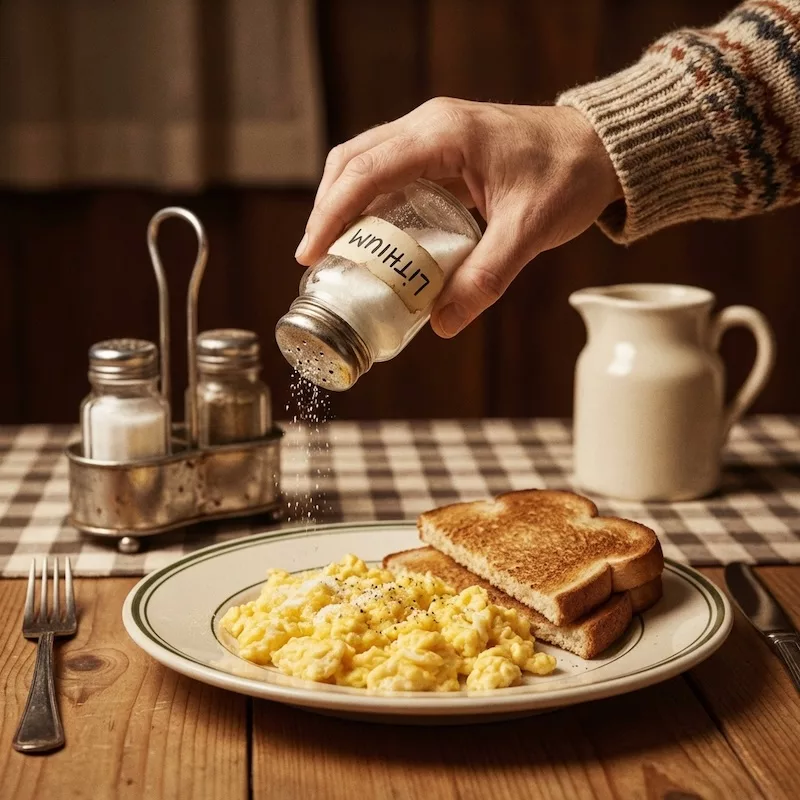
_-The-Breakthrough-Antipsychotic-That-Could-Change-Everything.webp?t=1729528747 "KarXT (Cobenfy)_ The Breakthrough Antipsychotic That Could Change Everything.jpg")
Before lithium became a cornerstone of psychiatry, it was in soda, spa water, and salt shakers. Trace lithium’s journey from Victorian health fad to life-saving mood stabilizer, and discover why the uric acid theory that launched it may be making a comeback.
Publication Date: 04/13/2026
Duration: 12 minutes, 48 seconds
Transcript:
KELLIE NEWSOME: They drank it at health spas. They put it in 7-UP. They even used it for mania and depression. Lithium was the elixir of the early 1900s — until Big Food tried to sell it as a table salt. That was one step too far. Welcome to the Carlat Psychiatry Podcast, keeping psychiatry honest since 2003.
CHRIS AIKEN: I’m Chris Aiken, the editor in chief of the Carlat Report. And I’m Kellie Newsome, a psychiatric NP and a dedicated reader of every issue. And I'm Kellie Newsome, a psychiatric NP and a dedicated reader of every issue.
KELLIE NEWSOME: Our recent episodes traced a lineage of psychiatric revolutions — from Freud to DBT, from Carl Jung to Alcoholics Anonymous. These pioneers drew from a deep well: their own struggles with depression, psychosis, and addiction. Other trailblazers were inspired by what they witnessed in family members. And that's the spark that lit the way for lithium.
CHRIS AIKEN: Lithium had a lot of false starts in medicine. But it finally caught on in the 1950s when a Danish psychiatrist named Mogens Schou began studying it for depression and bipolar disorder. Schou went to medical school with one goal: to understand mood disorders. His own brother suffered from severe, recurrent depressions — depressions that came on every spring — and eventually went into remission on lithium. But how did Dr. Schou get the idea to try lithium in the first place, fresh out of residency training? That's where the story gets tangled. There's no straight line. It winds through spas, Victorian literature, and a dangerous theory about crystals in the blood. We'll start this tale with an unlikely source: Gout. Back in the 1840s, the English physician Alfred Baring Garrod discovered that gout was caused by elevated uric acid crystals. It was a landmark moment — medicine was just beginning to move away from ancient Greco-Roman theories toward empirical science. And like a lot of exciting discoveries, physicians stretched it as far as it would go. Suddenly, uric acid wasn't just the cause of gout. This crystal, they believed, was building up everywhere — in the joints, in the blood, in the brain — causing headaches, asthma, high blood pressure, and epilepsy. And since alcoholism is one pathway to gout, and gouty patients seemed moody and irritable, the theory jumped to psychiatry. Terms like "gout brain," "gouty mania," and "gouty melancholia" entered the medical lexicon and slipped into popular culture, where “gouty” became a synonym for irritable and irrational.
KELLIE NEWSOME: You can hear it in Victorian fiction. Charles Dickens wrote of "a gouty old gentleman who cursed and swore at the servants." George Eliot tells of a gouty character so irritable "that no one dared approach him." And William Thackeray describes "the old gouty officer, peevish and out of humour with all the world."
CHRIS AIKEN: Dr. Garrod’s next discovery added to the fervor, and this is where lithium enters. He found that lithium dissolved uric acid crystals in a test tube. So, the thinking went: maybe it would dissolve them inside the body? The evidence was shaky, but the idea took off. Doctors started prescribing lithium orally for gout and for the whole constellation of disorders where uric acid was supposedly the culprit.
KELLIE NEWSOME: What? Doctors stretching a theory beyond its therapeutic reach? We would never do that today. Unless we’re using off-label anticonvulsants to target the kindling theory of bipolar mania.
CHRIS AIKEN: Or anti-inflammatories to target the inflammatory theory of depression. Sure, a few of them work, but many do not. Have you ever seen a patient come in on low-dose naltrexone, like 2-5 mg, for depression? In low doses, naltrexone has anti-inflammatory properties, and it has some promising data in inflammatory disorders like multiple sclerosis and fibromyalgia, which has led some clinicians to prescribe it for depression. Here’s a research update. The first trial of naltrexone in depression was negative, but with only 12 patients, it was too small to draw any conclusions. The second trial just came out – a randomized, placebo-controlled trial of 37 adults with depression. Again, it didn’t work – not on depression, not on secondary measures, and not even at lowering markers of inflammation.
KELLIE NEWSOME: But the inflammatory theory has produced positive results in other areas — the NSAID celecoxib, for example, has 31 randomized controlled trials in depression and several in bipolar. Enough to earn it a chapter in Dr. Aiken's new textbook, Difficult to Treat Depression. Let's pause for a preview of the CME quiz for this episode. Earn CME for each episode through the link in the show notes.
CHRIS AIKEN: I’m Chris Aiken, the editor in chief of the Carlat Report. And I’m Kellie Newsome, a psychiatric NP and a dedicated reader of every issue. And I'm Kellie Newsome, a psychiatric NP and a dedicated reader of every issue.
KELLIE NEWSOME: Our recent episodes traced a lineage of psychiatric revolutions — from Freud to DBT, from Carl Jung to Alcoholics Anonymous. These pioneers drew from a deep well: their own struggles with depression, psychosis, and addiction. Other trailblazers were inspired by what they witnessed in family members. And that's the spark that lit the way for lithium.
CHRIS AIKEN: Lithium had a lot of false starts in medicine. But it finally caught on in the 1950s when a Danish psychiatrist named Mogens Schou began studying it for depression and bipolar disorder. Schou went to medical school with one goal: to understand mood disorders. His own brother suffered from severe, recurrent depressions — depressions that came on every spring — and eventually went into remission on lithium. But how did Dr. Schou get the idea to try lithium in the first place, fresh out of residency training? That's where the story gets tangled. There's no straight line. It winds through spas, Victorian literature, and a dangerous theory about crystals in the blood. We'll start this tale with an unlikely source: Gout. Back in the 1840s, the English physician Alfred Baring Garrod discovered that gout was caused by elevated uric acid crystals. It was a landmark moment — medicine was just beginning to move away from ancient Greco-Roman theories toward empirical science. And like a lot of exciting discoveries, physicians stretched it as far as it would go. Suddenly, uric acid wasn't just the cause of gout. This crystal, they believed, was building up everywhere — in the joints, in the blood, in the brain — causing headaches, asthma, high blood pressure, and epilepsy. And since alcoholism is one pathway to gout, and gouty patients seemed moody and irritable, the theory jumped to psychiatry. Terms like "gout brain," "gouty mania," and "gouty melancholia" entered the medical lexicon and slipped into popular culture, where “gouty” became a synonym for irritable and irrational.
KELLIE NEWSOME: You can hear it in Victorian fiction. Charles Dickens wrote of "a gouty old gentleman who cursed and swore at the servants." George Eliot tells of a gouty character so irritable "that no one dared approach him." And William Thackeray describes "the old gouty officer, peevish and out of humour with all the world."
CHRIS AIKEN: Dr. Garrod’s next discovery added to the fervor, and this is where lithium enters. He found that lithium dissolved uric acid crystals in a test tube. So, the thinking went: maybe it would dissolve them inside the body? The evidence was shaky, but the idea took off. Doctors started prescribing lithium orally for gout and for the whole constellation of disorders where uric acid was supposedly the culprit.
KELLIE NEWSOME: What? Doctors stretching a theory beyond its therapeutic reach? We would never do that today. Unless we’re using off-label anticonvulsants to target the kindling theory of bipolar mania.
CHRIS AIKEN: Or anti-inflammatories to target the inflammatory theory of depression. Sure, a few of them work, but many do not. Have you ever seen a patient come in on low-dose naltrexone, like 2-5 mg, for depression? In low doses, naltrexone has anti-inflammatory properties, and it has some promising data in inflammatory disorders like multiple sclerosis and fibromyalgia, which has led some clinicians to prescribe it for depression. Here’s a research update. The first trial of naltrexone in depression was negative, but with only 12 patients, it was too small to draw any conclusions. The second trial just came out – a randomized, placebo-controlled trial of 37 adults with depression. Again, it didn’t work – not on depression, not on secondary measures, and not even at lowering markers of inflammation.
KELLIE NEWSOME: But the inflammatory theory has produced positive results in other areas — the NSAID celecoxib, for example, has 31 randomized controlled trials in depression and several in bipolar. Enough to earn it a chapter in Dr. Aiken's new textbook, Difficult to Treat Depression. Let's pause for a preview of the CME quiz for this episode. Earn CME for each episode through the link in the show notes.
What led the FDA to restrict the sale of lithium in 1949?
A. Discovery of its antimanic effects
B. Confirmation of its antigout effects
C. False advertising by the lithium industry
D. Reports of toxicity from lithium salt
CHRIS AIKEN: But even when the theory is wrong, it can still lead to treatments that work. When physicians treated gout with lithium, they noticed their patients' moods improved. By the 1880s, clinicians like Alexander Haig and the Lange brothers — Carl and Frederik — were using lithium specifically for mania and depression. They described their findings in books and medical journals. Carl Lange was a prominent neurologist, and his idea that emotions arise from neurophysiology was cited by Freud. His paper also made its way to Emil Kraepelin, the German psychiatrist who first described "manic-depression" in 1899, bringing together different types of mood disorders under one umbrella and separating it from schizophrenia. But Kraepelin rejected lithium, believing the uric acid theory it was based on was a bunch of bunk.
KELLIE NEWSOME: Kraepelin’s rejection of lithium may have also been a reaction to the faddish quackery that sprung up around it. By the early 1900s, the uric acid theory had jumped from medicine into wellness culture — and lithium came along with it. People flocked to lithium spas, hoping to dissolve the “uric acid poison” that gave them headaches, fatigue, and indigestion. Lithium beer was marketed as a healthier alternative to alcohol, and if you drank too much, you could try 7-UP, marketed as a cure for hangovers that “takes the ouch of the grouch.” 7-Up took its name from the molecular weight of lithium (7), which serves as a helpful reminder of lithium’s current FDA approval: It is approved for bipolar disorder in children and adults all the way down to age 7.
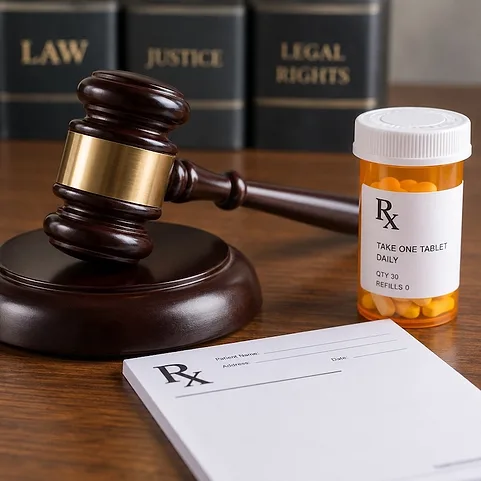
CHRIS AIKEN: This wellness craze ran for nearly 75 years, until a dash of table salt brought it down. As doctors grew concerned about high-sodium diets and hypertension, they searched for a salt substitute — and what better candidate than the celebrated health elixir, lithium? In 1948, the Foster Milburn Company in Buffalo, New York, began marketing lithium table salt. Within a year, reports of fatal toxicity were making national headlines — and landing on the cover of JAMA — as people sprinkled the salt too liberally on their food. In response, the FDA reclassified lithium as a prescription drug, ending its career in sodas, spas, and salt shakers. Eventually, Foster Milburn was brought down by lawsuits, and their former Buffalo headquarters are occupied by the Spectrum behavioral health clinic.
KELLIE NEWSOME: And here's where the story pivots. Five months after the lithium toxicity scare, a Melbourne psychiatrist named John Cade published a small case series in an obscure Australian medical journal. The title: Lithium Salts in the Treatment of Psychotic Excitement. The medical establishment had every reason to ignore it. It was based on the now discredited uric acid theory. The study was uncontrolled. And the drug itself was now considered a dangerous toxin. But the paper found its way to Mogens Schou — remember Dr. Schou? The Danish psychiatrist whose brother had suffered those crushing spring depressions — and that is where the lithium spark finally caught fire.
CHRIS AIKEN: In the decades since, researchers have uncovered a remarkable range of benefits from lithium. None have anything to do with uric acid. Lithium stabilizes circadian rhythms. It has anti-aging effects, protecting the telomeres at the ends of our DNA from degradation. It is neuroprotective, and epidemiological studies link it to a lower risk of dementia. In the 1980’s, lithium’s antiviral properties were discovered, first against herpes — and now across more than a dozen viruses, including controlled trials in COVID-19, using the same serum levels we target for mood disorders: 0.6 to 0.8. There's also preliminary data suggesting lithium may reduce the risk of stroke and cancer. And the most recent finding? While SSRIs and SNRIs are tied to bone loss — osteopenia — lithium appears to do the opposite. It seems to protect the bones as people age, in both lab and epidemiologic studies.
KELLIE NEWSOME: Lithium is no longer used for gout, as physicians realized in the late 1800’s that the amount of lithium they’d need to give someone to dissolve uric acid crystals was toxic. But the mania-gout story came back with a modern twist. Researchers at the NIMH — including Carlos Zarate and Husein Manji — have linked bipolar disorder to abnormal purine metabolism. That connection led to trials of allopurinol, an anti-gout medication, in acute mania. It worked. We now have five positive randomized controlled trials supporting allopurinol as an adjunct in mania. I've used it as a last resort in mania, and with some success — and we'll cover it next month in an article on off-label therapies for mania in the Carlat Report’s print edition. Dr. Aiken’s new book, Difficult to Treat Depression, features 15 antidotes for lithium side effects, including aspirin for sexual dysfunction, amiloride for nephrogenic diabetes insipidus. And N-acetylcysteine to prevent renal disease. It’s available in print or audio.
CHRIS AIKEN: But even when the theory is wrong, it can still lead to treatments that work. When physicians treated gout with lithium, they noticed their patients' moods improved. By the 1880s, clinicians like Alexander Haig and the Lange brothers — Carl and Frederik — were using lithium specifically for mania and depression. They described their findings in books and medical journals. Carl Lange was a prominent neurologist, and his idea that emotions arise from neurophysiology was cited by Freud. His paper also made its way to Emil Kraepelin, the German psychiatrist who first described "manic-depression" in 1899, bringing together different types of mood disorders under one umbrella and separating it from schizophrenia. But Kraepelin rejected lithium, believing the uric acid theory it was based on was a bunch of bunk.
KELLIE NEWSOME: Kraepelin’s rejection of lithium may have also been a reaction to the faddish quackery that sprung up around it. By the early 1900s, the uric acid theory had jumped from medicine into wellness culture — and lithium came along with it. People flocked to lithium spas, hoping to dissolve the “uric acid poison” that gave them headaches, fatigue, and indigestion. Lithium beer was marketed as a healthier alternative to alcohol, and if you drank too much, you could try 7-UP, marketed as a cure for hangovers that “takes the ouch of the grouch.” 7-Up took its name from the molecular weight of lithium (7), which serves as a helpful reminder of lithium’s current FDA approval: It is approved for bipolar disorder in children and adults all the way down to age 7.
CHRIS AIKEN: This wellness craze ran for nearly 75 years, until a dash of table salt brought it down. As doctors grew concerned about high-sodium diets and hypertension, they searched for a salt substitute — and what better candidate than the celebrated health elixir, lithium? In 1948, the Foster Milburn Company in Buffalo, New York, began marketing lithium table salt. Within a year, reports of fatal toxicity were making national headlines — and landing on the cover of JAMA — as people sprinkled the salt too liberally on their food. In response, the FDA reclassified lithium as a prescription drug, ending its career in sodas, spas, and salt shakers. Eventually, Foster Milburn was brought down by lawsuits, and their former Buffalo headquarters are occupied by the Spectrum behavioral health clinic.
KELLIE NEWSOME: And here's where the story pivots. Five months after the lithium toxicity scare, a Melbourne psychiatrist named John Cade published a small case series in an obscure Australian medical journal. The title: Lithium Salts in the Treatment of Psychotic Excitement. The medical establishment had every reason to ignore it. It was based on the now discredited uric acid theory. The study was uncontrolled. And the drug itself was now considered a dangerous toxin. But the paper found its way to Mogens Schou — remember Dr. Schou? The Danish psychiatrist whose brother had suffered those crushing spring depressions — and that is where the lithium spark finally caught fire.
CHRIS AIKEN: In the decades since, researchers have uncovered a remarkable range of benefits from lithium. None have anything to do with uric acid. Lithium stabilizes circadian rhythms. It has anti-aging effects, protecting the telomeres at the ends of our DNA from degradation. It is neuroprotective, and epidemiological studies link it to a lower risk of dementia. In the 1980’s, lithium’s antiviral properties were discovered, first against herpes — and now across more than a dozen viruses, including controlled trials in COVID-19, using the same serum levels we target for mood disorders: 0.6 to 0.8. There's also preliminary data suggesting lithium may reduce the risk of stroke and cancer. And the most recent finding? While SSRIs and SNRIs are tied to bone loss — osteopenia — lithium appears to do the opposite. It seems to protect the bones as people age, in both lab and epidemiologic studies.
KELLIE NEWSOME: Lithium is no longer used for gout, as physicians realized in the late 1800’s that the amount of lithium they’d need to give someone to dissolve uric acid crystals was toxic. But the mania-gout story came back with a modern twist. Researchers at the NIMH — including Carlos Zarate and Husein Manji — have linked bipolar disorder to abnormal purine metabolism. That connection led to trials of allopurinol, an anti-gout medication, in acute mania. It worked. We now have five positive randomized controlled trials supporting allopurinol as an adjunct in mania. I've used it as a last resort in mania, and with some success — and we'll cover it next month in an article on off-label therapies for mania in the Carlat Report’s print edition. Dr. Aiken’s new book, Difficult to Treat Depression, features 15 antidotes for lithium side effects, including aspirin for sexual dysfunction, amiloride for nephrogenic diabetes insipidus. And N-acetylcysteine to prevent renal disease. It’s available in print or audio.