RSS
RSS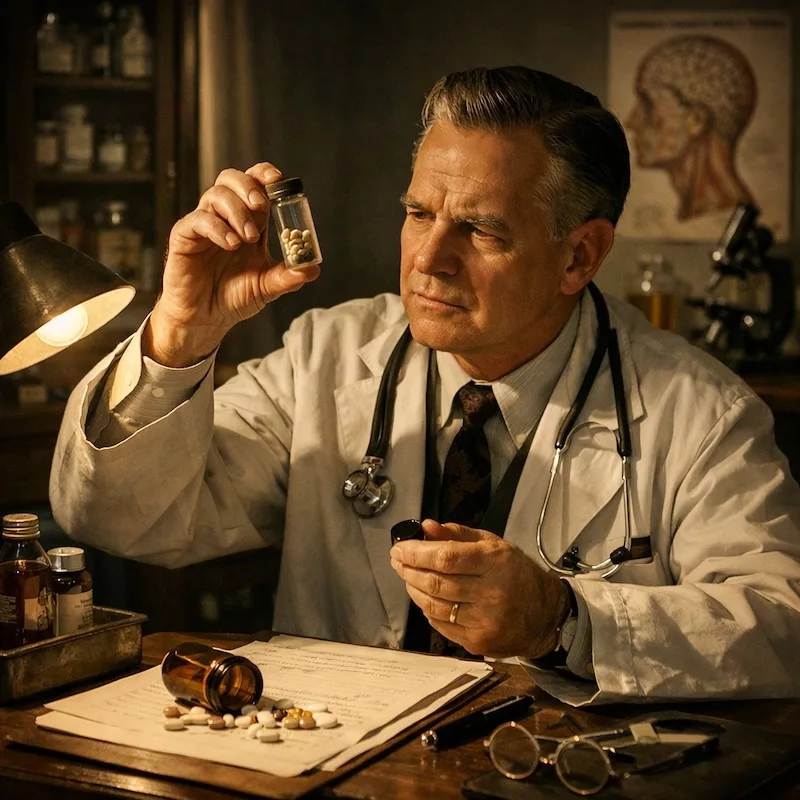
_-The-Breakthrough-Antipsychotic-That-Could-Change-Everything.webp?t=1729528747 "KarXT (Cobenfy)_ The Breakthrough Antipsychotic That Could Change Everything.jpg")
In the 1950s, a young Danish psychiatrist named Mogens Schou staked his career — and his family — on a mineral most of his colleagues dismissed as dangerous nonsense. This is the story of how lithium went from fringe curiosity to the gold standard for bipolar disorder, and the bitter scientific battle that nearly derailed it.
Publication Date: 04/20/2026
Duration: 16 minutes, 01 seconds
Transcript:
KELLIE NEWSOME: In the 1950s, Mogens Schou was fresh out of residency training. He staked his career — and his family — on a mineral most of his colleagues dismissed as dangerous nonsense. This is the story of how lithium went from a fringe wellness fad to the gold standard for bipolar disorder, and the bitter scientific battle that nearly derailed it. Welcome to the Carlat Psychiatry Podcast, keeping psychiatry honest since 2003.
CHRIS AIKEN: I'm Chris Aiken, editor in chief of the Carlat Report.
KELLIE NEWSOME: And I'm Kellie Newsome, a psychiatric NP and a dedicated reader of every issue.
CHRIS AIKEN: The year is 1951. Mogens Schou has just read a report on 10 patients whose mania resolved with lithium. The young Danish psychiatrist had enrolled in medical school, hoping to find a way to treat mood disorders — inspired, in part, by his brother's experience with recurrent depression. His father, also a prominent psychiatrist, had delivered pointed lectures dismissing lithium as a useless fad built on an erroneous theory. But his father's generation hadn't discovered anything else for mania — antipsychotics were still a few years away. Schou figured lithium was worthy of further investigation. And he knew of a new method to test it: randomization.
KELLIE NEWSOME: Three years earlier, Austin Bradford Hill had published the first randomized controlled trial — a 1948 study of streptomycin in tuberculosis. But no one had taken randomization to psychiatry, and Schou decided to change that. Using a coin flip, he randomly allocated 38 manic patients to lithium or placebo. After two weeks, lithium worked, surpassing placebo on a crude, 3-point scale of mania. And then Schou noticed something else in the data that still holds up as one of the most useful pearls in lithium therapy. Dr. Schou divided the patients into classic and atypical bipolars. The classic cases looked like textbook manic depression — pure manias, an episodic course, clear recovery between episodes. The atypical cases had mood-incongruent delusions, catatonia, and less distinct episodes. Lithium worked in 90% of the classic cases, but only 60% of the atypical ones. This observation has become one of the most replicated findings in lithium research. About one in three patients with bipolar disorder fits this classic type — and they may be bipolar I or bipolar II. But when you see it — the euphoric manias or hypomanias followed by depression — lithium is very likely to work and keep working.
CHRIS AIKEN: These classic patients tend to have onset in their teens, around 15 to 20. They have long periods of euthymia between episodes, and a pattern where depression tends to follow mania, as if following the law of what goes up must come down. The atypical patients may still respond to lithium, but are less likely to achieve full recovery. They often have an earlier onset — childhood or around puberty. They don't recover all the way between episodes, whether because of temperamental instability, continuous residual symptoms — often mixed in nature — or because of comorbidities like anxiety, OCD, eating disorders, personality disorders, or substance use. These are the patients who tell you, "I don't know what normal is."
KELLIE NEWSOME: Lithium was slow to catch on. By 1959, Schou had counted only 359 reports of patients on lithium in the medical literature. But that was about to change. The invention of the Coleman flame photometer in 1958 made it possible to measure lithium levels more accurately and easily. Lithium spread. The first reported use in the US came out of the University of Michigan in Ann Arbor in 1960, at least, the first non-bromide lithium. As he worked with it, Schou came to believe lithium was more than a symptomatic treatment. Patients who stayed on it had long recoveries. A few complained of emotional or cognitive blunting — something we still see today when the dose is too high —, but lithium didn't affect emotions the way barbiturates or stimulants did. That comparison mattered because the most popular treatment for manic-depression in the 1950s was a barbiturate-amphetamine combination pill branded as Dexamyl — dextroamphetamine paired with amobarbital. It was even called a "mood stabilizer" at the time. The amphetamine treated the depression; the amobarbital sedated the mania. Schou observed that patients felt better on this combination, but they didn't function better. They didn't have the long-term stability he was seeing with lithium. So Dr. Schou coined a new term — "mood normalizer" — to distinguish lithium, and set out to test its long-term effects in clinical trials.
CHRIS AIKEN: The landmark paper was a long time coming. In 1967, Schou and colleagues published the first long-term mirror-image study of lithium, so called because it looked at episode rates before and after starting the drug. The results were striking. Lithium reduced the frequency and duration of new episodes five to tenfold, and nearly 80% of patients had no relapses at all during treatment. But to prove it conclusively, they needed a placebo control. That came in August 1970, with a double-blind discontinuation trial published in The Lancet. At first, the editors rejected it, thinking that lithium had already garnered too much publicity, but they changed their mind at the urging of other psychiatrists.
KELLIE NEWSOME: Here's a preview of the CME quiz for this episode. Start earning CME through the link in the show notes.
CHRIS AIKEN: I'm Chris Aiken, editor in chief of the Carlat Report.
KELLIE NEWSOME: And I'm Kellie Newsome, a psychiatric NP and a dedicated reader of every issue.
CHRIS AIKEN: The year is 1951. Mogens Schou has just read a report on 10 patients whose mania resolved with lithium. The young Danish psychiatrist had enrolled in medical school, hoping to find a way to treat mood disorders — inspired, in part, by his brother's experience with recurrent depression. His father, also a prominent psychiatrist, had delivered pointed lectures dismissing lithium as a useless fad built on an erroneous theory. But his father's generation hadn't discovered anything else for mania — antipsychotics were still a few years away. Schou figured lithium was worthy of further investigation. And he knew of a new method to test it: randomization.
KELLIE NEWSOME: Three years earlier, Austin Bradford Hill had published the first randomized controlled trial — a 1948 study of streptomycin in tuberculosis. But no one had taken randomization to psychiatry, and Schou decided to change that. Using a coin flip, he randomly allocated 38 manic patients to lithium or placebo. After two weeks, lithium worked, surpassing placebo on a crude, 3-point scale of mania. And then Schou noticed something else in the data that still holds up as one of the most useful pearls in lithium therapy. Dr. Schou divided the patients into classic and atypical bipolars. The classic cases looked like textbook manic depression — pure manias, an episodic course, clear recovery between episodes. The atypical cases had mood-incongruent delusions, catatonia, and less distinct episodes. Lithium worked in 90% of the classic cases, but only 60% of the atypical ones. This observation has become one of the most replicated findings in lithium research. About one in three patients with bipolar disorder fits this classic type — and they may be bipolar I or bipolar II. But when you see it — the euphoric manias or hypomanias followed by depression — lithium is very likely to work and keep working.
CHRIS AIKEN: These classic patients tend to have onset in their teens, around 15 to 20. They have long periods of euthymia between episodes, and a pattern where depression tends to follow mania, as if following the law of what goes up must come down. The atypical patients may still respond to lithium, but are less likely to achieve full recovery. They often have an earlier onset — childhood or around puberty. They don't recover all the way between episodes, whether because of temperamental instability, continuous residual symptoms — often mixed in nature — or because of comorbidities like anxiety, OCD, eating disorders, personality disorders, or substance use. These are the patients who tell you, "I don't know what normal is."
KELLIE NEWSOME: Lithium was slow to catch on. By 1959, Schou had counted only 359 reports of patients on lithium in the medical literature. But that was about to change. The invention of the Coleman flame photometer in 1958 made it possible to measure lithium levels more accurately and easily. Lithium spread. The first reported use in the US came out of the University of Michigan in Ann Arbor in 1960, at least, the first non-bromide lithium. As he worked with it, Schou came to believe lithium was more than a symptomatic treatment. Patients who stayed on it had long recoveries. A few complained of emotional or cognitive blunting — something we still see today when the dose is too high —, but lithium didn't affect emotions the way barbiturates or stimulants did. That comparison mattered because the most popular treatment for manic-depression in the 1950s was a barbiturate-amphetamine combination pill branded as Dexamyl — dextroamphetamine paired with amobarbital. It was even called a "mood stabilizer" at the time. The amphetamine treated the depression; the amobarbital sedated the mania. Schou observed that patients felt better on this combination, but they didn't function better. They didn't have the long-term stability he was seeing with lithium. So Dr. Schou coined a new term — "mood normalizer" — to distinguish lithium, and set out to test its long-term effects in clinical trials.
CHRIS AIKEN: The landmark paper was a long time coming. In 1967, Schou and colleagues published the first long-term mirror-image study of lithium, so called because it looked at episode rates before and after starting the drug. The results were striking. Lithium reduced the frequency and duration of new episodes five to tenfold, and nearly 80% of patients had no relapses at all during treatment. But to prove it conclusively, they needed a placebo control. That came in August 1970, with a double-blind discontinuation trial published in The Lancet. At first, the editors rejected it, thinking that lithium had already garnered too much publicity, but they changed their mind at the urging of other psychiatrists.
KELLIE NEWSOME: Here's a preview of the CME quiz for this episode. Start earning CME through the link in the show notes.
What is the main advantage of antipsychotics over lithium in acute mania?
A. Faster onset
B. Fewer side effects
C. Greater benefits in depression
D. Better functional outcomes
KELLIE NEWSOME: Every scientific revolution has its opponents. Leading the charge against lithium were two British psychiatrists from the Maudsley Hospital — Aubrey Lewis and Michael Shepherd, and another Brit who had migrated to the University of Cincinnati, Barry Blackwell. Lewis was the most influential British psychiatrist of his era. He favored a psychosocial view of mental illness and thought lithium was quote "dangerous nonsense," lumping it other therapies he disapproved of: ECT and insulin coma therapy. His younger colleagues were more open to biological treatments, but preferred intramuscular chlorpromazine for mania, arguing that mania was a "rare disorder" and that manic patients would refuse oral medication. Every time Schou's group published, the Maudsley gang swooped in to point out holes in the science. And after each criticism, Schou returned with a better trial. In 1970, this back and forth culminated in a placebo-controlled double-blind trial showing that lithium not only treated mania but prevented it. But Shepherd and Blackwell did not back down. They had one argument left, and they used it, claiming the blind must have been broken. Patients, they wrote, could detect whether they were on lithium or placebo because of subliminal changes in mental state — specifically, alterations in REM sleep.
CHRIS AIKEN: Today we call that functional unblinding. Blackwell used a more ominous phrase, calling it "awareness of subterfuge." In sounds like a stretch, arguing that lithium caused subtle improvements in sleep quality, which tipped off subjects to the fact that they got the active treatment and not placebo, and somehow the optimism this sparked was enough to prevent mania. But Blackwell has a point. Around 60 to 70% of patients taking lithium in a supposedly double-blind trial can correctly identify their treatment. But if we discard trials on those grounds, we'd have to discard most treatments in psychiatry — we see similar rates of unblinding with antidepressants, in the 60 to 70% range, and much higher rates, approaching 95%, with ketamine and psychedelics.
KELLIE NEWSOME: A few years after running his first lithium trial in the 1950s, Schou's brother began taking the drug — and experienced full remission from his debilitating cycles of yearly depressions. That family connection fueled Schou's work. But it also became a liability. After he published the long-term mirror-image trial, Schou was so convinced of lithium's preventative benefits that he initially resisted testing it against placebo. He wrote that it might be unethical to subject patients — quote "for example, my brother" — to a 50% chance of receiving placebo and possibly facing a suicide. Eventually, Schou relented. But when the attacks on lithium continued, he began to suspect that this familial connection was fueling the skepticism against him. Here's what he wrote:
CHRIS AIKEN: "The crucial point [in the conflict with Shepherd and the Maudsley Group] seems to have been reached when I told [them] how the disease course of my brother, who for 25 years had had depressions every spring, changed drastically on lithium. To Shepherd, this was apparently the final testimony of my folly, and more or less proved that lithium was ineffective. He did not seem to understand that my personal involvement made me extra motivated to put the efficacy of the treatment on the firmest possible ground and to study closely its side effects and risks."
KELLIE NEWSOME: The acrimony went further. Shepherd wrote editorials calling Mogens Schou "an enthusiast," and rumors circulated within the Maudsley group that Schou himself was taking lithium for manic depression. Schou was forced to respond:
CHRIS AIKEN: "I am not manic and never was in lithium treatment. But what difference would it make? Should data, arguments, and conclusions presented by insane persons be disregarded rather than judged on their merits?"
KELLIE NEWSOME: The debate spilled into medical and cardiology journals. The acrimony was ugly — but the debates also it also drew attention to a drug that otherwise had no industry sponsor, no marketing budget, and no seat at the table. Without Shepherd's contrarian stance, Schou might never have conducted the placebo-controlled trial that proved lithium's long-term merits, tipping the balance as it moved through the FDA. All this debate played out in the late 1960’s, when lithium was not even available as a prescription medication in the US. That changed in 1970, when the FDA approved lithium for acute mania, followed by an approval for prevention of bipolar in 1974. It was a rare example where the agency reclassified a natural substance as a prescription medication. There are no other examples in psychiatry – unless we count cannabidiol for seizures, or psilocybin, that magical mushroom that isn’t yet approved. Back then, approvals were not as costly, and two pharmaceutical companies paid for the application – both had patents on a controlled-release formulation of lithium. By the end of the 1970s, lithium's ability to prevent new episodes in bipolar disorder was well established. Fred Goodwin captured the state of the field in a 1979 paper comparing lithium to antipsychotics in mania. Antipsychotics worked faster, he concluded, but carried more side effects, while lithium produced better long-term outcomes — both in overall functioning and in episode recurrence. Those findings hold up today. Even as antipsychotics have expanded to treat both depression and mania, Goodwin's conclusions are echoed in the new treatment guidelines from the International Society of Bipolar Disorders, which recommend lithium first-line for new-onset bipolar disorder — citing its superior ability to prevent new episodes and improve long-term functioning. Mogens Schou died in 2005 at the age of 86. He worked up to his final day. When he passed, his computer was still on. He'd been planning a large, long-term trial to test whether lithium prevented new episodes in unipolar depression. Schou had a hunch that he did, as there were already 21 controlled trials showing this preventative benefit – I’m talking about 21 trials in recurrent unipolar depression, not bipolar – but Schou thought it needed a large trial to really be sure. Ironically, one of those small trials was conducted by his nemesis, Matthew Shepherd, in 1984. Learn how to use lithium in unipolar depression in Dr. Aiken's new book, Difficult to Treat Depression, available in print and audio. The book also covers other mood stabilizers — lamotrigine, carbamazepine, and valproate — and explores whether they have a role in unipolar depression, or are better off deprescribed.
KELLIE NEWSOME: Every scientific revolution has its opponents. Leading the charge against lithium were two British psychiatrists from the Maudsley Hospital — Aubrey Lewis and Michael Shepherd, and another Brit who had migrated to the University of Cincinnati, Barry Blackwell. Lewis was the most influential British psychiatrist of his era. He favored a psychosocial view of mental illness and thought lithium was quote "dangerous nonsense," lumping it other therapies he disapproved of: ECT and insulin coma therapy. His younger colleagues were more open to biological treatments, but preferred intramuscular chlorpromazine for mania, arguing that mania was a "rare disorder" and that manic patients would refuse oral medication. Every time Schou's group published, the Maudsley gang swooped in to point out holes in the science. And after each criticism, Schou returned with a better trial. In 1970, this back and forth culminated in a placebo-controlled double-blind trial showing that lithium not only treated mania but prevented it. But Shepherd and Blackwell did not back down. They had one argument left, and they used it, claiming the blind must have been broken. Patients, they wrote, could detect whether they were on lithium or placebo because of subliminal changes in mental state — specifically, alterations in REM sleep.
CHRIS AIKEN: Today we call that functional unblinding. Blackwell used a more ominous phrase, calling it "awareness of subterfuge." In sounds like a stretch, arguing that lithium caused subtle improvements in sleep quality, which tipped off subjects to the fact that they got the active treatment and not placebo, and somehow the optimism this sparked was enough to prevent mania. But Blackwell has a point. Around 60 to 70% of patients taking lithium in a supposedly double-blind trial can correctly identify their treatment. But if we discard trials on those grounds, we'd have to discard most treatments in psychiatry — we see similar rates of unblinding with antidepressants, in the 60 to 70% range, and much higher rates, approaching 95%, with ketamine and psychedelics.
KELLIE NEWSOME: A few years after running his first lithium trial in the 1950s, Schou's brother began taking the drug — and experienced full remission from his debilitating cycles of yearly depressions. That family connection fueled Schou's work. But it also became a liability. After he published the long-term mirror-image trial, Schou was so convinced of lithium's preventative benefits that he initially resisted testing it against placebo. He wrote that it might be unethical to subject patients — quote "for example, my brother" — to a 50% chance of receiving placebo and possibly facing a suicide. Eventually, Schou relented. But when the attacks on lithium continued, he began to suspect that this familial connection was fueling the skepticism against him. Here's what he wrote:
CHRIS AIKEN: "The crucial point [in the conflict with Shepherd and the Maudsley Group] seems to have been reached when I told [them] how the disease course of my brother, who for 25 years had had depressions every spring, changed drastically on lithium. To Shepherd, this was apparently the final testimony of my folly, and more or less proved that lithium was ineffective. He did not seem to understand that my personal involvement made me extra motivated to put the efficacy of the treatment on the firmest possible ground and to study closely its side effects and risks."
KELLIE NEWSOME: The acrimony went further. Shepherd wrote editorials calling Mogens Schou "an enthusiast," and rumors circulated within the Maudsley group that Schou himself was taking lithium for manic depression. Schou was forced to respond:
CHRIS AIKEN: "I am not manic and never was in lithium treatment. But what difference would it make? Should data, arguments, and conclusions presented by insane persons be disregarded rather than judged on their merits?"
KELLIE NEWSOME: The debate spilled into medical and cardiology journals. The acrimony was ugly — but the debates also it also drew attention to a drug that otherwise had no industry sponsor, no marketing budget, and no seat at the table. Without Shepherd's contrarian stance, Schou might never have conducted the placebo-controlled trial that proved lithium's long-term merits, tipping the balance as it moved through the FDA. All this debate played out in the late 1960’s, when lithium was not even available as a prescription medication in the US. That changed in 1970, when the FDA approved lithium for acute mania, followed by an approval for prevention of bipolar in 1974. It was a rare example where the agency reclassified a natural substance as a prescription medication. There are no other examples in psychiatry – unless we count cannabidiol for seizures, or psilocybin, that magical mushroom that isn’t yet approved. Back then, approvals were not as costly, and two pharmaceutical companies paid for the application – both had patents on a controlled-release formulation of lithium. By the end of the 1970s, lithium's ability to prevent new episodes in bipolar disorder was well established. Fred Goodwin captured the state of the field in a 1979 paper comparing lithium to antipsychotics in mania. Antipsychotics worked faster, he concluded, but carried more side effects, while lithium produced better long-term outcomes — both in overall functioning and in episode recurrence. Those findings hold up today. Even as antipsychotics have expanded to treat both depression and mania, Goodwin's conclusions are echoed in the new treatment guidelines from the International Society of Bipolar Disorders, which recommend lithium first-line for new-onset bipolar disorder — citing its superior ability to prevent new episodes and improve long-term functioning. Mogens Schou died in 2005 at the age of 86. He worked up to his final day. When he passed, his computer was still on. He'd been planning a large, long-term trial to test whether lithium prevented new episodes in unipolar depression. Schou had a hunch that he did, as there were already 21 controlled trials showing this preventative benefit – I’m talking about 21 trials in recurrent unipolar depression, not bipolar – but Schou thought it needed a large trial to really be sure. Ironically, one of those small trials was conducted by his nemesis, Matthew Shepherd, in 1984. Learn how to use lithium in unipolar depression in Dr. Aiken's new book, Difficult to Treat Depression, available in print and audio. The book also covers other mood stabilizers — lamotrigine, carbamazepine, and valproate — and explores whether they have a role in unipolar depression, or are better off deprescribed.