Expert Q&A
EMDR in Practice: A Clinician's Guide to Trauma Reprocessing with Roger Solomon, PhD
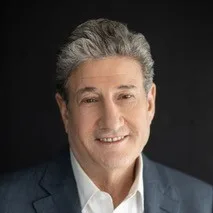
Dr. Roger Solomon provides a comprehensive introduction to Eye Movement Desensitization and Reprocessing (EMDR), explaining the adaptive information processing model that underlies the treatment, walking through all eight phases of the protocol, and discussing how EMDR can be applied across a wide range of presentations—from single-incident trauma to complex trauma with dissociation. Dr. Solomon also addresses how clinicians can determine client readiness, navigate repressed memories, and leverage the generalization effect when working with patients who have extensive trauma histories.
Published On: June 8, 2026
Duration: 30 minutes, 32 seconds
Topics Covered
- Overview of EMDR and the Adaptive Information Processing (AIP) model
- How bilateral stimulation affects working memory and memory storage
- The distinction between "big-T" and "small-t" trauma
- The three-pronged EMDR model: past memories, present triggers, and future templates
- The eight phases of EMDR treatment, covered in sequence:
- Phase 1: History-taking and treatment planning
- Phase 2: Preparation and stabilization (coping skills, resourcing, grounding)
- Phases 3–7: Memory reprocessing (assessment, desensitization, installation, body scan, closure)
- Phase 8: Reevaluation
- Determining client readiness for memory reprocessing
- Contraindications and adaptations for complex trauma and dissociation
- Selecting which memories to target when a client has multiple traumas
- The generalization effect and memory clustering
- Working with clients who have repressed or blocked memories
- Treatment timelines for acute vs. complex trauma
- Guidance for clinicians seeking EMDR training and credentialing
CME Learning Objectives
Upon completion of this activity, participants will be able to:
- Describe the Adaptive Information Processing (AIP) model and explain how maladaptively stored memories contribute to present psychological symptoms in EMDR theory.
- Identify the eight phases of EMDR treatment and the clinical criteria used to determine a client's readiness for memory reprocessing.
- Explain the role of bilateral stimulation in facilitating memory reprocessing, including its proposed mechanism of action via working memory interference.
- Apply the three-pronged EMDR model—targeting past memories, present triggers, and future templates—to clinical case conceptualization, including adaptations for clients with complex trauma or dissociation.
Abbreviated Transcript
Abigail Rasol: Hi, everyone. Welcome back to the Carlat Psychotherapy Podcast. This is your host, Abigail Rasol, and today I'm joined by Dr. Roger Solomon to discuss eye movement desensitization and reprocessing, also known as EMDR. I'm very excited for this conversation. I think EMDR is an approach that has been rising in popularity over the last few years and has been proven to be widely successful for PTSD particularly, but also a number of other psychiatric conditions that we will dive into.
Dr. Solomon is a clinical psychologist and psychotherapist who specializes in trauma and grief. He is a senior faculty member of the EMDR Institute, where he's been teaching since 1993, after being selected and trained by Francine Shapiro, who is the original developer of EMDR. And for the past three decades, he has provided basic and advanced EMDR trainings internationally and has become a leading voice in the application of EMDR for complex trauma, grief, and dissociation.
In addition to his clinical and training work, he's authored more than 50 articles and book chapters on trauma, grief, and dissociation, and is the author of EMDR Treatment for Grief and Mourning: Transforming the Connection to the Deceased Loved One, which is a great read for anybody who would like to read further on EMDR once we wrap up with this episode.
So, needless to say, we are very lucky to have Dr. Solomon here with us today to kick off this conversation.
Let's jump right into it. If you could just give us really a brief overview to somebody that knows absolutely nothing about EMDR. What is it? How does it work? Who do you use it for? And then we'll go from there.
What is EMDR?
Roger Solomon, PhD: So EMDR is an evidence-based psychotherapeutic approach that is applicable to a wide variety of diagnoses.
EMDR is guided by a theory, the adaptive information processing model, which states that present problems are the result of past memories that have been inadequately processed. When there is some kind of event that is too much, that memory can get stuck in the brain, unable to process.
There's an assumption here that the brain, like the body, has a tendency to heal. When we get cut, the body heals. When we go through a distressing event, we think about it, talk about it, mull it over, sleep on it, read about it, and it becomes integrated. That is, we discard what's not useful, we retain the information that is useful for survival with appropriate emotion, and this guides our present and future behavior.
When something happens that's too much, it interferes with the brain's processing, and that memory gets stuck, frozen in the brain. The images, thoughts, emotions, and sensations that were there at the time get stuck in state-specific form, inadequately processed.
And then when there's some kind of reminder, what we call a present trigger, then those images, thoughts, emotions, sensations, and the perception that we had at the time come forward. In other words, the past becomes present, and this is what underlies present problems.
So in EMDR we want to access the memory as it's currently stored.
Bring up that image, the negative belief, "I'm not safe, I'm going to die," the emotions, sensations.
And then we do dual-attention bilateral stimulation. And by dual attention, what I mean is we hold the memory in mind while we apply the eye movement, tapping, or auditory stimulation. So it starts an association process, and what happens is that adaptive information that we have stored in our brain starts to link it to that memory network holding that maladaptively stored information, allowing that memory with the trauma to integrate into that wider memory network.
And with integration, we retain what's useful with appropriate emotion, discard what's not useful, and it becomes a past event.
The Effects of Bilateral Stimulation on Memory Processing
Abigail Rasol: You spoke about bilateral stimulation. It seems to me that that's a central part of the treatment. But what does rapid eye movement or tapping have to do with memory consolidation? How do those go together?
Roger Solomon, PhD: So there is research that the bilateral stimulation interferes with the working memory that we have. So when a person is bringing up the problem, or the problematic memory, and the eye movement, it will interfere with working memory, and research shows that the negative images fade, and the emotionality reduces.
In other words, the memory can be stored in a new way. And that's what we're doing with EMDR therapy, is we're changing the way that the memory is stored in the brain.
And we define trauma very broadly as any distressing event that is still impacting the person in the present. And that could be abuse, but also what didn't happen. Neglect. Also shame, humiliation, not belonging.
Abigail Rasol: And how do you target those less concrete traumatic examples? I assume it's easier to conjure up a memory that is something that happened that was external, brought upon the person. How would you work with something that's more subjective based on the internal experience, like these experiences of shame or humiliation?
Roger Solomon, PhD: So there are big-T traumas. For example, in war there's that moment of terror, "I'm going to die." Or an auto accident, "The car's coming at me, I'm powerless."
But there's also what is termed small-t trauma, the seemingly small, quite impactful moments of neglect, shaming, rejection. For a small child, this can lead to that belief of, "I'm invisible. I'm not good enough. There's something wrong with me." And for a small child, being alone or not seen, no comfort, is survival fear.
So this also is quite impactful, and EMDR therapy can be utilized to treat any distressing memory, from the big-T trauma to the seemingly small but very impactful moments that underlie those negative beliefs we may have about ourselves.
So that negative belief, "I'm not good enough," that's not the cause of a person's problem. It's a symptom. It's the result of previous memories and experiences that get maladaptively stored and get triggered.
The Three-Pronged EMDR Model
Abigail Rasol: I'm curious if you could take us into the room a little bit of both what an EMDR session looks like, but also what an EMDR treatment program looks like more broadly. My understanding is there are different phases to the treatment, if you could walk us through what those look like and also maybe on a micro level take us into the room and what that session looks like while you're in it.
Roger Solomon, PhD: EMDR therapy has eight phases, which I will describe, and also three-pronged. And by that, I mean that we want to process past memories that have been maladaptively stored that underlie the current problem.
And then we also will process the more present triggers, the more recent events that trigger the problem, and then we want to provide a future template for adaptive behavior for each present trigger.
So for example, a person may get nervous at a meeting because "I'm not good enough." Where's that coming from? Well, maybe there's a childhood full of shame or rejection, humiliation, giving the person a sense of failure. "There's something wrong with me."
So these are memories we would want to process, or we use the term to reprocess.
Then there's present triggers. Maybe there was a meeting a month ago that was very stressful. We want to target that. And, as a result of processing the past memories, there's a lot of healing.
But there still may be, due to second-order conditioning, some charge to attending a meeting. So we process more recent memories, those present triggers, and then lay down a positive future template.
So now imagine being at a meeting and being able to behave, react, and handle the meeting in an adaptive way.
So past, present, and future.
Abigail Rasol: So those are the three prongs.
Roger Solomon, PhD: Those are the three prongs.
Phase One: History-Taking and Treatment Planning
Roger Solomon, PhD: And then it's eight phases.
The first phase is history-taking and treatment planning.
So a person comes in, "I have this problem. I'm socially anxious," or, "I'm depressed, nervous at a meeting."
Okay. What are some recent examples? What are the present triggers? Of course, we're going to explore that. And then we also want to take a history. What are the memories, the past experiences that have been maladaptively stored that underlie the present problem?
So we gather information on the negative memories, but we also, of course, want to gather information on positive memories. We're doing an assessment not just of what's negative but also positive resources. You know, we want to look at the whole person.
And based on the information we collect, we form a hypothesis of, all right, the problems are the result of these memories underlying the problem.
Phase Two: Preparation and Stabilization
Roger Solomon, PhD: The second phase is stabilization and preparation. We want to prepare our client for EMDR. So clients come in with very horrific memories, and it may be very difficult to start to remember the memories.
It can be too much. So part of phase two, preparation and stabilization, is teaching the clients self-soothing strategies, like a safe, calm, emotional state. We do resourcing. We can have the client think of a situation or place where they feel safe and calm, or moments they felt confident, competent, good about themselves.
And we can enhance these positive feelings, these resources, also with bilateral stimulation. And we will also teach whatever coping skills the client may need.
You know, clients come in with deficits. For example, "I never learned how to express anger." And so EMDR therapy being therapy, of course we want to fill in developmental deficits as well.
So certainly let's talk about how to express emotion. So again, we want to provide coping skills, stabilization skills, self-soothing skills according to the needs of the client. Some clients are ready fairly quickly. Other clients where there's been a lot of severe childhood trauma, abuse, or neglect may need longer periods of stabilization.
Determining a Client's Readiness
Abigail Rasol: And how do you determine when the client has sufficiently stabilized enough that EMDR would not be more harmful than helpful?
Roger Solomon, PhD: The basic criteria is the client is able to stay present with the emotions that may come up.
Because an important part of integration is the person has to experience now what was too much then. But of course, there's the therapist, there is the preparation, teaching of coping skills, self-soothing strategies as well. So the basic criteria is being able to stay present and even tolerate some intense emotions.
And of course, the therapeutic relationship is something that's important. And for many people, that can happen very quickly. For other people, maybe where there's a history of never being able to trust anybody, or a trauma, so it's difficult to think about what's going on inside, it may take longer to develop the trust and affect tolerance to be able to go inside and access the memory.
Abigail Rasol: Are there particular clients or client presentations for whom you would say, this is just not a candidate for EMDR, whether because it would be more harmful than helpful, or because it wouldn't be effective for their particular set of difficulties?
Roger Solomon, PhD: Well, let's broaden what EMDR is. There's different phases. So I talked about history-taking, then I talked about preparation.
Then there's also memory reprocessing phases, phases three through seven for memory reprocessing. We'll talk about that in a moment.
And then phase eight is reevaluation, where the next session we evaluate what's happened. So when we talk about EMDR therapy for somebody where there's complex trauma, when there's dissociative symptoms, the person may not be ready for memory reprocessing.
But there's things that we do in phase two stabilization. First of all, we're going to integrate whatever therapeutic frameworks and methods are going to help the client. EMDR therapy is an integrative therapy. So for example, if I'm working with somebody where there are dissociative symptoms, there's certain interventions I'm going to utilize that inform what I'm doing with the client. I'll teach stabilization skills and self-soothing skills and strategies to start understanding what's going on inside.
When I'm working with a traumatic loss, I'm informed by frameworks for grief and mourning that will inform the EMDR treatment.
So if somebody comes in, they're not ready for memory processing, we spend more time in phase two, and we can bring in EMDR elements.
Phases Three Through Seven: Memory Reprocessing
Abigail Rasol: That makes sense. So let's get back to those phases, I think we had phases three to seven or three to eight remaining, which you called the memory reprocessing phases, if you could take us through those.
Roger Solomon, PhD: So the memory reprocessing phases. Phase three we call the assessment phase, and what we're doing here is we're accessing the memory that we are going to target with EMDR therapy.
This is access and target identification. That's the formal name.
So we want to access that memory as it's stored in the brain. Remember that memory is maladaptively stored, and what we want to do is access it so we can start reprocessing.
So how do we access it? We ask, "What image represents the worst part?"
Then we want to get that negative cognition, the negative irrational belief the person has about themselves. "I'm not good enough. I'm not safe. I'm powerless. I don't belong."
Then we identify a therapeutic goal, a positive cognition. So "I'm not safe" becomes "I'm safe today." If the negative cognition is "I'm powerless," the positive cognition becomes "I have choices."
So this is a therapeutic dialogue to identify the negative irrational belief about the self, and then we identify that therapeutic goal. Because if we process the negative memory, there will be adaptive information and positive belief that will arise.
Abigail Rasol: Are you doing this separately for each memory that the person needs to work through?
Roger Solomon, PhD: Yes, we are. We're starting with one memory at a time. We're starting with a specific memory. And we're starting with that specific moment in time and targeting, you know, accessing this one specific memory. It starts to get us into the whole memory network.
So again, we talked about the image. We talked about a negative cognition, positive cognition, and then we take a measurement. When you bring up the memory, how true do those positive words, "I'm safe," or, "I'm good enough," feel on a one-to-seven scale, one false, seven true?
So in the beginning, that negative belief resonates more. So that positive cognition, "I'm safe today," I know in my head it's true, but in my gut, on a one-to-seven scale, it feels like a three.
So that's a measurement. And of course, by the end of treatment, we want it to be seven. All right, so we have that image, negative/positive cognition, that scale, we call it validity of cognition, one to seven, one false or seven true.
Now we're going to get the emotions, and then we're going to take another measurement, called Subjective Units of Disturbance. How disturbing is it, zero to 10, zero being calm, 10 the worst it could be?
And then finally, where do you experience the distress in your body? So that's how we access the memory as it's stored in the brain.
Phase Four: Desensitization
Roger Solomon, PhD: Then we're going to start doing the bilateral stimulation, reprocessing. So we ask the client to bring up that image, that negative belief, notice the sensations, and then we start with sets of bilateral stimulation. Eye movement, according to research, is the most efficient for most, not everybody. Some people will respond better to the tapping or auditory.
We start the eye movement, and that may be anywhere from 20 to 30 seconds or a minute, and we fine-tune it to the client.
We'll do a set, okay, pause, take a breath. What do you notice?
And then the client gives us feedback. And if things are moving, changing, and shifting, we do another set.
So what's happening is that as we start to stimulate the brain's information processing mechanisms through bilateral stimulation, adaptive information starts to link in, and so that distress level starts to go down. And so there we take a measurement.
The goal is zero. Calm. Maybe it would be that ecologically adaptive one, like for example, with grief, a good person died and so it's a one, not a zero, or it was a very distressing kind of event. It's a one.
Phase Five: Installation
Abigail Rasol: What happens once you've brought it down to a zero or a one?
Roger Solomon, PhD: Then we're ready for the next phase. Phase five, the installation phase, where we bring up the memory and that positive belief, "I'm safe today," hold them together, and we continue the processing.
This time we're focusing on the positive cognition, doing sets of bilateral stimulation, measuring the effect by that one-to-seven scale, and the goal is that they can bring up the memory, that positive belief, "I'm safe today, I'm good enough," and it feels true. On a one-to-seven scale, it's a seven.
So the negative distress is down, that positive cognition feels true, and then we do a body scan. It's a final check. Bring up the memory, the positive cognition, and scan your body and let me know if there's any unusual sensation, if there's any disturbance.
And if there is, we continue to process that.
Abigail Rasol: And if there is no disturbance, where do you go next?
Roger Solomon, PhD: So we have a clear body scan. Subjective Units of Disturbance (SUD) zero, Validity of Cognition (VOC) seven, body scan is clear. Now we want to do a closure. We won't always complete the processing in one session, so we want to be sure the client is grounded. So we will do methods to ground the client that were taught in the second phase of EMDR therapy, preparation and stabilization.
So we'll do breathing exercises. We'll bring in the resources that ground the client according to what's needed. And then we also prepare the client for what may happen during the week because we scraped out the beaver dam, so other memories may come up. And the client can use their other coping methods that we've talked about.
And we encourage clients also to keep a log of what comes up. What do they get triggered by during the week? What other memories may come up? What dreams do they have? And then at the next session, we talk about it, and that's phase eight, reevaluation. We ask what happened during the week, and we also evaluate if the treatment effects from the last session have maintained, and what else has come up.
Selecting a Memory
Abigail Rasol: How do you select which memory to start working with if a patient has multiple traumatic memories or a prolonged trauma history?
Roger Solomon, PhD: This is from the history-taking. We identify the problems that a person has. What's happening? What are the present triggers? And then we identify the memories that underlie the present problem, and that's how we select which memories to start with.
If it's a problem having to do with self-esteem, for example, we want to start with these earlier memories that gave rise to that negative belief, "I'm not good enough. There's something wrong with me."
If it's a traumatic event, then, of course, we can go in and process the robberies, the tornadoes, war experiences, the traumatic experiences.
The Generalization Effect
Abigail Rasol: I would guess that a lot of clients that you work with are not necessarily clients that have been through one capital-T trauma, but rather ones that have more prolonged traumatic experiences, whether it be childhood abuse or neglect, but really people who have been through years and years of trauma and have an abundance of traumatic memories stored up.
And so in situations like that, is the idea that you need to systematically work through every single traumatic memory that there is, or once you work through a certain amount, those memories being resolved effectively resolves the others as well?
Roger Solomon, PhD: There is a generalization effect.
So we can group or cluster memories.
These are memories of my parent not picking me up from school. Or these are memories of finding my parent passed out. And we can group these and cluster them and target a representative memory or that worst memory, and what we find is that there will be some generalization through that cluster.
So we don't have to target each and every negative memory a person has. Each time that we're able to successfully process a memory, there's a generalization effect, but there's also a rise in integrative capacity as well along the healing journey.
EMDR with Repressed Memories
Abigail Rasol: One of the things we know about trauma is that a common traumatic response is to block out a lot of the distressing memories, and at the same time EMDR relies on being able to consciously bring up those traumatic memories. Is there any way to make EMDR work for individuals who have blocked trauma out?
Roger Solomon, PhD: Yes, there is. So first of all, let's understand that now we're talking about complex trauma. So somebody coming in says, "I don't have memories," then I know there's a complex process going on. There may be detachment, avoidance, suppressing affect because that was the best survival strategy in childhood.
And so a person starts to come in and they may say, "I don't have memories." But they are coming in with problems. Problems in relationships, problems in regulating affect, problems in everyday living, problems in self-esteem.
So we will start where the client's at. And again, if there aren't memories, that's all right, we start dealing with whatever problems in life are there, teaching coping skills. And we can also use EMDR therapy, if the client meets the readiness criteria, on the more recent problems.
So we can do, again, resourcing, a safe-state exercise, ways to calm. We can teach skills. We can teach problem-solving to deal with the problems in living, and we can also use EMDR therapy in very gentle and very focused ways on present triggers.
Also, what we would be doing with these clients is building the integrative capacity by building up not just external resources and coping, but also internal resources. So think of a moment you felt confident, competent, good about yourself, a moment of success, something like that. And then we have specialized methods to add the bilateral stimulation to enhance that positive affect.
So these are things that we would be doing in the preparation and stabilization phase to raise integrative capacity, resource the client, and teach coping skills.
Abigail Rasol: So the idea is that as you continue working in this second phase of building stabilization and feelings of safety, once the client feels safe and strong enough, those memories would naturally come out at the right time?
Roger Solomon, PhD: That is the idea, and of course, there's a number of different frameworks that can integrate with EMDR therapy or inform EMDR therapy that help us work with the complex situations too. Because when there is complex trauma, there can be a division in the personality.
There can be one side of the person that engages in everyday life, but there could be another side of the client that's holding the memory, reliving it, re-experiencing it, and there's such avoidance, and maybe not able to remember it. So we know we can work with the different sides of the person without opening everything up for stabilization, and also creating the atmosphere where the memories can start to come up, and the person is within that window of tolerance.
Treatment Timeline
Abigail Rasol: In terms of zooming out and what the complete EMDR treatment protocol looks like, is there any sort of timeline that we're looking at in terms of number of sessions for a successful treatment? Is it really individual to the person and the amount of trauma and their access to memories?
Roger Solomon, PhD: It depends, of course, on the person. If a person's coming in with an acute trauma, an auto accident, a robbery, an assault, and then assuming that there's not a history of trauma, the research shows that with these clients, with three to six sessions, six 90-minute sessions, the person no longer will meet criteria for PTSD.
They still may need other sessions to deal with other problems. For example, I worked with a man who worked in a mine, and there was a cave-in and he was injured.
And so I worked with him and in two sessions he no longer was having the nightmares and the flashbacks. However, more sessions were needed because he felt guilty for the burden he put on his family because he was injured. He also had anger about the accident.
So in three to six sessions, we can treat that memory so they no longer will meet criteria for PTSD. But of course, it's going to be integrated within an overall therapeutic framework. So I'm certainly not saying three sessions, you're done. It could be, but there may be other issues to address.
On the other end, when somebody's coming in with a history of abuse and a history of neglect, having never trusted anybody before, that's going to be, of course, a longer process.
So that's why, again, we're going to adapt the EMDR therapy according to the needs of the client, and we will go at the pace of the client.
The Depths of EMDR
Roger Solomon, PhD: But I can say this, that EMDR therapy is effective and efficient in reprocessing these negative memories, and it goes deeper than words. EMDR therapy goes to places words don't go. Trauma gets stored in the brain, places words don't go, and EMDR will get to that level of affect to be able to reprocess that memory. So it does become integrated in ways that are more efficient than talking therapy alone.
Abigail Rasol: Absolutely. As I was reading about it, one of the things that struck me about EMDR is that it almost feels more raw in a sense.
You know, when you are in a more traditional therapy setting, there's almost a filter between what goes on internally in the memories and what you're working on. Because that filter is how you're articulating or interpreting, or sharing whatever it is you're dealing with.
Whereas here, you're really just getting into the most raw depths of that experience inside of you. And so like what you were saying, it gets somewhere that we with words are not able to. And I think that's one of the things that makes it really rather unique. We don't really have another modality that does something like that.
At least not one that I am familiar with.
Guidance for Interested Clinicians
Abigail Rasol: I think I'd like to close off with just a general question of any sort of guidance that you would be able to give a clinician that's listening to this episode and this is a treatment that they'd like to learn further about, perhaps add to their repertoire. What's a good place for them to start?
Roger Solomon, PhD: Well, EMDR therapy is an effective therapy, and because it's an effective therapy, it's very important that the clinician have effective training.
So it's very important that they go to a training that has been certified by the EMDR International Association. Be sure that you're getting trained by a trainer who has been credentialed by the EMDR International Association or the EMDR Europe Association or EMDR Asia or EMDR Australia and New Zealand, too. Because there are imposter trainings there.
So there is the EMDR International Association that is kind of like the watchdog organization that sets standards for who can be trained. You have to be a licensed therapist or a graduate student in a licensable track under supervision.
And they also credential the person who does the training.
Abigail Rasol: And we will link those resources in our text for our listeners to pursue if they are interested.
Well, thank you so much, Dr. Solomon, for joining us and for a really enlightening discussion. Thank you so much to our listeners for following along, and we look forward to seeing you back here soon.
References
EMDR International Association. https://www.emdria.org/emdr-starts-with-you/
Gainer, D., Alam, S., Alam, H., & Redding, H. (2020). A flash of hope: Eye Movement Desensitization and Reprocessing (EMDR) therapy. Innovations in Clinical Neuroscience, 17(7–9), 12–20.
Marich, J., & Dansiger, S. (2018). EMDR therapy & mindfulness for trauma-focused care. New York, NY: Springer Publishing Company.
Russell, M. C. (2015). A clinician's guide for treating active military and veteran populations with EMDR therapy. New York, NY: Springer Publishing Company.
Shapiro, F. (2013). Getting past your past: Take control of your life with self-help techniques from EMDR therapy. New York, NY: Rodale.
Shapiro, F. (2018). Eye Movement Desensitization and Reprocessing (EMDR) therapy: Basic principles, protocols, and procedures (3rd ed.). New York, NY: Guilford Press.
Shapiro, F., & Forrest, M. S. (2016). EMDR: The breakthrough "eye movement" therapy for overcoming stress, anxiety, and trauma (2nd ed.). New York, NY: Basic Books.
Solomon, R., & Shapiro, F. (Eds.). (2008). EMDR and psychotherapy integration: Theoretical and clinical suggestions with focus on traumatic stress. Washington, DC: American Psychological Association.
Struwig, J., & van den Berg, D. P. G. (Eds.). (2023). EMDR as an integrative psychotherapy approach: Experts of diverse orientations explore the paradigm prism. Springer.
EMDR International Association. (2019, September 5). Introduction to EMDR Therapy [Video]. YouTube. https://www.youtube.com/watch?v=Pkfln-ZtWeY&t=2s
_________
The Carlat CME Institute is accredited by the ACCME to provide continuing medical education for physicians. Carlat CME Institute maintains responsibility for this program and its content. Carlat CME Institute designates this enduring material educational activity for a maximum of one quarter (.50) AMA PRA Category 1 CreditsTM. Physicians or psychologists should claim credit commensurate only with the extent of their participation in the activity. This activity is available for CME credit for a defined period based on the date of publication, in accordance with accreditation requirements. The post-test must be completed prior to the expiration date; after that time, CME credit will no longer be available.


Recommended