• Home
  • Store
    • Total Access Subscriptions
    • Newsletter Subscriptions
    • Multimedia
    • Books
    • eBooks
    • ABPN SA Courses
    • Institutional Site Licenses
  • CME Center
  • Multimedia
    • Podcast
    • Webinars
    • Blog
  • Newsletters
    • General Psychiatry
    • Child Psychiatry
    • Addiction Treatment
    • Hospital Psychiatry
    • Geriatric Psychiatry
    • Psychotherapy and Social Work
  • Toolkit/AskCarlat AI
  • FAQs
  • Log In
  • Register
  • Welcome
  • Sign Out
  • Subscribe
Access Purchased Content
Home » General Psychiatry » Clozapine Shows Best Persistence in Real-World Oral Antipsychotic Use
Research Update

Clozapine Shows Best Persistence in Real-World Oral Antipsychotic Use

October 1, 2026
From The Carlat Psychiatry Report
Issue Links: Editorial Information | PDF of Issue

Reviewed by Jesse Koskey, MD. Dr. Koskey has no financial relationships with companies related to this material.

PDF


Getting your Trinity Audio player ready...

REVIEW OF: Parabiaghi A et al, Pharmacopsychiatry 2025;58(4):159–169
STUDY TYPE: Population-based pharmacoepidemiologic cohort study

Antipsychotic adherence is a major challenge; nearly 40% of patients who begin them stop within three months. This large, real-world Italian study tracked over 42,000 adults who started an oral antipsychotic between 2001 and 2021. Researchers used pharmacy records to compare “persistence” (time to discontinuation) across and between first- and second-generation antipsychotics (FGAs/SGAs).

Patients were followed for 3 months primarily, with secondary analyses that extended up to 20 years. Persistence was adjusted for age, sex, and polypharmacy.

Results

  • SGAs overall had better persistence than FGAs. The hazard ratio (HR) for discontinuation was 0.76 (95% CI: 0.73–0.79), meaning patients prescribed SGAs had a 76% likelihood of discontinuing compared to those prescribed FGAs.
  • Of antipsychotics available in the US, clozapine had the lowest absolute number of prescriptions (amisulpride was the lowest overall).
  • However, clozapine had the longest persistence (median 175 days vs 92–133 for other meds). It significantly outperformed all other agents, including olanzapine (HR: 0.85; 95% CI: 0.79–0.91) and risperidone (HR: 0.80; 95% CI: 0.74–0.87).
  • Olanzapine and aripiprazole had longer persistence than risperidone and quetiapine.
  • Quetiapine had the poorest persistence but was the second most prescribed.
  • By one year, 80% of patients had discontinued their initial agent. Only 1% were re-prescribed the same drug.

CARLAT TAKE
This real-world study reported prescription data only, not diagnoses or clinical outcomes, and didn’t verify whether patients took their meds. Those are significant limitations. The researchers elucidated an interesting (but unsurprising) paradox: The most persistent medication, clozapine, was one of the least prescribed. This study is further evidence, if we needed it, that we should be using clozapine more often than we do.

General Psychiatry
KEYWORDS antipsychotic persistence clozapine medication adherence pharmacoepidemiology second-generation antipsychotics
    www.thecarlatreport.com
    Issue Date: October 1, 2026
    SUBSCRIBE NOW
    Table Of Contents
    Learning Objectives, Ketamine, TCPR, October 2026
    Top 10 Prescribing Tips for Working with Teens and Kids
    An Update on Ketamine
    Bupropion for Anxious Depression: Not as Activating as You Think
    Clozapine Shows Best Persistence in Real-World Oral Antipsychotic Use
    OxMIS: A Free Online Suicide Assessment Tool
    CME Post-Test, Ketamine, TCPR, 2026
    DOWNLOAD NOW
    Featured Book
    • MFB8e_SpiralCover.png

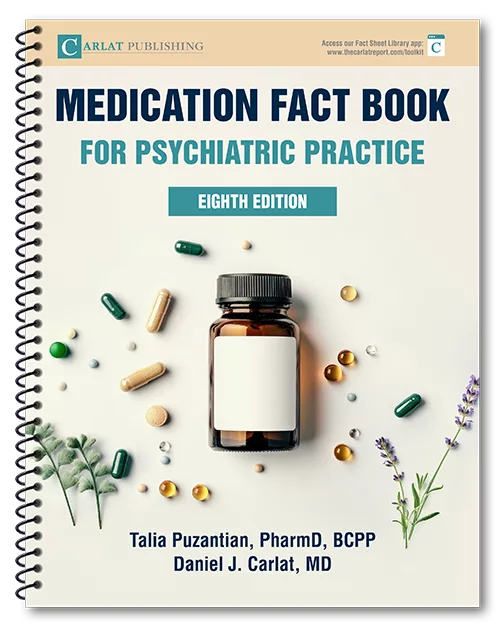
      Medication Fact Book for Psychiatric Practice, Eighth Edition (2026)

      Updated 2026 prescriber's guide.
      READ MORE
    Featured Video
    • KarXT (Cobenfy)_ The Breakthrough Antipsychotic That Could Change Everything.jpg
      General Psychiatry

      KarXT (Cobenfy): The Breakthrough Antipsychotic That Could Change Everything

      Read More
    Featured Podcast
    • shutterstock_2850155913.jpg
      General Psychiatry

      ADHD Undone: The Corporate Practice of Medicine

      Listen now
    Recommended
    • Join Our Writing Team

      July 18, 2024
      WriteForUs.png
    • Insights About a Rare Transmissible Form of Alzheimer's Disease

      February 9, 2024
      shutterstock_2417738561_PeopleImages.com_Yuri A.png
    • How to Fulfill the DEA's One Time, 8-Hour Training Requirement for Registered Practitioners

      May 24, 2024
      DEA_Checkbox.png
    • Join Our Writing Team

      July 18, 2024
      WriteForUs.png
    • Insights About a Rare Transmissible Form of Alzheimer's Disease

      February 9, 2024
      shutterstock_2417738561_PeopleImages.com_Yuri A.png
    • How to Fulfill the DEA's One Time, 8-Hour Training Requirement for Registered Practitioners

      May 24, 2024
      DEA_Checkbox.png
    • Join Our Writing Team

      July 18, 2024
      WriteForUs.png
    • Insights About a Rare Transmissible Form of Alzheimer's Disease

      February 9, 2024
      shutterstock_2417738561_PeopleImages.com_Yuri A.png
    • How to Fulfill the DEA's One Time, 8-Hour Training Requirement for Registered Practitioners

      May 24, 2024
      DEA_Checkbox.png

    About

    • About Us
    • CME Center
    • FAQ
    • Contact Us

    Shop Online

    • Newsletters
    • Multimedia Subscriptions
    • Books
    • eBooks
    • ABPN Self-Assessment Courses

    Newsletters

    • The Carlat Psychiatry Report
    • The Carlat Child Psychiatry Report
    • The Carlat Addiction Treatment Report
    • The Carlat Hospital Psychiatry Report
    • The Carlat Geriatric Psychiatry Report
    • The Carlat Psychotherapy Report

    Contact

    carlat@thecarlatreport.com

    866-348-9279

    PO Box 626, Newburyport MA 01950

    Follow Us

    Please see our Terms and Conditions, Privacy Policy, Subscription Agreement, Use of Cookies, and Hardware/Software Requirements to view our website.

    © 2026 Carlat Publishing, LLC and Affiliates, All Rights Reserved.