• Home
  • Store
    • Total Access Subscriptions
    • Newsletter Subscriptions
    • Multimedia
    • Books
    • eBooks
    • ABPN SA Courses
  • CME Center
  • Multimedia
    • Podcast
    • Webinars
    • Blog
  • Newsletters
    • General Psychiatry
    • Child Psychiatry
    • Addiction Treatment
    • Hospital Psychiatry
    • Geriatric Psychiatry
    • Psychotherapy and Social Work
  • Toolkit
  • FAQs
  • Log In
  • Register
  • Welcome
  • Sign Out
  • Subscribe
Access Purchased Content
Home » Placebo Response in Psychiatry: How Big It Is and Why It Matters
Research Update

Placebo Response in Psychiatry: How Big It Is and Why It Matters

January 28, 2026
Ethan Short, MD
From The Carlat Psychiatry Report
Issue Links: Editorial Information | PDF of Issue

Ethan Short, MD. Dr. Short has no financial relationships with companies related to this material.

PDF


Getting your Trinity Audio player ready...

REVIEW OF: Bschor T et al, JAMA Psychiatry 2024;81(8):757–768

STUDY TYPE: Systematic review and meta-analysis

Placebo responses are a well-known feature of psychiatric care, but until now, clinicians have lacked clear data on how those effects differ by diagnosis. This meta-analysis provides a comprehensive look at placebo responses across nine major psychiatric disorders, offering context care ­strategies.

The authors analyzed 90 high-quality RCTs across nine psychiatric diagnoses: major depressive disorder (MDD), generalized anxiety disorder (GAD), panic disorder, ADHD, PTSD, social phobia, mania, OCD, and schizophrenia. Only placebo groups were included. The primary outcome was pre-post symptom improvement, measured by effect size, or the magnitude of change during the trial. The analysis also examined whether gender composition, study duration, or placebo probability influenced the magnitude of response.

Results

Placebo responses were moderate to large across all diagnoses:

  • Large effects: MDD (effect size: 1.40), GAD (1.23), panic disorder (0.92), ADHD (0.88), and PTSD (0.84)
  • Moderate effects: Social phobia (0.72), mania (0.68), OCD (0.65), and schizophrenia (0.59)

Effect sizes in MDD and GAD were comparable to or greater than those seen with active medications in some studies. Trials with a higher proportion of female participants showed a 0.2-point increase in effect size for every 25% increase in female representation. Placebo effects in PTSD varied widely, ranging from negative to very large, likely due to patient-specific and contextual factors. Most included trials were short term (2–13 weeks), which may account for some of the effects, as placebo responses are known to diminish over time. 

CARLAT TAKE
Placebo effects can be substantial, and this analysis captures them when they’re likely to be largest. Clinically, a placebo response can be just as beneficial as a “real” response—the difference being that the former is likely to wane over time. So use early gains to build an alliance and encourage lifestyle changes that can mitigate any diminishing returns later.
General Psychiatry
KEYWORDS MDD placebo effect
    Ethan Short, MD

    More from this author
    www.thecarlatreport.com
    Issue Date: January 28, 2026
    SUBSCRIBE NOW
    Table Of Contents
    Brexpiprazole’s New Claims
    Perinatal Mental Health
    Service Dogs for Veterans With PTSD
    Placebo Response in Psychiatry: How Big It Is and Why It Matters
    Vitamin D Has Dose-Dependent Effect on Depressive Symptoms
    Metformin Endorsed for Preventing Antipsychotic Weight Gain
    CME Post-Test, Women's Mental Health, TCPR, February 2026
    DOWNLOAD NOW
    Featured Book
    • MFB8e_SpiralCover.png

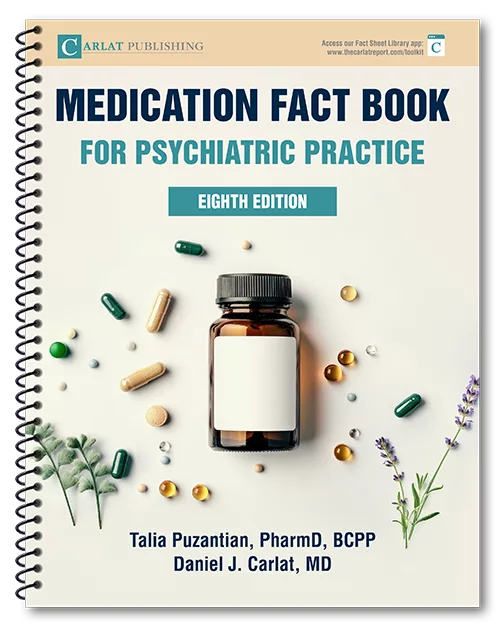
      Medication Fact Book for Psychiatric Practice, Eighth Edition (2026)

      Updated 2026 prescriber's guide.
      READ MORE
    Featured Video
    • KarXT (Cobenfy)_ The Breakthrough Antipsychotic That Could Change Everything.jpg
      General Psychiatry

      KarXT (Cobenfy): The Breakthrough Antipsychotic That Could Change Everything

      Read More
    Featured Podcast
    • shutterstock_2721606927.jpg
      General Psychiatry

      Wounded Healers: Linehan and DBT Part 1

      Listen now
    Recommended
    • Join Our Writing Team

      July 18, 2024
      WriteForUs.png
    • Insights About a Rare Transmissible Form of Alzheimer's Disease

      February 9, 2024
      shutterstock_2417738561_PeopleImages.com_Yuri A.png
    • How to Fulfill the DEA's One Time, 8-Hour Training Requirement for Registered Practitioners

      May 24, 2024
      DEA_Checkbox.png
    • Join Our Writing Team

      July 18, 2024
      WriteForUs.png
    • Insights About a Rare Transmissible Form of Alzheimer's Disease

      February 9, 2024
      shutterstock_2417738561_PeopleImages.com_Yuri A.png
    • How to Fulfill the DEA's One Time, 8-Hour Training Requirement for Registered Practitioners

      May 24, 2024
      DEA_Checkbox.png
    • Join Our Writing Team

      July 18, 2024
      WriteForUs.png
    • Insights About a Rare Transmissible Form of Alzheimer's Disease

      February 9, 2024
      shutterstock_2417738561_PeopleImages.com_Yuri A.png
    • How to Fulfill the DEA's One Time, 8-Hour Training Requirement for Registered Practitioners

      May 24, 2024
      DEA_Checkbox.png

    About

    • About Us
    • CME Center
    • FAQ
    • Contact Us

    Shop Online

    • Newsletters
    • Multimedia Subscriptions
    • Books
    • eBooks
    • ABPN Self-Assessment Courses

    Newsletters

    • The Carlat Psychiatry Report
    • The Carlat Child Psychiatry Report
    • The Carlat Addiction Treatment Report
    • The Carlat Hospital Psychiatry Report
    • The Carlat Geriatric Psychiatry Report
    • The Carlat Psychotherapy Report

    Contact

    carlat@thecarlatreport.com

    866-348-9279

    PO Box 626, Newburyport MA 01950

    Follow Us

    Please see our Terms and Conditions, Privacy Policy, Subscription Agreement, Use of Cookies, and Hardware/Software Requirements to view our website.

    © 2026 Carlat Publishing, LLC and Affiliates, All Rights Reserved.