Expert Q&A
Ketamine Treatment in Inpatient Psychiatry: What Clinicians Need to Know

Getting your Trinity Audio player ready...
CHPR: Please begin by telling us what inspired you to research the use of ketamine on the inpatient unit.
Dr. Brody: The ketamine story goes back to 2000 and even earlier, when John Krystal’s group published the landmark paper showing ketamine’s rapid-acting antidepressant effects (Berman RM et al, Biol Psychiatry 2000;47(4):351–354). When I started working in inpatient psychiatry, I kept running into a familiar dilemma: We admit patients for depression and start an antidepressant, knowing that while some benefit can appear within the first couple of weeks, the full therapeutic effect often takes six to eight weeks. That timeline can feel painfully long on an inpatient unit.
CHPR: Right—it’s frustrating that standard treatments can take so long to work.
Dr. Brody: We have ECT, of course, but for antidepressants the time course doesn’t align with a typical inpatient stay. What drew me to ketamine was its rapid onset—hours to days. I remember thinking it might be a perfect fit for inpatient psychiatry, where patients tend to have more severe depression and need faster-acting interventions. By 2017, two developments convinced me we should pursue this on our unit at Weill Cornell. First, a couple of studies showed ketamine wasn’t just rapidly acting for depression—it also appeared to reduce suicidal ideation. One study showed that a single dose led to marked reductions in suicidal thoughts that lasted at least six weeks (Grunebaum MF et al, Am J Psychiatry 2018;175(4):327–335). That’s how long it takes for a standard antidepressant just to start working. Second, the American Psychiatric Association (APA) published what was essentially a position paper outlining how ketamine could be used safely and responsibly (Sanacora G et al, JAMA Psychiatry 2017;74(4):399–405). Having formal guidance helped make the case to hospital leadership that this wasn’t fringe work. Interestingly, we launched our program in 2019, around the same time intranasal esketamine was approved for treatment-resistant depression.
CHPR: What does ketamine administration actually look like on the inpatient unit?
Dr. Brody: It’s fairly straightforward. We use the original protocol described by Krystal and colleagues: IV ketamine at 0.5 mg/kg infused over 40 minutes. It produces a subanesthetic blood level—roughly 10% or 20% of what you’d see with an anesthetic dose.
CHPR: Why not just go with intranasal esketamine?
Dr. Brody: There are clear advantages to IV ketamine. We can titrate the dose precisely based on body weight. That differs from esketamine, which comes in fixed-dose intranasal formulations and requires judgment about which dose fits best. And with an infusion, if someone has an adverse reaction, we can simply stop. The drug level falls quickly, and symptoms resolve. That level of control has made IV ketamine practical and manageable in the inpatient setting. Another advantage of IV ketamine is cost. Racemic ketamine has been around since the 1970s, it’s off-patent, and a dose costs just a few dollars. So obviously that’s an advantage on the inpatient side if hospitals already have it on formulary or can add it inexpensively. Esketamine (Spravato), in contrast, is substantially more expensive. But the flip side is that it’s commonly covered by insurance for outpatients, so that’s decisive for many patients.
CHPR: I see. Do you have anesthesiologists involved in the process of administering IV ketamine?
Dr. Brody: We don’t. When I launched the program, I worked with the anesthesiology department, and they credentialed me by assisting with the first few infusions and reviewing our protocol. But these are subanesthetic doses. Patients remain arousable. They may get drowsy, but they’re not unconscious. That distinction was key to demonstrating that psychiatrists could safely administer ketamine without anesthesia staff. This is consistent with national guidance. The APA’s recommendations do not call for anesthesiology involvement for subanesthetic ketamine. Our setup is simple: We have one physician present, and a nurse who administers the infusion and monitors vitals. We also follow standard medical monitoring protocols and ensure staff are prepared to manage uncommon but recognized effects such as transient hypertension, tachycardia, or respiratory slowing.
CHPR: How quickly do you see benefits?
Dr. Brody: When ketamine works, it works fast, sometimes within a day or two. On the unit, we give twice-weekly infusions for a couple of weeks, as long as the patient remains hospitalized. If they’re discharged sooner, we refer them to an outpatient program for IV ketamine or esketamine, depending on what’s available to the individual in the community and covered by their insurance. If a patient hasn’t improved after about four doses, that’s our cue to pivot, most commonly to ECT. And that’s really one of the reasons I became so interested in ketamine in the first place: If it’s going to help, it tends to help quickly. In terms of time course, it’s much closer to benzodiazepines or stimulants than to our traditional antidepressants or antipsychotics. The onset is just dramatically faster than what we’re used to seeing with standard medications.
CHPR: You also start patients on antidepressants to maintain the gains, correct?
Dr. Brody: Yes. Most inpatients we treat with ketamine have treatment-refractory depression, and we use ketamine as an augmentation strategy combined with an antidepressant. If you stop dosing ketamine, the benefit fades pretty quickly. Patients often relapse within a couple of weeks, so they need a maintenance plan. Ketamine can be part of that, but it’s not ideal as long-term monotherapy. That said, its cousin, intranasal esketamine, recently received an FDA indication as monotherapy for treatment-resistant depression ().
CHPR: Why don’t you like ketamine for long-term monotherapy?
Dr. Brody: I worry about safety issues. We do have some long-term data, including studies from the Janssen esketamine program showing safety and effectiveness out to about five years at standard doses. That’s reassuring. But we also know that if the total amount of ketamine gets too high, it can become neurotoxic, and we don’t yet know exactly where that cutoff is—when it stops helping and starts to carry risk. That uncertainty makes it hard to recommend ketamine as a long-term monotherapy. There are also practical issues. I’m opposed to the at-home model where companies mail ketamine to patients, usually as lozenges or oral tablets. I don’t think that’s safe. It’s inconsistent with APA recommendations and completely inconsistent with the Risk Evaluation and Mitigation Strategy (REMS) program for esketamine. The FDA has warned against this practice. Safe treatment requires monitoring, which means patients have to come into clinic, and that adds a layer of logistics for long-term use. By contrast, traditional antidepressants have been used since the 1950s. They’re not perfect, but they’re broadly safe over the long term. For all of these reasons, ketamine monotherapy is likely to remain uncommon, even with the new esketamine monotherapy indication.
CHPR: Can you say more about neurotoxicity? That’s not something many clinicians are aware of.
Dr. Brody: A recent review examined this across animal and human data (Li WS et al, Am J Psychiatry 2025;182:903–912). At very high or very frequent doses, far above anything we use clinically, you can start to see problems. In animals, repeated high-dose exposure can overstimulate glutamate pathways—a process called excitotoxicity, where brain cells get “over-revved” to the point of injury—and can cause long-term cognitive impairment. In humans, heavy recreational users, in some cases taking a gram or more a day, show memory, attention, and executive functioning deficits (Morgan CJA et al, Addiction 2010;105(1):121–133). But at therapeutic doses used in clinical practice, especially in the esketamine trials, the picture is quite different. Large, long-term studies of intranasal esketamine—up to 84 mg weekly or every other week for years—show stable or slightly improved cognition in adults with depression (Wajs E et al, J Clin Psychiatry 2020;81(3):19m12891). So, when we talk about neurotoxicity, we’re really talking about exposures far outside therapeutic use.
“The dissociative experience deserves attention. Most patients find it neutral, odd but not troubling. Some find it pleasant, which explains its misuse potential. But a minority, maybe 2%–5%, find it frightening. They may say, ‘I feel out of control’ or ‘This is scary.’”
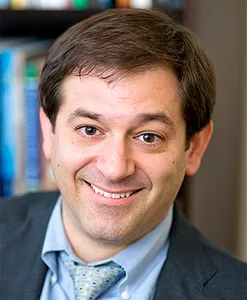
Benjamin D. Brody, MD
CHPR: What are the typical adverse reactions you watch for?
Dr. Brody: The most common issues are transient increases in blood pressure and pulse; nausea happens occasionally. Hypertension is by far the most frequent. When that occurs, we pause the infusion for 10 or 15 minutes, the blood pressure usually settles, and we finish the treatment.
CHPR: Are there any other potential side effects we should know about?
Dr. Brody: The dissociative experience deserves attention. Most patients find it neutral, odd but not troubling. Some find it pleasant, which explains its misuse potential. But a minority, maybe 2%–5%, find it frightening. They may say, “I feel out of control” or “This is scary.” In a paper we published, one patient even became suicidal during the experience (Brody BD et al, J Clin Psychiatry 2025;86(3):25com15946). That’s why close monitoring is essential, with regular assessment of mental status, anxiety, and suicidality during and after dosing, and staff should be prepared to provide reassurance, grounding, or intervention if distress escalates. The good news is ketamine’s half-life is short. Dissociation resolves as the drug is metabolized, usually within hours. But you can’t predict who is going to have that experience, so monitoring is critical.
CHPR: Are there exclusion criteria, particularly for people with cognitive impairment?
Dr. Brody: Yes. We generally avoid ketamine in people with dementia or significant cognitive disorders co-occurring with depression, as well as in people with psychosis. For patients with cognitive impairment, the concern is that the dissociative experience can be disorienting, frightening, or difficult to interpret, and may worsen confusion or behavioral symptoms. They can also complicate the diagnostic picture by making it less clear whether we’re really dealing with major depressive disorder vs a primary neurocognitive disorder. For patients with psychosis, there’s a separate concern about exacerbating psychotic symptoms.
CHPR: What about comorbid substance use disorders?
Dr. Brody: That’s a thornier area. A history of ketamine use disorder—or really any psychedelic use disorder—is a contraindication, but other substance use disorders are more complicated. Several studies suggest ketamine may have a role when it’s paired with psychotherapy. For example, one randomized trial combined ketamine with motivational enhancement therapy for alcohol use disorder (Dakwar E et al, Am J Psychiatry 2020;177:125–133), and another paired infusion with mindfulness-based behavioral modification for cocaine dependence (Dakwar E et al, Am J Psychiatry 2019;176:923–930). And this work goes back even further. In the 1980s, a psychiatrist in Russia used ketamine combined with psychotherapy to treat alcohol and heroin dependence, and he published a substantial body of work that was really ahead of its time (Krupitsky EM and Grinenko AY, J Psychoactive Drugs 1997;29:165–183).
CHPR: Are there medications that need to be discontinued before infusion?
Dr. Brody: The main one is benzodiazepines. They can blunt ketamine’s antidepressant effects, likely because of how they affect GABAergic interneurons that modulate glutamate circuits. We taper or minimize them when possible. The other is naltrexone, since it blocks ketamine’s therapeutic effect and makes the experience unpleasant (Williams NR et al, Am J Psychiatry 2018;175(12):1205–1215).
CHPR: If a clinician wants to begin using ketamine, what would you advise?
Dr. Brody: Ketamine is used all across medicine—emergency, anesthesia, pain medicine—so there’s a lot of expertise out there. Having an anesthesiologist join you for the first few cases is exactly how I learned, and it’s a sensible way to get comfortable. The APA has clear guidance on how to administer ketamine safely (Sanacora et al, 2017) and the REMS program for esketamine is also very straightforward.
CHPR: Are there any final things we should know?
Dr. Brody: I’d emphasize that inpatient psychiatry is uniquely suited for ketamine. Units already have nurses, the ability to give IV fluids, and the capacity to monitor vitals and post-infusion recovery. And we have social workers who can connect patients to outpatient ketamine or esketamine programs, which is essential because ketamine’s benefits are transient. The “expertise” in ketamine isn’t just giving the drug. It’s understanding the literature, patient selection, risks, and the importance of follow-up. Ketamine is in its own therapeutic domain and requires real familiarity to use safely and effectively.
CHPR: Thank you for your time, Dr. Brody.


Recommended