_-The-Breakthrough-Antipsychotic-That-Could-Change-Everything.webp?t=1729528747 "KarXT (Cobenfy)_ The Breakthrough Antipsychotic That Could Change Everything.jpg")
Expert Q&A
Stigma, Shame, and Recovery in Physician Health Programs
Getting your Trinity Audio player ready...
CATR: You lead both a state physician health program (PHP) and the national federation of PHPs. For readers who may not be familiar, what exactly is a PHP, and what role does it play in addiction care?
Dr. Bundy: Physician health programs (PHPs) emerged in the mid-1970s following a landmark JAMA article called “The Sick Physician,” published by the AMA Council on Mental Health (AMA Council on Mental Health, JAMA 1973;223(6):684–687). That article came on the heels of a series of physician suicides. It asked: Why is it that physicians can only start to get help when they’re already in regulatory trouble? What is this culture of silence in medicine? From that, state medical societies began setting up peer-based, confidential programs designed to support physicians who were struggling with addiction, mental illness, or other conditions that could get in the way of them practicing safely. Today there are PHPs in nearly every state, although they vary considerably in structure, funding, and regulatory relationships. Some PHPs include other health professionals such as nurses, nurse practitioners, physician associates, and pharmacists, whereas other states have separate organizations. Some PHPs are independent nonprofits, like ours in Washington; others are housed within medical boards or medical associations. The Federation of State Physician Health Programs, founded in 1990, exists to share best practices, promote standardization, and advocate nationally for policies aligned with the physician health model.
CATR: How does stigma affect physicians with addiction differently than it does the general population?
Dr. Bundy: It’s intensified. Physicians are selected for by their intellect, judgment, and commitment to excellence. They’re trained in systems that demand perfection and instill a deep sense of professional identity around competence and self-sacrifice. When they then develop a condition that has historically been framed as a failure of will or character, there can be an intense inner conflict. An especially painful element, but also an instructive one, is that physicians develop substance use disorders (SUDs) at approximately the same rate as the general population (Baldisseri MR, Crit Care Med 2007;35(2 Suppl):S106–S116). This is a powerful argument that these are not diseases of willpower, but genuine health conditions that anyone can develop. Yet physicians feel they should have known better, been more protected by their training, and been able to solve the problem on their own. This belief delays help-seeking and compounds shame in ways that the general patient often doesn’t face.
CATR: What are the specific fears that keep physicians from seeking treatment?
Dr. Bundy: There are several factors that converge. There’s fear of reputational harm: What will peers and colleagues think? There’s fear about confidentiality and whether disclosing an SUD will trigger cascading professional consequences: licensing questions, credentialing inquiries, medical executive committee review. There’s also a practical layer: Physicians are not immune to financial strain, and the out-of-pocket costs of proper evaluation and treatment can be real barriers. Then there’s the fear of burdening colleagues by taking time away; medicine is chronically short-staffed, and many physicians carry a sense of indispensability. But what is too often underestimated is how much untreated illness may already be affecting work and patient care.
CATR: When you’re sitting with a physician who is resistant to treatment, what strategies do you use to build trust and reduce shame?
Dr. Bundy: Education is foundational and often underestimated. Many physicians have never really integrated a brain-based model of addiction into their clinical framework. They may have been exposed to the concept, but too often it doesn’t connect in a personal way. When you walk someone through their family history and explain that genetic factors account for roughly half of addiction liability, something shifts (Deak JD and Johnson EC, Psychol Med 2021;51(13):2189–2200). Then I try to address the confidentiality and professional reputation concerns directly by explaining how PHPs are designed to operate: what is and isn’t reported, and to whom. I think it also helps to be concrete about outcomes. I tell physicians that there is a recipe for how doctors get well, and I emphasize that the success rate is very high, substantially higher than outcomes in general addiction treatment populations (DuPont RL et al, J Subst Abuse Treat 2009;36(2):159–171). Physicians are trained to follow pathways, so framing recovery as a structured, navigable process can resonate with them. Finally, I try to distinguish between help-seeking and help-acceptance. Sometimes people come in the door but still can’t fully accept what’s being offered. That’s okay; it’s something we work through together.
CATR: You mentioned that PHP outcomes are strong. Can you say more about what the research shows?
Dr. Bundy: Physicians who engage with PHPs do remarkably well compared with what most clinicians see in general addiction treatment. Studies show five-year abstinence rates in the range of 70%–80%, and a large majority return to practice (McLellan AT et al, BMJ 2008;337:a2038). Part of that reflects selection: Physicians tend to be highly motivated to preserve their careers. But I think a lot of it is the model itself. The structure of long-term monitoring, peer accountability, access to specialized treatment, and workplace advocacy all work together in a way that few other treatment contexts can replicate. I think physicians can underestimate the power of addiction treatment because of what they see in training: patients cycling through the ER, not getting better. But that’s a highly biased sample. In the PHP model, most physicians get well and stay well. Most keep their careers. That message can be transformative for someone sitting across from me who has convinced themselves that getting help is the end of their professional life.
CATR: What are the key components of the PHP model?
Dr. Bundy: One is peer support: immediate access to physicians who have been through the process and are in sustained recovery themselves. That starts the moment someone walks into a PHP, and it continues through treatment and monitoring. Physicians in treatment are typically in settings with other health professionals, which can be very helpful; there are things a doctor needs to be able to say about their relationship to their profession and their disease that are very hard to say in a mixed community setting. Another important component is accountability: random toxicology testing, regular adherence reporting from treaters to the PHP. This isn’t punitive; it’s a chronic disease management model, and it enables early intervention when recurrence occurs, before a crisis develops. There also needs to be a structured return-to-work pathway with appropriate workplace liaison, advocacy, and support. And finally, a monitoring agreement that typically spans five years, which may sound long but mirrors what we know about the duration of risk in addiction.
CATR: Are medications for SUDs, like buprenorphine and naltrexone, used in physician patients the same way? Or have PHPs historically taken a different approach?
Dr. Bundy: PHPs were early adopters of medications for opioid use disorder (MOUD), and I suspect that the use of MOUD is higher in this group than the general population due to the increased safety it can provide in a safety-sensitive worker, particularly with respect to diversion for personal use. Historically, long-acting injectable (LAI) naltrexone has been the preferred modality because it is easier to monitor than sublingual buprenorphine and has less potential cognitive effects, particularly in combination with other medications. That said, buprenorphine is also routinely used. Care is individualized to the patient and their unique circumstances and needs. In a recent survey we performed (study publication pending) of PHPs (94% of PHPs responding), 83% supported the use of LAI naltrexone, 73% supported use of oral buprenorphine, and 69% supported use of LAI buprenorphine, even when the physician is working. Prohibition was extremely low, with only 2% prohibiting naltrexone formulations and 6% prohibiting buprenorphine formulations. This means that 98% and 94% of programs have no prohibition on naltrexone or buprenorphine, respectively.
“It helps to be concrete about outcomes. I tell physicians that there is a recipe for how doctors get well, and I emphasize that the success rate is very high, substantially higher than outcomes in general addiction treatment populations.”
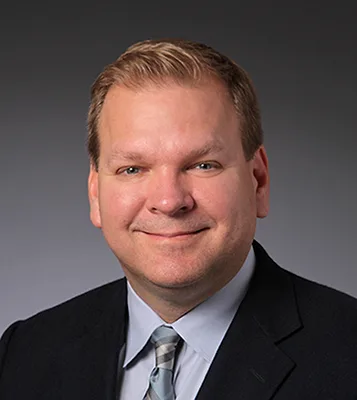
Chris Bundy, MD, MPH
CATR: Why is a physician-specific peer support community so important, as opposed to general mutual aid?
Dr. Bundy: It goes back to that intensified shame and professional stakes that we’ve discussed. There’s a need for a space that general recovery support may not be able to provide. I sometimes use the analogy of a pilot who experienced a blackout while flying a transcontinental flight; there are things that person needs to process about their profession and their disease that just can’t happen fully in a typical community meeting. The same is true for physicians. Being in a room with other doctors who have had similar experiences and don’t come at you with judgment is uniquely powerful for shame reduction. And beyond the emotional experience, there are practical clinical topics that physicians can help one another navigate: how to think about prescribing privileges, how best to restart clinical practice, and how the physician’s professional identity itself can both drive illness and be a resource in recovery. Peer-based, professionally informed support is where those conversations can happen safely.
CATR: What can health care institutions and employers do to reduce stigma and make it easier for physicians to come forward?
Dr. Bundy: Quite a lot, actually. Credentialing and employment questions that ask about historical diagnoses rather than current impairment send exactly the wrong message and create unnecessary barriers to care. The question should be, “Are you currently impaired?” not “Have you ever been diagnosed?” Institutions can also look at how they respond when a physician becomes ill. Is the response supportive, as it would be for a cardiac event, or is it primarily punitive? Some institutions are now actively supporting the out-of-pocket costs of PHP evaluation and treatment, and I can tell you that when I’m sitting with a frightened physician and I can say, “Your health system is going to cover this for you,” it is a big relief. The economic case for this is strong. Replacing a physician can be enormously expensive for employers, but more importantly, it sends the message that the institution is a partner in recovery, not a threat.
CATR: For the psychiatrist or addiction clinician who suspects that a colleague (or a physician who is their patient) has an untreated SUD, what should they do? Are they legally required to file a report? How does a referral to a PHP work in practice?
Dr. Bundy: Physicians and addiction clinicians should understand that caring for patients who are safety-sensitive workers carries ethical and, in many states, legal obligations. In general, reports aren’t required for suspecting, say, an SUD, but many states have mandatory reporting requirements when there is concern for impairment or compromise of safe patient care. There are also legal liability concerns if you are caring for a patient in a safety-sensitive position and fail to mitigate foreseeable risk. Clinicians can contact their state PHP to consult about the situation and determine whether referral to the PHP would be prudent or required based on the specific case.
CATR: How do you think about balancing potential conflicts and maintaining a positive therapeutic relationship, confidentiality, and safety?
Dr. Bundy: It is important for clinicians to understand that these situations can be fraught, with the provider feeling conflicted. PHPs can help clinicians navigate this challenge, including helping with how to talk with physician patients about the need and benefits of referral and how to help address the fears and concerns that will inevitably arise. Often, the care provider and the physician patient can make the call to the PHP together to ensure that both feel supported in what can be a difficult, yet life- and career-altering, moment. In cases where there is concern for patient safety, the clinician should close the loop with the PHP and make sure their patient is engaged in the process and following recommendations. PHPs do not provide diagnosis or treatment but will likely refer to specialized evaluation centers that have expertise in assessing health professionals and providing fitness for duty determinations. They will coordinate with the referring provider throughout and will likely ask them to remain involved during the evaluation and treatment process. If a higher level of care is recommended, the referring provider typically resumes continuing care and PHP collaboration post-discharge.
CATR: What is a message of hope you offer to a physician who walks into your office at their lowest point?
Dr. Bundy: The first thing I want them to understand is that the day they walk into my office is probably going to be the worst day of their entire career. It gets better from there, not incrementally, but substantially, in ways most of them can’t imagine in that moment. Thousands of physicians have been through this process and have gone on to careers and lives they couldn’t have envisioned when they were sitting in crisis. I also try to be honest about the other side of that equation: Whatever shame they might feel as they walk through my door, while real, is not worse than the consequences of untreated illness. These are serious diseases that can cause harm to both them and their patients. The speculative fear of professional consequences is generally more manageable than it looks, and it’s something we know how to navigate. The outcome of doing nothing is not speculative. That reframing doesn’t land for everyone immediately, but it’s something I return to throughout the work. Recovery for physicians is real, it’s common, and there is a proven path to get there.
CATR: Thank you for your time, Dr. Bundy.

Recommended