• Home
  • Store
    • Total Access Subscriptions
    • Newsletter Subscriptions
    • Multimedia
    • Books
    • eBooks
    • ABPN SA Courses
  • CME Center
  • Multimedia
    • Podcast
    • Webinars
    • Blog
  • Newsletters
    • General Psychiatry
    • Child Psychiatry
    • Addiction Treatment
    • Hospital Psychiatry
    • Geriatric Psychiatry
    • Psychotherapy and Social Work
  • Toolkit
  • FAQs
  • Log In
  • Register
  • Welcome
  • Sign Out
  • Subscribe
Access Purchased Content
Home » dementia

Articles Tagged with ''dementia''

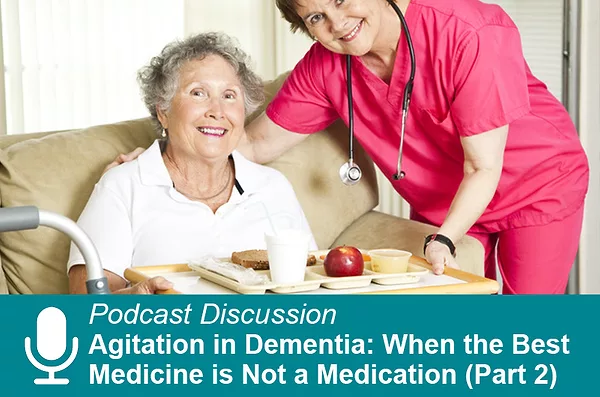
Agitation in Dementia (Part 2)

February 20, 2020
Families bring difficult questions when their loved one has dementia, and in this interview with Cathy Howard, RN, we’ll show you how to answer some of them. We also delve into the nonpharmacologic approaches to agitation in dementia to learn what they look like in real life.Published On: 2/20/20Duration: 8 minutes, 9...
Read More

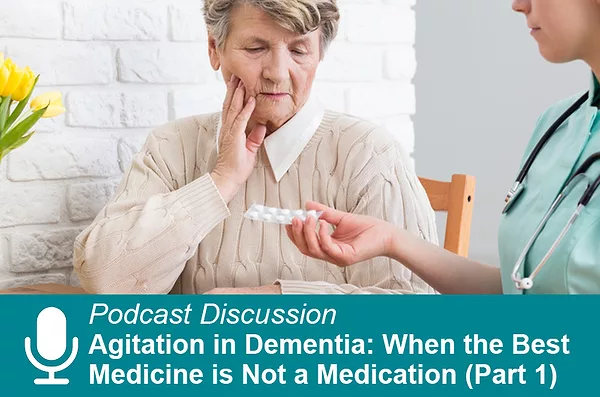
Agitation in Dementia (Part 1)

February 17, 2020
Nuedexta. A 60 year old cough medicine gets approve for uncontrollable crying, but the drug company has its eyes on a bigger target: Agitation in dementia. Follow the trail of pseudoscience, bribery, and indictments, and learn a few clinical pearls about this dextromethorphan-quinidine combination along the way.Published On: 2/17/20Duration: 15 minutes, 51...
Read More

Nuedexta in Agitated Dementia

February 10, 2020
From The Carlat Psychiatry Report
Issue Links: Learning Objectives | Editorial Information | PDF of Issue
Nuedexta is indicated for pseudobulbar affect, but when the manufacturer attempted to expand its use into agitation in dementia they ran into some heavy legal penalties. Here we take a closer look at the published and unpublished trials to see what ─ if anything ─ is salvageable. We’ll also show you how to prescribe this high-cost drug as a generic equivalent.
Read More

In Brief: Antipsychotic Update

November 15, 2019
From The Carlat Psychiatry Report
Issue Links: Learning Objectives | Editorial Information | PDF of Issue
Outdoor activity, massage, and touch therapy ranked most effective for agitation in dementia. Risperidone doesn’t appear to cause fractures.
Read More

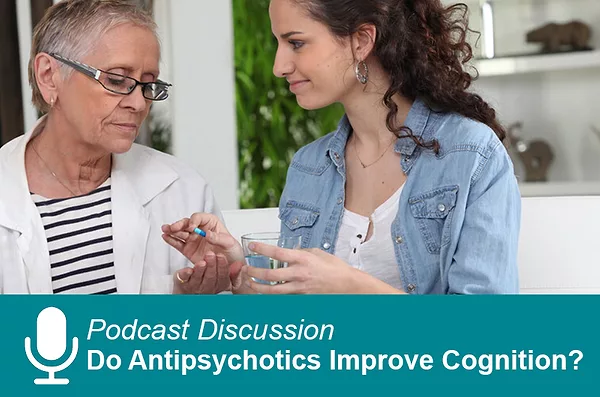
Do Antipsychotics Improve Cognition?

May 27, 2019
Unlike the typical antipsychotics, atypicals improve both cognitive and psychotic symptoms of schizophrenia, so they must have procognitive effects of their own that can be harnessed in mood disorders, ADHD, and even dementia. The problem is that the data show the opposite.Publication Date: 5/27/19Runtime: 8 mins, 35 secondsArticle Referenced: "Ask...
Read More

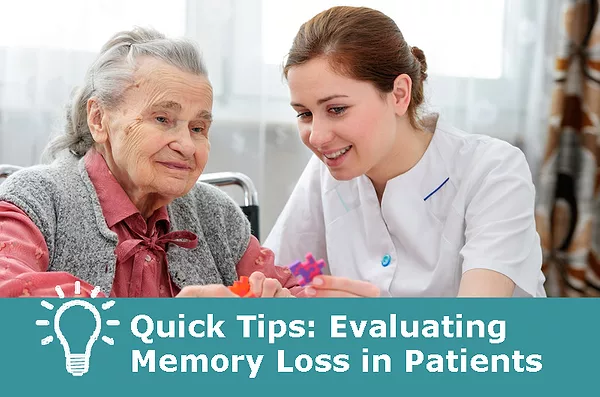
Evaluating Memory Loss in Patients

May 1, 2019
The old rule of thumb used to be that “you don’t need to worry about the person who’s worried about their memory; you need to worry about people who aren’t worried.” Although that might still be true for people already with dementia, it’s important that you pick up on memory...
Read More

The Aging Brain: Preventing Cognitive Decline

April 10, 2019
From The Carlat Psychiatry Report
Issue Links: Learning Objectives | Editorial Information | PDF of Issue
We’ve all been there. A 63-year-old patient comes to you with a chief complaint of memory loss. She tells you that she has a hard time remembering people’s names and forgets where she puts her keys. She lives and drives on her own without a problem, but asks, “Isn’t there some memory pill I can take?” What advice can we give her?
Read More

Screening Tests for Cognitive Decline

April 10, 2019
From The Carlat Psychiatry Report
Issue Links: Learning Objectives | Editorial Information | PDF of Issue
Screening tests can also help distinguish normal aging from a Neurocognitive Disorder. The popular Mini Mental Status Exam is being replaced by more sensitive tests like the Montreal Cognitive Assessment (MOCA) and the Saint Louis University Mental Status Examination (SLUMS). Both of these can be completed in 10 minutes and are normed for Mild and Major Neurocognitive Disorders. An abbreviated form of the SLUMS, the Rapid Cognitive Screen, can be administered in 5 minutes.
Read More

Moderate Alcohol Use Associated With Reduced Risk of Dementia

April 10, 2019
Michael Posternak, MD
From The Carlat Psychiatry Report
Issue Links: Learning Objectives | Editorial Information | PDF of Issue

Michael Posternak, MD. Dr. Posternak has disclosed that he has no relevant financial or other interests in any commercial companies pertaining to this educational activity.

Excessive alcohol use is neurotoxic, but some studies have found that moderate alcohol intake might actually reduce the risk of dementia. Most of these studies, however, have focused on geriatric patients.
Read More
EXPERT Q&A

Neurobiology Concepts for Psychiatrists

June 1, 2018
David M. Kaufman, MD
From The Carlat Psychiatry Report
Issue Links: Learning Objectives | Editorial Information | PDF of Issue
David M. Kaufman, MD Department of Neurology, Montefiore Medical Center, Bronx, NY. Co-author of Kaufman’s Clinical Neurology for Psychiatrists, 8th ed. (Elsevier). Dr. Kaufman has disclosed that he has no relevant financial or other interests in any commercial companies pertaining to this educational activity.
The most common cause of parkinsonism is Parkinson disease, but parkinsonism also can occur from the use of any medication that blocks the D2 (dopamine type 2) receptor. Those include antipsychotics but can also include non-psychiatric medicines, particularly metoclopramide (Reglan), an anti-nausea medicine.
Read More
Previous 1 2 3 4 5 6 7 Next
Carlat Total Access Subscriptions: Get access to every article on the website.

Complete access to every article you search on the website.

Shop for Total Access
Free Psychiatry Updates
The latest unbiased psychiatric information sent to your inbox.
Specify Your Interests
Featured Book
  • MFB8e_SpiralCover.png

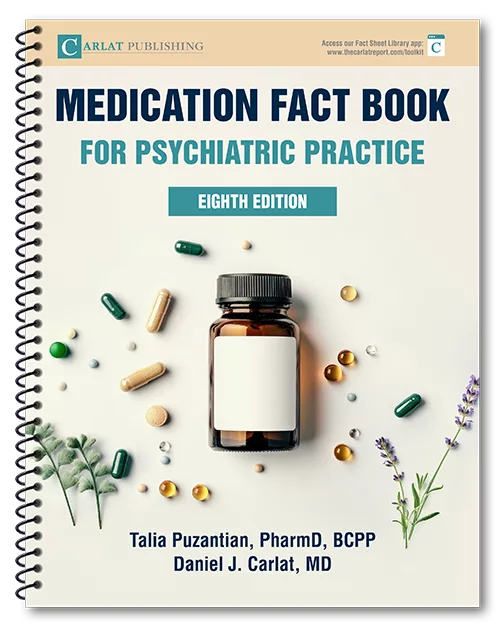
    Medication Fact Book for Psychiatric Practice, Eighth Edition (2026)

    Updated 2026 prescriber's guide.
    READ MORE
Featured Video
  • KarXT (Cobenfy)_ The Breakthrough Antipsychotic That Could Change Everything.jpg
    General Psychiatry

    KarXT (Cobenfy): The Breakthrough Antipsychotic That Could Change Everything

    Read More
Featured Podcast
  • shutterstock_2745130545.jpg
    General Psychiatry

    Hidden Gems: Pramipexole Part II

    Listen now
Recommended
  • Join Our Writing Team

    July 18, 2024
    WriteForUs.png
  • Insights About a Rare Transmissible Form of Alzheimer's Disease

    February 9, 2024
    shutterstock_2417738561_PeopleImages.com_Yuri A.png
  • How to Fulfill the DEA's One Time, 8-Hour Training Requirement for Registered Practitioners

    May 24, 2024
    DEA_Checkbox.png
  • Join Our Writing Team

    July 18, 2024
    WriteForUs.png
  • Insights About a Rare Transmissible Form of Alzheimer's Disease

    February 9, 2024
    shutterstock_2417738561_PeopleImages.com_Yuri A.png
  • How to Fulfill the DEA's One Time, 8-Hour Training Requirement for Registered Practitioners

    May 24, 2024
    DEA_Checkbox.png
  • Join Our Writing Team

    July 18, 2024
    WriteForUs.png
  • Insights About a Rare Transmissible Form of Alzheimer's Disease

    February 9, 2024
    shutterstock_2417738561_PeopleImages.com_Yuri A.png
  • How to Fulfill the DEA's One Time, 8-Hour Training Requirement for Registered Practitioners

    May 24, 2024
    DEA_Checkbox.png

About

  • About Us
  • CME Center
  • FAQ
  • Contact Us

Shop Online

  • Newsletters
  • Multimedia Subscriptions
  • Books
  • eBooks
  • ABPN Self-Assessment Courses

Newsletters

  • The Carlat Psychiatry Report
  • The Carlat Child Psychiatry Report
  • The Carlat Addiction Treatment Report
  • The Carlat Hospital Psychiatry Report
  • The Carlat Geriatric Psychiatry Report
  • The Carlat Psychotherapy Report

Contact

carlat@thecarlatreport.com

866-348-9279

PO Box 626, Newburyport MA 01950

Follow Us

Please see our Terms and Conditions, Privacy Policy, Subscription Agreement, Use of Cookies, and Hardware/Software Requirements to view our website.

© 2026 Carlat Publishing, LLC and Affiliates, All Rights Reserved.