As Lindsay Clancy’s hallucinations grow louder, we look at how postpartum psychosis presents, why the DSM struggles to classify it, and the treatment that brought 98% of women with this disorder to full recovery. Plus: The first trial of lumateperone in acute mania.
Four months after giving birth, Lindsay Clancy stopped sleeping, and each new prescription seemed to make it worse. In Part 2, we follow her from hypomania through depression to the border of psychosis, and find a new way to interpret dissociation. Plus: A research update on a potentially fatal risk with GLP-1 agonists: Low thiamine.
Lindsay Clancy’s trial became a televised spectacle this summer. In this series, we set the courtroom aside and focus on her psychiatric signs and treatments, following them month by month over the postpartum course. Plus: a new trial on what happened when depressed patients cut ultra-processed food.
We tell patients to exercise. We're usually vague about the dose. A 2025 UK Biobank study (Yu K et al, Am J Geriatr Psychiatry 2025;33(5):512–523 https://lnkd.in/eVAh4Dtq) put real numbers on it — using accelerometers, not self-report. The design: 71,556 adults. Mean age 62. No depression or anxiety at baseline. Followed a median of 8 years.
Have you ever heard of hikikomori?Literally: "pulling inward."
First described by Japanese psychiatrist Tamaki Saito in 1998 — and for decades assumed to be a uniquely Japanese problem.
It isn't.
A 2025 meta-analysis of 19 studies and 58,000+ participants found cases across Europe, North America, and beyond. US estimates put prevalence around 2–3%. Roughly 1 in 40 Americans.
In the 1950s, a young Danish psychiatrist named Mogens Schou staked his career — and his family — on a mineral most of his colleagues dismissed as dangerous nonsense. This is the story of how lithium went from fringe curiosity to the gold standard for bipolar disorder, and the bitter scientific battle that nearly derailed it.
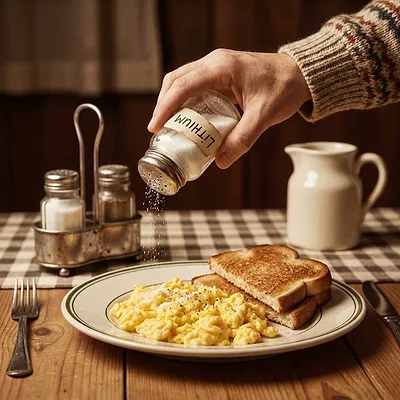
Before lithium became a cornerstone of psychiatry, it was in soda, spa water, and salt shakers. Trace lithium’s journey from Victorian health fad to life-saving mood stabilizer, and discover why the uric acid theory that launched it may be making a comeback.