• Home
  • Store
    • Total Access Subscriptions
    • Newsletter Subscriptions
    • Multimedia
    • Books
    • eBooks
    • ABPN SA Courses
    • Institutional Site Licenses
  • CME Center
  • Multimedia
    • Podcast
    • Webinars
    • Blog
  • Newsletters
    • General Psychiatry
    • Child Psychiatry
    • Addiction Treatment
    • Hospital Psychiatry
    • Geriatric Psychiatry
    • Psychotherapy and Social Work
  • Toolkit
  • FAQs
  • Log In
  • Register
  • Welcome
  • Sign Out
  • Subscribe
Access Purchased Content
Home » addiction

Articles Tagged with ''addiction''

Note From the Editor-in-Chief

October 1, 2018
Bachaar Arnaout, MD
From The Carlat Addiction Treatment Report
Issue Links: Learning Objectives | Editorial Information
Bachaar Arnaout, MD Editor-in-Chief
Addiction spares no age group, but it often goes undetected in older adults age 65 or older, and its treatment poses age-specific challenges.
Read More

Alcohol Use Disorder Meds in Older Adults

October 1, 2018
Rehan Aziz, MD, FAPA
From The Carlat Addiction Treatment Report
Issue Links: Learning Objectives | Editorial Information
Rehan Aziz, MD, FAPA Associate Professor of Psychiatry and Neurology, Rutgers Robert Wood Johnson Medical School Dr. Aziz has disclosed that he has no relevant financial or other interests in any commercial companies pertaining to this educational activity.
How should we employ pharmacotherapies for alcohol use disorder (AUD) in older adult patients? There are three FDA-approved medications (acamprosate, disulfiram, and naltrexone) and two other commonly used off-label agents (gabapentin and topiramate).
Read More

Substance Use Disorder in Older Adults

October 1, 2018
David Oslin, MD
From The Carlat Addiction Treatment Report
Issue Links: Learning Objectives | Editorial Information
David Oslin, MDDavid Oslin, MD Professor of Psychiatry, Philadelphia Veterans Affairs Medical Center and the University of Pennsylvania Medical Center Dr. Oslin has disclosed that he has no relevant financial or other interests in any commercial companies pertaining to this educational activity.
As we age, we are more vulnerable to a lot of things—the same amount of alcohol or the same amount of any of these substances is going to cause more impairment in an older person vs a younger one. As an example, our stability and gait can worsen as we get older, so any substance that affects gait or balance will have a larger effect.
Read More

Low-Risk Drinking Limits: What Should We Tell Older Adult Patients?

October 1, 2018
Thomas Jordan, MD, MPH
From The Carlat Addiction Treatment Report
Issue Links: Learning Objectives | Editorial Information
Thomas Jordan, MD, MPH Contributing writer to the Carlat newsletters Dr. Jordan has disclosed that he has no relevant financial or other interests in any commercial companies pertaining to this educational activity.
How much can our older patients safely drink? And what does “safe” or “low-risk” drinking actually mean? The National Institute on Alcohol Abuse and Alcoholism (NIAAA), which is the branch of the NIH that focuses on problems related to alcohol, has released guidelines for low-risk drinking limits in older patients.
Read More
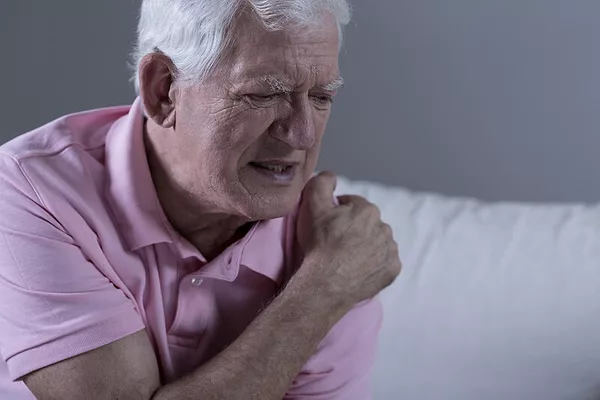
Chronic pain

Opioids Not Superior to Other Medicines for Some Chronic Pain

October 1, 2018
Rehan Aziz, MD
From The Carlat Addiction Treatment Report
Issue Links: Learning Objectives | Editorial Information
Rehan Aziz, MD Dr. Aziz has disclosed that he has no relevant financial or other interests in any commercial companies pertaining to this educational activity.
Rising rates of opioid overdose deaths have sounded alarm bells over opioid prescribing practices for chronic pain. Unfortunately, and despite the absence of quality data on their risks vs benefits, long-term opioid management has remained a common approach to managing chronic musculoskeletal pain.
Read More

Sleep Apnea in Patients With Substance Use Disorders: A Primer

August 23, 2018
Rehan Aziz, MD
From The Carlat Addiction Treatment Report
Issue Links: Learning Objectives | Editorial Information
Rehan Aziz, MD Associate Professor of Psychiatry and Neurology, Rutgers University—Robert Wood Johnson Medical School Dr. Aziz has disclosed that he has no relevant financial or other interests in any commercial companies pertaining to this educational activity.
There are three types of sleep apnea: obstructive sleep apnea (OSA), central sleep apnea, and mixed. Of these, OSA is by far the most common, and that’s what we’ll focus on in this article. OSA is caused by excessive relaxation of the throat during sleep, which in some people causes enough obstruction to impede the flow of air.

Read More

Treating Insomnia With Addiction

August 23, 2018
Eric Hermes, MD
From The Carlat Addiction Treatment Report
Issue Links: Learning Objectives | Editorial Information
Eric Hermes, MDEric Hermes, MD Assistant Professor, Department of Psychiatry, Yale School of Medicine, New Haven, CT Dr. Hermes has disclosed that he has no relevant financial or other interests in any commercial companies pertaining to this educational activity.

With substance use disorders (SUDs) that are comorbid with chronic insomnia, what would you say are some of the main treatment challenges?
Read More
Sleep disorder sm

Non-Addictive, Pharmacological Options for Sleep

August 23, 2018
Daniel Carlat, MD
From The Carlat Addiction Treatment Report
Issue Links: Learning Objectives | Editorial Information
Daniel Carlat, MD Publisher, The Carlat Addiction Treatment Report Dr. Carlat has disclosed that he has no relevant financial or other interests in any commercial companies pertaining to this educational activity.
In this month’s interview with Dr. Eric Hermes, we learned about his approach to treating insomnia in patients with substance use disorders, with a focus on cognitive behavioral therapy. In this article, we’ll look at some non-addictive pharmacological options.
Read More

Adolescents With ADHD and Substance Use Disorders: A Primer

July 1, 2018
Candace Good, MD
From The Carlat Addiction Treatment Report
Issue Links: Learning Objectives | Editorial Information
Candace Good, MD Child and adolescent psychiatrist, SunPointe Health, State College, PA Dr. Good has disclosed that she has no relevant financial or other interests in any commercial companies pertaining to this educational activity.
You are evaluating a 16-year-old boy referred for mandated substance use treatment by his high school, where he was found drinking alcohol and smoking cannabis with a friend in the restroom.
Read More

Talking to Parents and Adolescent Patients About Substance Use

July 1, 2018
Joanna Quigley, MD
From The Carlat Addiction Treatment Report
Issue Links: Learning Objectives | Editorial Information
Joanna Quigley, MDJoanna Quigley, MD Associate medical director for Child and Adolescent Ambulatory Services, University of Michigan, Ann Arbor, MI Dr. Quigley has disclosed that she has no relevant financial or other interests in any commercial companies pertaining to this educational activity.
Since they already often seem two steps ahead of us, with adolescents it can be really helpful to use direct routes. Be very specific in your questions. For example, don’t just ask, “Do you smoke?” Ask, “Are you using any nicotine products? What are you using in your vape?”
Read More
Previous 1 2 … 5 6 7 8 9 10 11 12 13 … 22 23 Next
Try The New AskCarlat AI

Ask any clinical question—our AI responds using only the peer-reviewed, editorially vetted content from Carlat Publishing.

Available In The Carlat Toolkit
Free Psychiatry Updates
The latest unbiased psychiatric information sent to your inbox.
Specify Your Interests
Featured Book
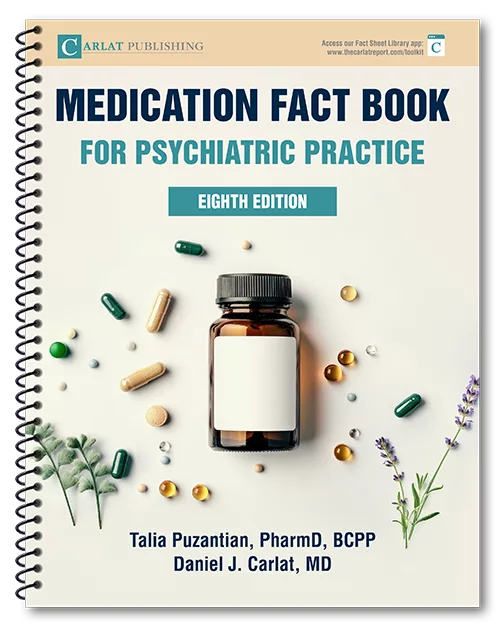
  • MFB8e_SpiralCover.png

    Medication Fact Book for Psychiatric Practice, Eighth Edition (2026)

    Updated 2026 prescriber's guide.
    READ MORE
Featured Video
  • KarXT (Cobenfy)_ The Breakthrough Antipsychotic That Could Change Everything.jpg
    General Psychiatry

    KarXT (Cobenfy): The Breakthrough Antipsychotic That Could Change Everything

    Read More
Featured Podcast
  • RogerSolomon2023.jpg
    General Psychiatry

    EMDR in Practice: A Clinician's Guide to Trauma Reprocessing with Roger Solomon, PhD

    Dr. Roger Solomon provides a comprehensive introduction to Eye Movement Desensitization and Reprocessing (EMDR).

    Listen now
Recommended
  • Join Our Writing Team

    July 18, 2024
    WriteForUs.png
  • Insights About a Rare Transmissible Form of Alzheimer's Disease

    February 9, 2024
    shutterstock_2417738561_PeopleImages.com_Yuri A.png
  • How to Fulfill the DEA's One Time, 8-Hour Training Requirement for Registered Practitioners

    May 24, 2024
    DEA_Checkbox.png
  • Join Our Writing Team

    July 18, 2024
    WriteForUs.png
  • Insights About a Rare Transmissible Form of Alzheimer's Disease

    February 9, 2024
    shutterstock_2417738561_PeopleImages.com_Yuri A.png
  • How to Fulfill the DEA's One Time, 8-Hour Training Requirement for Registered Practitioners

    May 24, 2024
    DEA_Checkbox.png
  • Join Our Writing Team

    July 18, 2024
    WriteForUs.png
  • Insights About a Rare Transmissible Form of Alzheimer's Disease

    February 9, 2024
    shutterstock_2417738561_PeopleImages.com_Yuri A.png
  • How to Fulfill the DEA's One Time, 8-Hour Training Requirement for Registered Practitioners

    May 24, 2024
    DEA_Checkbox.png

About

  • About Us
  • CME Center
  • FAQ
  • Contact Us

Shop Online

  • Newsletters
  • Multimedia Subscriptions
  • Books
  • eBooks
  • ABPN Self-Assessment Courses

Newsletters

  • The Carlat Psychiatry Report
  • The Carlat Child Psychiatry Report
  • The Carlat Addiction Treatment Report
  • The Carlat Hospital Psychiatry Report
  • The Carlat Geriatric Psychiatry Report
  • The Carlat Psychotherapy Report

Contact

carlat@thecarlatreport.com

866-348-9279

PO Box 626, Newburyport MA 01950

Follow Us

Please see our Terms and Conditions, Privacy Policy, Subscription Agreement, Use of Cookies, and Hardware/Software Requirements to view our website.

© 2026 Carlat Publishing, LLC and Affiliates, All Rights Reserved.